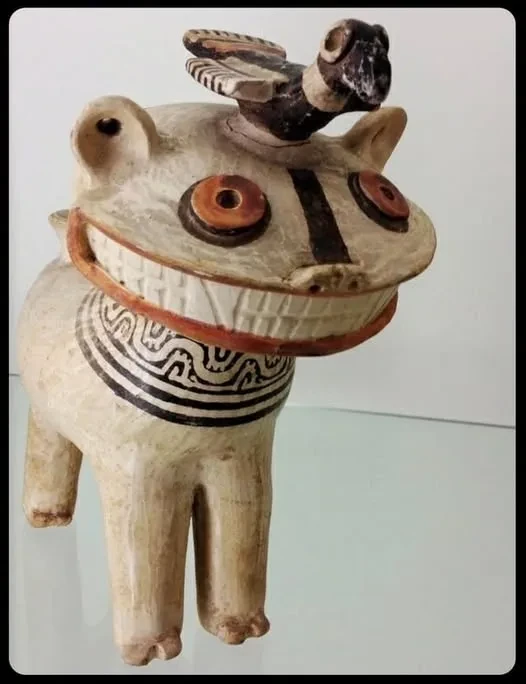
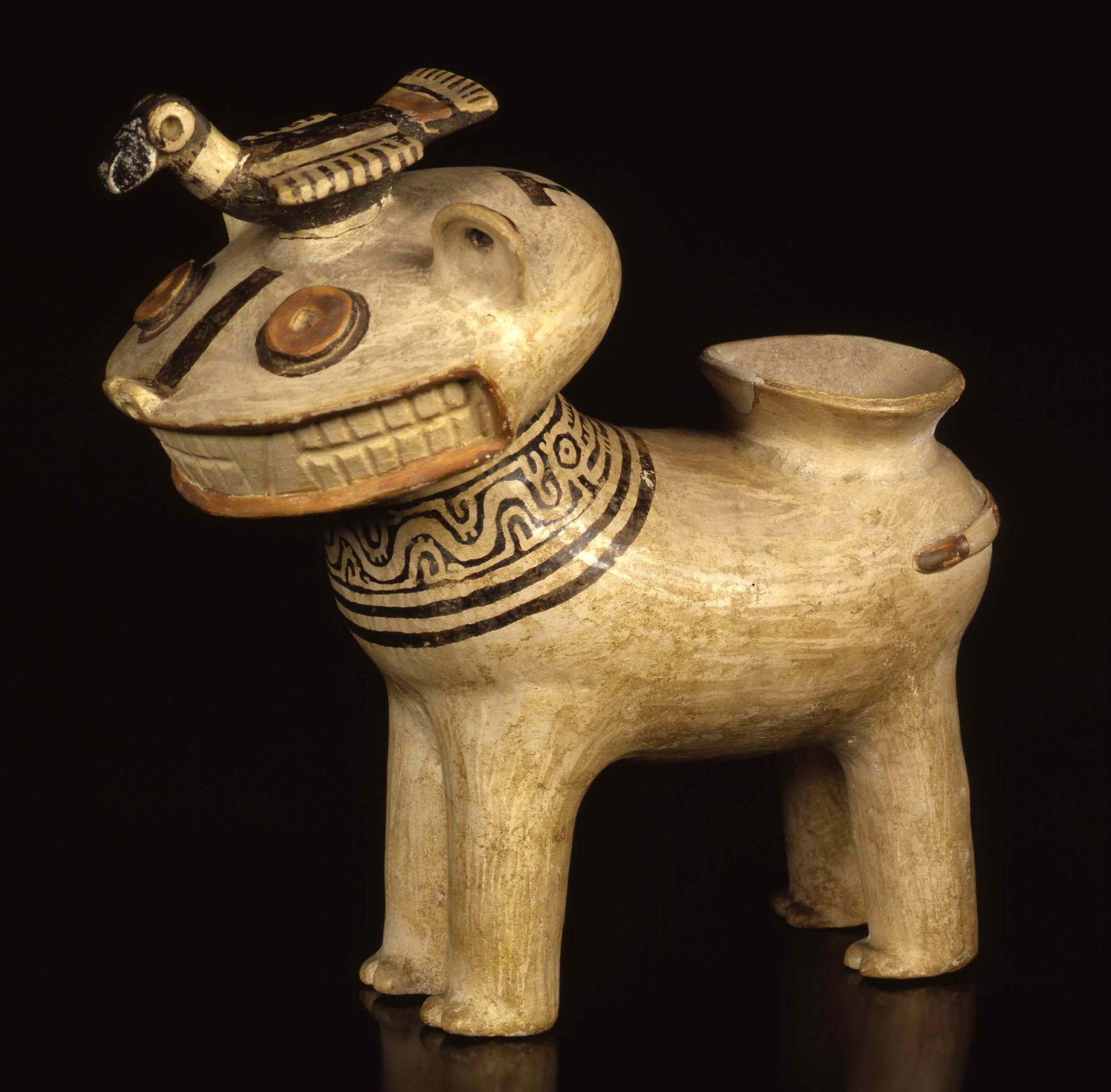
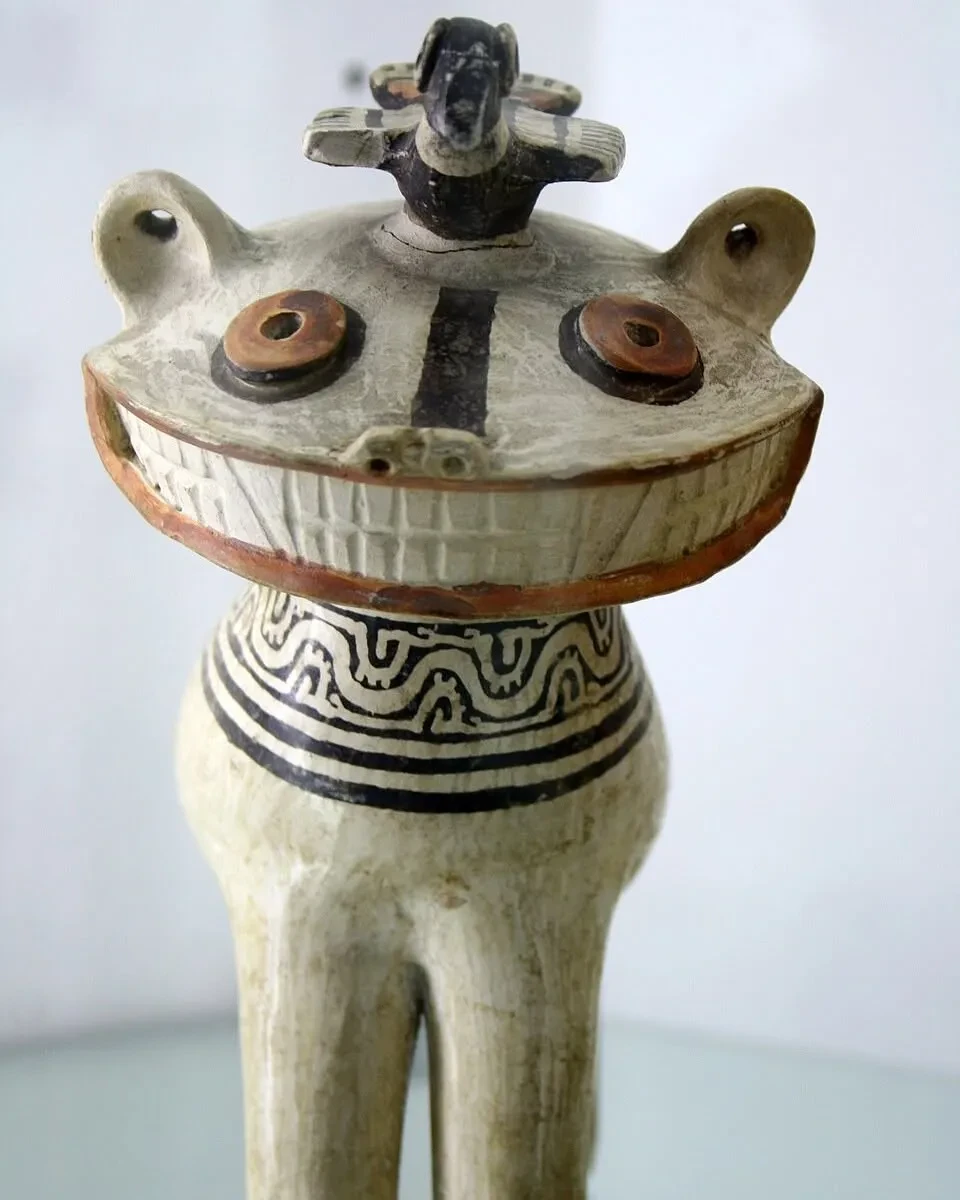
Cat-Shaped Vessel from Peru, c.200-700 Classical Antiquity (~800 BCE - 500 AD) (media.piefed.world)
you are viewing a single comment's thread
view the rest of the comments
[–] 19 points 1 month ago (7 children)

I fucking love this. It’s so cute but also so menacing with its teeth and red eyes. I wonder what animal it represents. Puma? Some small wild cat? If it was a jaguar I feel like the spots would have survived if it ever had any. Why does it have a bird on its head? Is it related to mythology and folktales or pure whimsy? They must have had people making whimsical nonsense back then, too.

  • source
  • hideshow 7 child comments
  • [–] 16 points 1 month ago (2 children)

    It's the Cheshire Cat, obviously.

  • source
  • parent
  • hideshow 2 child comments
  • [–] 6 points 1 month ago* (last edited 3 weeks ago) (1 child)

    This is the third recent post that reminds me of famous characters. I'm convinced artists are stealing ancient art for inspiration.

    There was some caveman painting on the cave's wall thinking "all art is derivative. How can Grog create, when nothing new under sun."

  • source
  • parent
  • hideshow 1 child comment
  • [–] [S] 8 points 1 month ago (3 children)

    I was unable to find any details beyond the images I posted. I wish I knew more as well. I freakin' love the fangs and the little tail wrapping around the back.

  • source
  • parent
  • hideshow 3 child comments
  • [–] 7 points 1 month ago (2 children)

    I did a brief search of Artstor and the best I can do is ‘probably Moche or Wari/Huari culture’ since both have similar looking cat ceramics, with an open mouth and bared fangs. Based on the reported location Wari is probably the safer bet. I’ll see if I can dig up anything more later.

  • source
  • parent
  • hideshow 2 child comments
  • [–] [S] 6 points 1 month ago* (1 child)
  • [–] 2 points 1 month ago

    Ooh, it does have a similar design. Maybe this was an old, widespread motif at the time? Because looking at the geographic range for Paracas culture it looks like it doesn’t overlap with the area it was found (hard to tell on the wiki maps). But people move around, it could be someone from the Paracas culture moved a little further inland and passed down that style of pottery.

  • source
  • parent