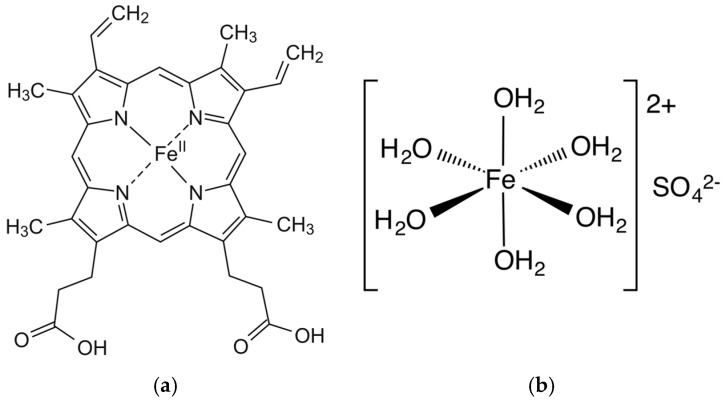
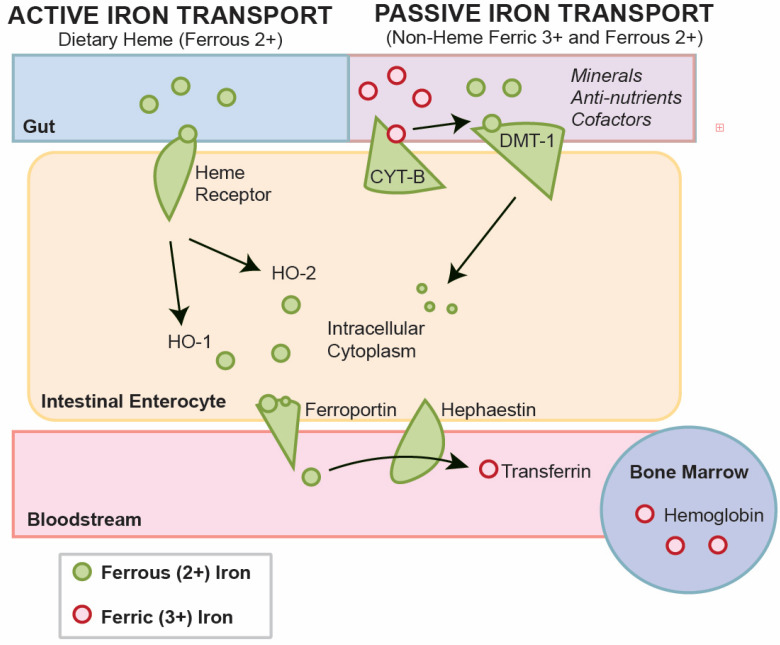
Our body needs iron to carry oxygen, help enzymes work, and to regulate and maintain itself. Iron exists in two forms in the diet: heme iron, from animal foods such as meat and fish, and non-heme iron, found in plants and widely used in iron supplements.
How well do we absorb iron?
Heme iron is absorbed at about 25-30%, while non-heme iron is absorbed at about 3-5%.
Does anything interfere with our ability to absorb iron?
Heme iron seems to be mostly unaffected by dietary inhibitors. Non-heme iron is inhibited by phytates, polyphenols, calcium, and some forms of protein, but can also be enhanced by ascorbic acid and meat.
Meat Factor
Meat also contains a "meat factor" that enhances non-heme iron absorption from other foods.
Improving absorption of non-heme iron using Vitamin C
Ascorbic acid forms a chelate with insoluble non-heme iron in the low pH of the stomach, which persists and remains soluble in the alkaline environment of the duodenum. This greatly improves absorption.
References:
- Biochemistry, Iron Absorption: https://www.ncbi.nlm.nih.gov/books/NBK448204/
- Iron Absorption: Factors, Limitations, and Improvement Methods: https://pmc.ncbi.nlm.nih.gov/articles/PMC9219084
- Meat protein fractions enhance nonheme iron absorption in humans: https://pubmed.ncbi.nlm.nih.gov/17056805