US Embassy Building, Wandsworth, London, UK, 2025.All the pixels, each unsure of which side of the road on which to drive, at flickr.com/photos/mattblaze/54#photography
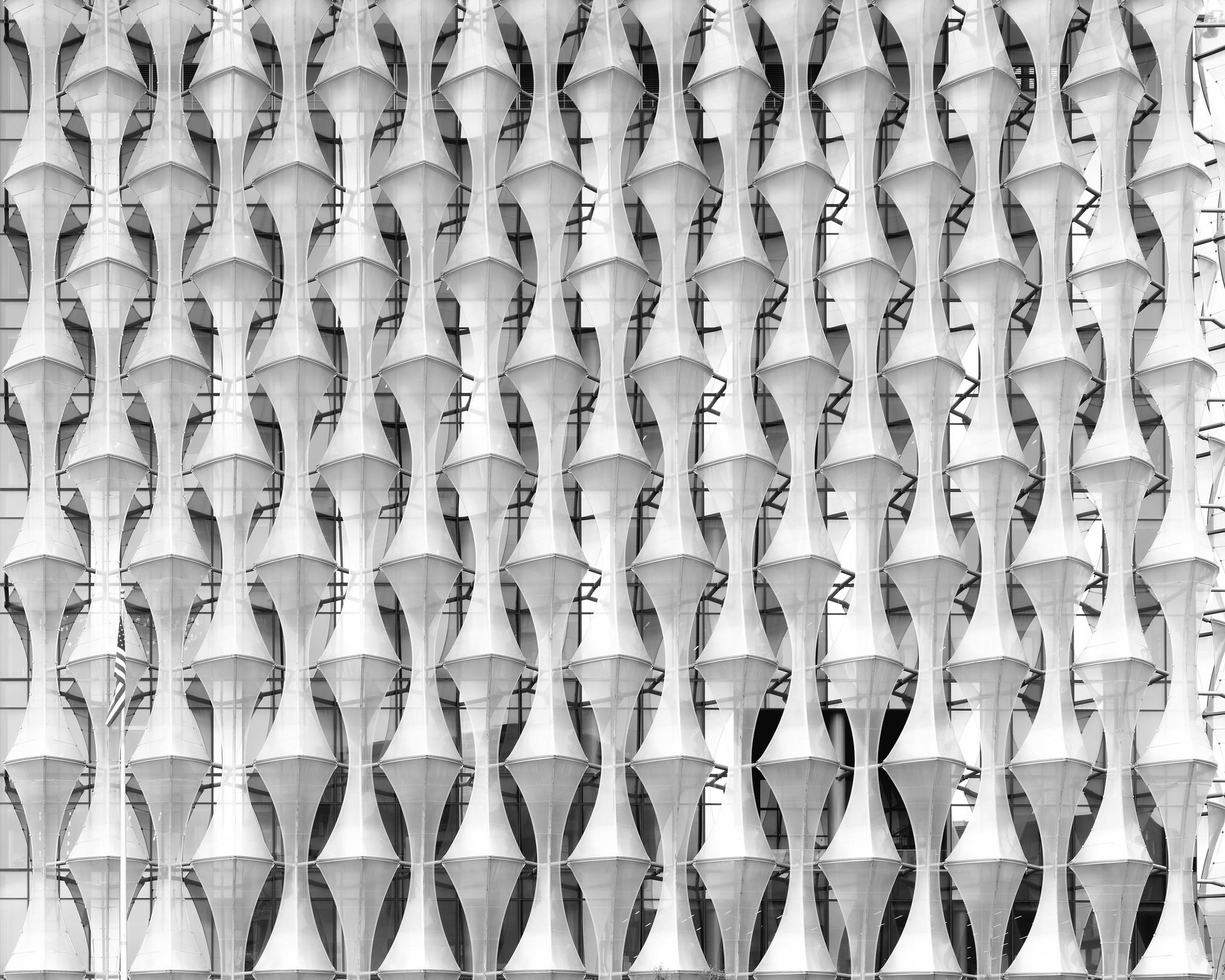
US Embassy Building, Wandsworth, London, UK, 2025.All the pixels, each unsure of which side of the road on which to drive, at flickr.com/photos/mattblaze/54#photography
@mattblazeInterestingly, actual recording studios rarely use anechoic spikes — completely dead rooms are rarely desirable. Instead you get a mix of flat (usually rockwool or melamine foam) absorbing panels and (generally wood) diffuser strips/panels. Some of the 2D quadratic diffusers look vaguely similar to anechoic spikes, but function very differently. In home studios, you sometimes see people putting "egg crate" foam on the wall, but this is largely ineffective — anything under 10cm thick won't do much for reflections below 1kHz, and that foam is rarely treated with flame retardant, with the consequences you can imagine.