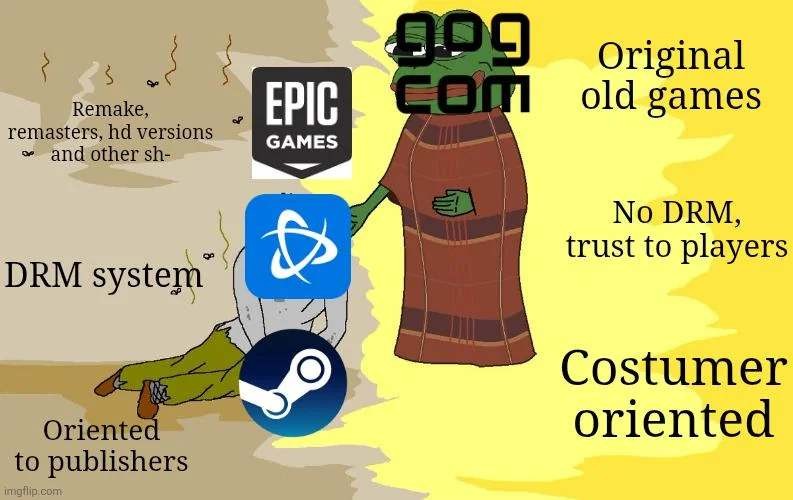
My own experience of problems with the "Steam way" is wanting to install and run a new game whilst offline (for example, when I moved houses and was waiting to get landline Internet running, whilst mobile Interned was too slow or expensive to download anything but the tinyiest of games, all the while my external HD with a collection of GOG offline installers gave me plenty of options) and installing games in machines with older versions of Windows because the Steam Application doesn't support those old OS versions anymore (plus, in all honesty, you definitelly don't want to to connect such machines to the Internet for security reasons).
Further, as I said in a different post, I can run my GOG games through Lutris by default sandboxed with networking disabled, but I can't do that in Steam.
More in general, as a Techie since the 90s I've long been very aware (and averse) to the dangers of having software or data which is supposedly yours yet is de facto under direct control of an external 3rd party for whom you're nothing (i.e. not a mate you lent a CD to, but a big company with a massive Legal budget controlling your access to it using phone-home validation), so out of principle I heavilly favor sellers who do not try and retain control of what I bought from them. Same reason I didn't like "phone home" or "dependent on external servers" hardware or DRM-wrapped books or music, well before the recent wave of enshittification and increase in problems like digital books taken away from people because of some licensing dispute (or even their accounts just being terminated) or hardware bricked because the servers were switched off.
Whilst it might seem like an old-fashioned sense of ownership, that posture has saved me from pretty much all the effects of the enshittification wave.