[–] 2 points 1 year ago (1 child)

All signs point to Epstine/Maxwell being intelligence of some sort. Likely Mossad and/or CIA, same thing.

And 95% of the US government on both sides of the aisle are funded and under the thumb of AIPAC...

So it all seems to playing out exactly as one would expect.

We the people have to keep the pressure on them all

  • source
  • parent
  • context
  • [–] 1 point 1 year ago

    I have also seen some recent articles that on top of the weakened field, the recent increase in solar activity, CME's create electromagnetic disturbances which could interfere with the brains biological electrical system, potentially affecting our mood and cognitive function, as well as messing up our circadian rhythyms.

    And I also read it may effect neurotransmitter production and hormone levels.

    I have personally been waking up a lot lately between 3 and 4 with a crazy amount of energy, and unable to go back to sleep. It is very uncommon for me to not sleep through the night.

  • source
  •  

    lifehacker.com

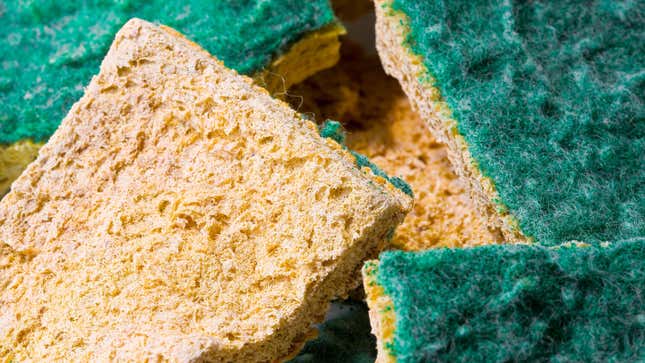
    For a seemingly humble cleaning supply, there has been a lot of discussion about sponges over the years; more specifically, how to clean or sanitize them. Various studies, like the one published in Nature’s Scientific Reports in 2017, found that kitchen sponges were teeming with bacteria—362 different types, to be exact—making them “the biggest reservoirs of active bacteria in the whole house,” including toilets.

    But beyond the bacteria, sponges also tend to disintegrate and develop a foul odor with use. Fortunately, there’s a way to revive a worn-out sponge using a few pantry staples. Here’s what to know. How to revive old sponges with salt

    So, why salt? Table salt is hygroscopic, which means it attracts moisture from the atmosphere, and is also the reason it can become damp and clog salt shakers in humid weather.

    According to an article in House Digest, salt can also draw moisture from a sponge, reducing the dampness that bacteria need to thrive, and, in turn, preventing the growth of mildew and mold, as well as that foul odor kitchen sponges develop over time. And that’s not all: Salt can make the sponge more efficient, absorbing oils and making it easier to tackle stains.

    There are two simple ways to put salt to work on your sponges:

    1. Saltwater soak

    Rinse your sponge with warm water, then squeeze it out to get rid of any lingering crumbs or bits that may be sticking to it. Fill a container with warm water, and add 1/4 cup of salt (e.g. table salt, kosher salt, sea salt, etc). Stir the mixture until the salt is completely dissolved.

    Next, place your sponge in the mixture, and make sure it’s fully submerged. Leave it there overnight, or at least for a few hours, then remove it, squeeze it out, and rinse it thoroughly with clean water.

    1. Add some vinegar

    This process is the same as the one described above, except the mixture consists of 1 cup hot water, ½ cup white vinegar, and 3 tablespoons salt.

    To clarify, the aim of these methods is to get rid of (or at least lessen) odors, and help get the sponge back to looking more like it did when it was new. We didn’t come across any research indicating that this would sterilize your sponge, so when you’re done, you may want to pop it in the microwave.


    WASHINGTON – Transportation Secretary Pete Buttigieg condemned Florida Gov. Ron DeSantis on Sunday over a campaign video that criticizes former President Donald Trump for his past support for LGBTQ Americans.

    “I just don't understand the mentality of somebody who gets up in the morning, thinking that he's going to prove his worth by competing over who can make life hardest for a hard-hit community that is already so vulnerable in America,” Buttigieg said during an appearance on CNN’s State of the Union.

    The video, released on the DeSantis War Room Twitter account on Friday, the last day of June’s LGBTQ Pride Month, has been criticized by gay-rights groups and even some Republicans as bordering on homophobia. Transportation Secretary Pete Buttigieg

    It shows footage of Trump at the 2016 Republican National Convention saying he would do everything in his power to protect LGBTQ citizens. He had been pledging protection from terrorist attacks weeks after the shootings at the Pulse Nightclub, a gay nightclub in Orlando, Florida, that was the deadliest mass shooting in U.S. history at that time.

    The video also highlights “LGBTQ for Trump” T-shirts sold by the former president’s campaign and his past comments saying he would be comfortable with Caitlyn Jenner, the former Olympic decathlete who came out as a transgender woman in 2015, using any bathroom at Trump Tower.

    Shifting gears, the video also shows images of DeSantis, who is seeking the GOP nomination for president, accompanied by dark, thumping music and promotes headlines about legislation he signed into law restricting transgender rights. The images are spliced together with footage of muscular, shirtless men and several Hollywood actors, including Brad Pitt, seen wearing a leather mask from the movie “Troy.”

    Asked by CNN to respond to the video, Buttigieg, who is gay, said he was going to leave aside “the strangeness of trying to prove your manhood by putting up a video that splices images of you in between oiled-up, shirtless bodybuilders and just get to the bigger issue that is on my mind whenever I see this stuff in the policy space, which is, again, who are you trying to help.”

    Source

    Source

    video


    Supporters of affirmative action demonstrate Thursday outside the U.S. Supreme Court in Washington.

    (Kent Nishimura / Los Angeles Times)

    To the editor: The overturning of affirmative action in college admissions by the U.S. Supreme Court does not simply show that the court is out of step with public opinion, which it clearly is. Nor does it simply reflect a partisan point of view.

    This decision distorts American history. Our history and present society are not colorblind. Race is a factor in every aspect of life, but there have been real personal and cultural advancements stemming, in part, from affirmative action.

    It is even more troubling when the affirmative action decision is seen alongside last year’s abortion decision. That decision also distorts history by harkening back to a vision of women as subservient without control of their own bodies and destinies. It ignores women’s professional and personal advancement, which at its core is based on personal autonomy over one’s body.

    It is too simple a solution to ask the justices of the Supreme Court to reacquaint themselves with our history — for them to come out of their marble tower and learn about the changes in our history over the past 50 years. But we have to start somewhere. The justices should protect our heritage and history, not dismantle it.

    Subscribe to Continue Reading

    Marcy Sheinwold, Laguna Woods

    ..

    To the editor: Now that the Supreme Court has struck down affirmative action in college admissions, I wonder if will also prohibit admissions based on athletic prowess.

    Or does the conservative majority place a higher value on the ability to sink baskets from outside the three-point line than it does in enrolling a diverse university student body?

    Larry Harmell, Granada Hills

    ..

    To the editor: In 1996, California voters decided to abolish the discriminatory effects of racial preferences in college admissions by passing Proposition 209.

    Then, in 2020, after a dramatic change in the state’s demographics over a 24-year period, proponents of affirmative action decided that the time was ripe to repeal Proposition 209 and put Proposition 16 on the ballot. It was decisively rejected by California voters, in favor of retaining the ban on racial preferences.

    Apparently, in its editorial, The Times misses the point that the Supreme Court may have taken a cue from the people of California in deciding to outlaw affirmative action in college admissions.

    Jim Redhead, San Diego

    ..

    To the editor: Justices appointed by presidents who lost the popular vote have struck again. To listen to entitled fossils try to spin their hate under the guise of judicial fairness would be hilarious if it weren’t so bleak. We have sunk to the equivalent of “separate but equal” being offered as legal rationale again.

    I truly believe the justices in the majority know they actually represent the minority. There is desperation mixed through all their specious garbage.

    I never dreamed I would live in a time where a president could be elected while losing the popular vote twice in 16 years. I never dreamed I could live in a time where supposed legal giants would be so immoral with their pouting Wall Street Journal editorials and arrogant senses of entitlement.

    How many more dominoes that protect our precious freedoms have to fall before the electoral college is abolished and Supreme Court impeachments and term limits are enacted?

    Mark Diniakos, Thousand Oaks

    ..

    To the editor: The Supreme Court’s decision to end affirmative action in admissions does not have to mean, as California has shown, the end of diversity at universities. Affirmative action was meant to be an adjustment to compensate for disparities in primary education. A focus on improving primary education is what is needed.

    No eighth-grade history teacher should be faced with teaching students who struggle to read, nor should an algebra teacher have pupils who are unable to do long division. Moving students forward in school due to their age must stop.

    If focused resources assured that all elementary school students were capable of reading, writing a paragraph, understanding arithmetic including multiplication, fractions and percentages prior to moving on to middle school, the need for affirmative action would diminish.

    Replacing traditional grade levels with performance levels would narrow gas in learning while maintaining the value of a college degree, which is lessened if basic education that should be taught prior to college has to be offered at universities.

    Glenn Egelko, Ventura

    Source


    Demonstrators protest outside of the Supreme Court on June 29 after the Supreme Court struck down affirmative action. | Jose Luis Magana/AP Photo

    CHICAGO — The Supreme Court decisions Thursday barring colleges from using race in their admissions processes became an immediate talking point in the 2024 campaign, with President Joe Biden declaring: “This is not a normal court.”

    POLITICO asked political consultants whether ending affirmative action in higher ed will resonate with voters the same way the end of Roe v. Wade fueled the 2022 election. The general answer is not likely — but certain voting blocks will be spurred to show up.

    “I hope inactive voters across the country finally start to realize, particularly Black voters, that elections have real consequences,” said Larry Luster, a political consultant who has worked on campaigns for Democratic Sen. Dick Durbin and Illinois Attorney General Kwame Raoul.

    “It really pisses me off,” Luster said of the court’s two decisions on the same issue. “These actions are racist at their core.”

    David Axelrod, a former senior strategist for President Barack Obama, expects the rulings “will motivate some, particularly the young.”

    Pete Giangreco, a Democratic strategist who’s worked on nine presidential campaigns, says the Democratic base is likely to be most motivated.

    “Just another log on the book-burning, abortion-banning, don’t-say-gay fire that’s consuming what’s left of the Republican Party,” he said. “Center-right moderates have nowhere to go but to Joe Biden.”

    Aaron Del Mar, a Republican State Central Committeeman who is also an Asian-Pacific Islander, says ending affirmative action isn’t the same as ending Roe v. Wade.

    “Many white suburban women who would have in the past voted Republican were enraged by the Dobbs ruling, as they felt it infringed on their rights to choose and control their own bodies,” he said. “In the affirmative action cases, it’s less personal — and even if they wouldn’t admit it, it gives their own children more opportunities.”

    Becky Carroll, a Democratic political consultant, called the latest rulings “a wake up call to the idea that elections matter because presidents and senators control who gets appointed to federal benches. We have the ruling today because of that.”

    And Brian Stryker, a Democratic pollster at Impact Research, says, “Dobbs in 2024 will be the Dobbs of 2022. People are still 11 of 10 mad with good reason, so it will be hard to supplant.”

    A version of this initially appeared in the June 30 edition of Illinois Playbook. Sign up for the newsletter here.


    Some jobs suck because they’re just not what you want to be doing; others suck because the workplace culture itself is a mess. It can be hard to tell if your workplace is toxic or if you just really hate it for your own reasons, but there are ways to parse it out. What every workplace should have

    Per the U.S. Surgeon General, for optimal worker mental health and well-being, a workplace must have these five essentials:

    • Protection from harm, both physical and mental: This means workplaces provide support that focuses on mental health, give you enough time to rest, prioritize your safety on the job, and make the environment safe and welcoming for everyone.
    • Connection and community: A workplace should create inclusive cultures that enable workers to form trusting relationships and collaborate with one another.
    • Work-life harmony: Workplaces with work-life harmony give employees some autonomy over how work is completed, offer flexible and predictable schedules, and respect the boundary between on- and off-hours. They also provide paid leave.
    • A feeling of mattering at work: Employees should feel like they matter at their job, not like they’re just disposable laborers. To do this, companies should offer a living wage, involve workers in decisions, and recognize good work.
    • Opportunities for growth: Finally, employees will have better well-being if they’re given opportunities to grow in their careers, whether through training and education or mentoring. There should be clear, equitable pathways for advancement laid out and feedback given on work.

    The Surgeon General came up with this framework after some grim statistics came from the pandemic: 76% of U.S. workers reported at least one mental health condition symptom in 2021, which was up 17% from two years prior, and 84% said they had encountered at least one factor in their workplace that had a negative impact on their mental health. How your job stacks up

    The five essentials are a great framework from which you can inspect your own company. If it provides safety, connection, work-life harmony, a feeling that you matter, and opportunities for growth, it’s meeting the benchmarks of not being toxic—but if you still dislike it or feel it draining you, it might be time to switch jobs.

    You don’t have to wait around for the right gig to fall in your lap. Research companies in your chosen field that meet those five requirements (Glassdoor and other employee review sites are great for this) and then send them a letter of interest. During any interviews, keep the five requirements top of mind and ask direct questions about how any potential new employer meets them. source


    If you’re trying to lose weight and you’re sick of watching what you eat, researchers have some good news: You can watch the clock instead.

    In a yearlong study, people who didn’t change what they ate — but ate it all between noon and 8 p.m. — achieved significant, sustained weight loss that was comparable to people who paid close attention to their food choices in order to cut their daily calories by 25%.

    Dieters in both groups lost about 4% of their body weight after a year, researchers reported Monday in the Annals of Internal Medicine. Meanwhile, people in a control group who made no changes to their eating habits gained about 1% of their body weight in those same 12 months.

    The study is the first in the U.S. to compare the two weight-loss methods head to head, said senior author Krista Varady, a nutrition researcher at the University of Illinois Chicago. Though both yielded similar results, the one that emphasized time instead of calories “is an easier diet to adhere to,” she said.

    As our waistlines continue to grow, so does interest in dieting. A whopping 49% of Americans try to lose weight each year, according to the CDC. That includes 56% of women and 42% of men.

    The tried-and-true way to lose weight is to burn more calories than you consume. But that’s easier said than done. Preparing low-calorie meals and keeping track of portion sizes can be expensive and time consuming, Dr. Adam Gilden and Dr. Victoria Catenacci of the University of Colorado School of Medicine wrote in an editorial that accompanies the study. It also requires a lot of discipline — not many people can withstand the temptation of a slice of cake on a co-worker’s birthday or a meal out with friends on the weekend.

    In recent years, time-restricted eating (or TRE) has emerged as a popular alternative for losing weight. The idea is to compress your eating day into six or eight hours in order to reduce the amount of insulin your body produces. That’s important, because insulin prompts the body to store fat. In addition, studies have shown that people following a TRE regimen consume fewer calories each day.

    TRE, a version of intermittent fasting, is certainly simpler than counting calories. But are the results the same?

    To find out, Varady and her colleagues recruited 90 people who were obese and randomly assigned them to one of three groups.

    The first group was asked to do all of their eating between noon and 8 p.m., then fast for the next 16 hours. (They were allowed to drink water, tea, coffee or up to two diet sodas during the fasting period.)

    The second group was asked to reduce their caloric intake by 25%, or about 500 calories on average. People in both of these groups met with dietitians to help them follow nutrition advice from the American Diabetes Assn. The people counting calories also used this time to plan meals based on their food preferences.

    The third group of participants was asked to stick with their usual eating and exercise routines.

    After six months, the people in the TRE group lost an average of 8.8 pounds (4 kilograms) and those counting calories dropped an average of 11.2 pounds (5.1 kilos). The difference between the two groups wasn’t statistically significant.

    The dieters spent the next six months in weight-maintenance mode. For the TRE group, that meant expanding their eating window to between 10 a.m. and 8 p.m. For the calorie counters, it meant increasing their caloric intake based on their new energy needs in order to maintain their weight. In both cases, they learned cognitive behavioral strategies to keep them from backsliding.

    After a year, the people in the TRE group were still 7.7 pounds (3.5 kilos) lighter than when they started out, and those tracking their calories maintained 9.5 pounds (4.3 kilos) of their weight loss. Again, the difference between the two groups wasn’t statistically significant. However, both dieting groups fared much better than the control group, whose members actually gained weight (around 2.4 pounds or 1.1 kilos) over the year, according to the study.

    More than 80% of the study participants were women, one-third were Black and 46% were Latino. Although this sampling does not represent the U.S. as a whole, Black and Latino Americans are more likely than white and Asian Americans to be obese. That makes the findings difficult to extrapolate to the population as a whole.

    It’s not clear whether people who are overweight but not obese would see the same results with TRE, though Varady said she suspects it would still work, though perhaps to a lesser extent.

    Motivated people who want to lose weight can see positive results with either method, Varady added. But in terms of accessibility and time commitment, time-restricted diets could be a better option.

    “It is a simple diet,” she said. “You don’t need to buy expensive products or change things out in your pantry. You just have to decide on a time window and stick to it for as long as you can.”

    In an interview, Gilden said he wasn’t convinced that people without access to professional dietitians would see the same benefits from TRE.

    Varady said her team would continue to follow the study participants to see if they can maintain their weight loss for another year.

     

    We’re a little more than a year away from the 2024 presidential election, and if you think things are ugly and crazy now, just wait a few months. We’re more ideologically divided nation than even before, and it’s partly by design. Fear and hatred are the keys to winning modern elections, so count on strategists and politicians to find exciting new ways to inject rhetorical poison directly into the cultural mainline.

    If you chose to bring children into this world, you have a responsibility to help them contextualize and understand the disheartening political moment we are trapped within. Critical thinking and bullshit detection are no longer luxuries; they’re life-skills, and you should help your children develop them, if only to make the future electorate less batshit crazy. Below are some tips that might help you help your child understand what’s going on and not be driven too crazy by it. Be open to the conversation

    For many, it’s easier to talk about sex with our children than it is to talk about politics. Kids can pick up on that reluctance and might not bring up their fears and concerns about current events, so you should make a conscious effort to broach the subject. Set aside some quiet time, and ask open questions like, “Who do you think should be president?” Then let them answer. Try not to steer the conversation toward your beliefs or argue. It really doesn’t matter what an 8-year-old thinks about politics—the point is for them to reflect and understand the world better. Keep things age-appropriate

    Children at different ages understand the world in different ways. Younger children see the world in simplistic, absolute terms. They believe in rules, expectations, and are innocent enough to ask for justice instead of mercy. So you can explain an election by saying something like, “The person with the most votes wins, and that’s fair,” a reasonable explanation for a six year-old.

    Older kids can (sometimes) grasp the nuances and contradictions in human endeavor. They can understand that compromise is necessary in public policy, and that no outcomes are going to be perfect. So you can explain an election by saying, “The person with the most electoral votes wins, and that’s not fair, but what are ya gonna do?” A reasonable explanation for a sixteen year-old. Be positive and reassuring

    You might be freaking out about politics, but there’s nothing to be gained by scaring the children, so try to be comforting and positive, even if you’re not feeling that way. I’m not suggesting you lie, but both parenting and politics require message discipline. The goal is to raise a child who feels comfortable in the world, and filling them with your fears does not achieve that. So massage the truth a little. If your child says, “I’m worried that Trump will be re-elected,” don’t respond with, “Right? We’re all going to die!” Instead, say, “I’m a little worried too, but it’s only for four years.” Take a long view

    When trying to contextualize current events for your child, it’s easy to fall into apocalyptic thinking—these are weird, ugly times after all—but remember that there have been weirder, uglier times. Like The Civil War. Or the Reconstruction. Or the period after The Reconstruction. Or the Great Depression. Or World War II, and on, and on. Our nation has been poised on the brink of collapse regularly, but it never quite topples over. And if the Jenga tower of American democracy really is about to hit the floor, your 9-year-old can’t do anything about it, so try to tie current events to historical events they’re learning about in History class. There’s something reassuring about the constancy of chaos in public life. Separate the signal from the noise

    It’s easy to get stuck in the daily outrage of political coverage, but almost all of the culture-war rhetoric we engage with is less meaningful than laws that are passed nationally and locally. So steer conversations with kids toward public policy instead of politics. Discuss the broad strokes: Why we have the laws we have. Who made them. Who enforces them. Explain what voting is and how the government is structured and works. (You might need to do some research for this.) Don’t demonize people you disagree with

    It’s good to let your children know how you feel about politics (in an age-appropriate way of course), but try to avoid demonizing people who disagree with you, especially if they’re relatives. How two decent people can have opposing views about politics can be baffling to children (and adults), but don’t explain it away by saying, “They’re just stupid.” (Even if they’re stupid.) Try something like “We don’t agree about everything” instead. Your brother-in-law who’s flying a Trump 2024 flag will still be at Thanksgiving, so try to model polite interaction despite ideological differences. Teach your children to think about media critically

    If a political ad pops up on YouTube or TV, don’t immediately turn it off. Use it as a lesson on media literacy, and talk about the messages you’re receiving. Try to get them to think critically about what is behind it. Discuss who made it and why. Discuss the tactics used—is it trying to scare people? Inform them? Persuade them? Are the claims it makes true? The idea is to actively question propaganda, no matter its source, and create a person who doesn’t let media wash over them. Let your children see you engage in politics

    If you want your child to grow up to be a good citizen, you have to model good citizen behavior. So engage in politics in a meaningful, positive way. If you really hate a guy running for mayor, volunteer to phone bank for the opposition instead of complaining. Put a sign on your lawn. Have family political discussions regularly. Discuss how your own value system lines up with your political views. Discuss how you came to hold the views you have and where your values come from.


    Elections are always high-stakes affairs in countries experiencing democratic backsliding. This was true of Turkey’s recent presidential election — described as “free but unfair.” Likewise, when Poles go to vote this fall, democracy itself will be on the line.

    Since coming to power in 2015, Poland’s populist Law and Justice (PiS) party has politicized the judiciary, harassed civil society and worked tirelessly to drive independent media out of business. It has capitalized on the politics of fear and grievance, pitted urban voters against rural constituencies and touted a mythologized version of Polish history.

    In this sense, the PiS has been following in the footsteps of both Turkish President Recep Tayyip Erdoğan and Hungarian Prime Minister Victor Orbán, whose country can no longer even be considered a democracy, though it remains a member of the European Union. The difference is that Poland’s de facto leader, Jarosław Kaczyński, has left the presidency to someone else — Andrzej Duda — thereby shielding his influence from vigorous scrutiny.

    Ultimately, only Poland’s voters can decide their country’s political future. But that is no reason for complacency on the part of the international community, especially the world’s democracies. Full-blown authoritarianism would inflict incalculable damage on the West while a war rages next door.

    A Polish government that eschews democracy, the rule of law, and European unity would embolden illiberal forces elsewhere, including in the United States, where Donald Trump is leading the Republican field ahead of next year’s presidential election.

    Another PiS victory might also weaken Poland’s position as a bulwark against Russian President Vladimir Putin’s imperial designs. Since Russia launched its invasion of Ukraine last year, Poland has provided sanctuary for millions of refugees and has served as the main conduit for Western military supplies flowing to Ukraine’s armed forces. Poles can identify with the refugees’ plight, which recalls the barbarism they suffered at the hands of the Nazis, including the destruction of Warsaw on Hitler’s orders (while the Red Army, on Stalin’s orders, sat on the opposite bank of the Vistula and watched).

    The PiS government deserves high praise for its support of Ukraine, which stands in stark contrast with the Orbán government’s “Hungary for Hungarians” stance and grotesque embrace of Putin. But its commitment to this approach may have its limits. In an apparent attempt to secure farmers’ votes, it announced in April that it was halting imports of Ukrainian grain, though it must be said that Bulgaria, Hungary, Romania and Slovakia also have prohibited grain imports from Ukraine, and all have done so with the EU’s blessing.

    Fortunately, the U.S. and the EU do have some leverage that they can use to prevent Poland from threatening foundations of the post-Cold War order, including Poland’s obvious reliance on NATO for its security and the EU for financial support.

    The EU must adopt a constructive yet firm approach to the Polish government, backed by the enforcement of the rule-of-law conditionality that was imposed on diplomatic and financial support for both Poland and Hungary last year. Already, the EU has withheld billions of euros that were supposed to go to Poland.

    Moreover, the European Court of Justice has imposed a massive daily fine on the country — recently reduced from 1 million euros to 500,000 euros — over its refusal to comply with EU demands to alter its 2019 judicial reforms, which the ECJ ruled violate EU law. The EU must back this ruling with even more institutional and financial muscle. The restoration of judicial independence is nonnegotiable.

    Democratic and humanist values — the values for which the Ukrainian people are now fighting, at extraordinary cost — are at the heart of the post-Cold War European order. Fortunately, Polish civil society remains robust, with younger generations increasingly leading the fight against PiS’s depredations. They are committed to preventing further democratic backsliding and upholding European values, even if Kaczyński is not. And they deserve greater support from their Western allies.

    The large Polish diaspora in the U.S. and Western Europe is uniquely positioned to help, along with the broader international community. Brave Polish NGOs — such as Women’s Strike — are fighting on the front lines to defend women’s rights, under direct threat from PiS. We must amplify their voices, as well as those of Poland’s increasingly threatened LGBT+ community.

    It is up to today’s Poles to take up the mantle of the Gdansk shipyard workers whose strike in 1980 led to the establishment of the anti-authoritarian Solidarity trade union and social movement, which ultimately brought down communist rule in Central Europe in 1989. But Poland’s friends must also support those Poles who embody this spirit. Without solidarity, Poland may well lose its democracy.

    Kati Marton, chair of Action for Democracy Advisory Council, is a journalist, human rights activist and the author, most recently, of “The Chancellor: The Remarkable Odyssey of Angela Merkel.”


    When the weather gets hot, and you switch on the air conditioning in your car, you may find that in addition to the cool breeze, you’re also hit with a strong, musty smell. Fortunately, banishing that odor is a relatively straightforward task. Here’s what to know. Why your car’s air conditioning smells musty

    So where is this musty odor coming from?

    “What you’re probably smelling is the condensation that comes from the evaporator inside your heating and cooling system,” says Jake Fisher, Consumer Reports’ senior director of auto testing. “Basically, water collects in that area and, if it sits long enough, creates the musty smell.”

    The stench may also be coming from built-up dust and bacteria in your cabin air filter. How to get rid of the musty smell

    Here’s how to take care of that musty odor, according to automotive experts at Consumer Reports:

    Open the windows of the vehicle.
    Switch on the car’s interior fan, and put it on the low setting.
    Remove your cabin air filter.
    Spray Lysol or another type of household or automotive disinfectant into both sides of the air intake vent, which is located at the base of your car’s windshield, where the wipers are attached.
    Leave the fan running and keep the windows open. This will give the disinfectant a chance to kill the bacteria causing the musty odor.
    Take a look at your cabin air filter before you put it back in. If it looks dirty or dusty, this would be a good time to replace it with a new one. This previous Lifehacker post walks you through that process.
    

    Once your vents are clean, you can help prevent the moisture from coming back by switching the AC off for the last few minutes of your trip, and turning the fan on instead.