Very neat article! I did not know exactly where argan oil came from before reading.

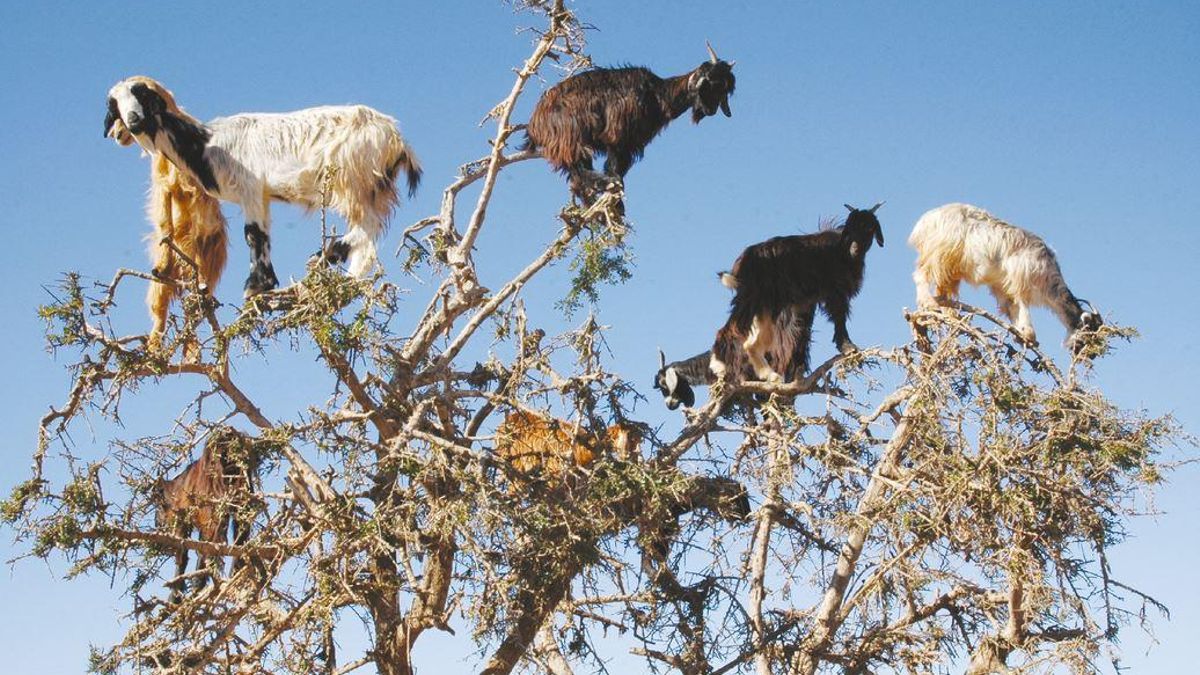
The goats' ability to ascend trunks and branches combines anatomical adaptation and human training. Their cloven hooves have soft, flexible pads that give them exceptional adherence to the rough bark. From the time they are young, Berber shepherds teach them to climb and prune trees to facilitate their movement between heights. In the autumn months, these animals can spend up to three-quarters of their day perched high in the canopy. The feast of leaves and sweet fruits rewards, however, the risky climb.
From the seed hidden behind the peel of the fruit, the sought-after argan oil, known as Moroccan liquid gold, is extracted. This elixir stands out for its high concentration of vitamin E and has three times more omega sixes than olive oil. Its exceptional nourishing and antioxidant power makes it a key input for the international cosmetics industry. Traditional extraction is a painful process that requires thirty kilos of fruit and twenty hours of work per liter. The product provides hydration and luminosity for the skin and hair. The global market demands tons of this valuable substance, which is why it sustains a thriving rural economic activity.
The commercialization of oil has generated a profound social transformation thanks to more than three hundred women's cooperatives. The project promoted by the researcher Zoubida Charrouf gave scientific basis and economic value to the work of Berber women. This initiative has enabled thousands of rural workers to earn a decent and independent wage. As a direct result, the female illiteracy rate in the region decreased dramatically. Mothers manage to send their children to school and improve family well-being. Women's economic empowerment strengthens the local community.
Supplemental images:

Fruits

Processing the seeds to make argan oil
all 2 comments