i only really made this so i can link to it on this post on my comment. whatever-


Explanation Time! ⏱

the idea here is that those "code blocks" aren't regular code blocks, but a special syntax which the LM writes so that the UI can present that as verifiable "hyperlinks" with exact text to the actual source.

so here, the LM specified exactly which lines it wants to highlight.

meaning: its not hallucinating, and if it is, you notice it because the highlighting is wrong or doesnt match at all.

we essentially use the LM as a "highlighter" rather than a regurgitator, making mistakes obvious and correct answers immediately verifiably correct, cuz u can see the source.

explanation done-


i like mockups. and godot. so here we are.

this uses the solarized theme which looks somewhat close to the claude theme they use. somewhat close.

whatever something something ai bad or whatever, is this what u need to hear? sigh

i hope u have a nice day <3

this is very much a post i first posted on the Qwen community but then i decided that this stuff doesnt belong on blahaj zone and moved it here... oh well.
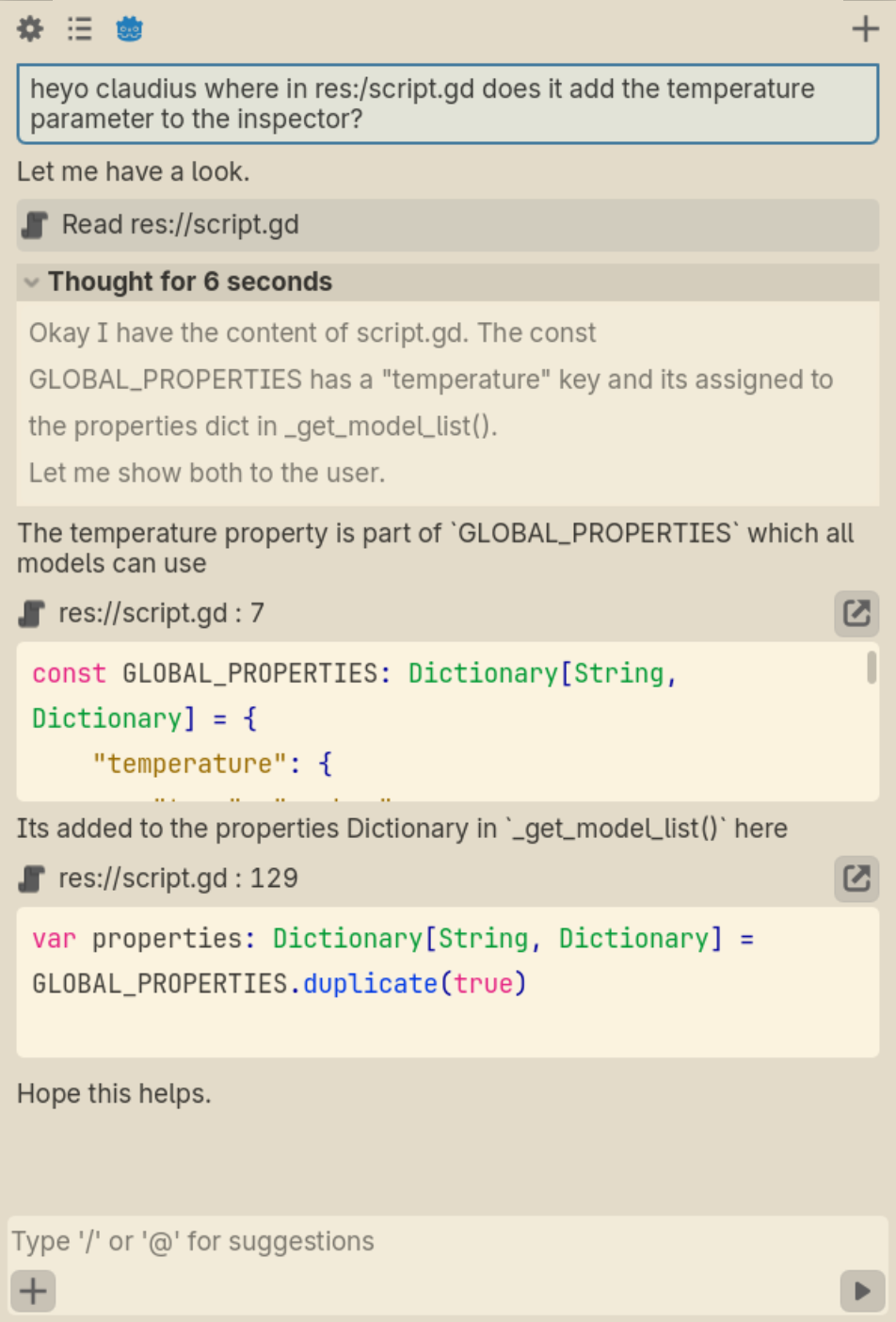
mockup made in godot game engine. shows conversation between user and language model. user asks to say where in a code file a "temperature" property is added. language model first calls read file tool, then presents the exact parts of where in the script the property is created and where it's added.
you are viewing a single comment's thread
view the rest of the comments
[–] 2 points 4 months ago (3 children)

What the LLM can do that grep can't is that it can find things by imperfect description. You need to know a text string that's exactly in the file to get grep/ack/etc. to locate it; you can be vague with an LLM and it may still be able to figure it out. It's the difference between searching for FooBarFactory already knowing the exact name and trying to find the file it's in (where grep, etc. are great) and "find the code that instantiates FooBar objects in foo project and tell me what it's called" when you don't know if it was FooBarManager or FooBarFactory or it's actually a function called make_foo_bar() instead of factory class or there are actually three different ways to do it because of legacy code.

  • source
  • parent
  • hideshow 3 child comments
  • [–] 1 point 4 months ago (2 children)

    So, a fuzzy search then?

    There's several command line tools for that too.

  • source
  • parent
  • hideshow 2 child comments
  • [–] 1 point 4 months ago

    More like a conceptual search. e.g. I've used my source code explorer to get a survey of how the template handling works in llama.cpp since the sample chat code doesn't apply the same logic that llama-cli actually does.

  • source
  • parent