you can't make the system better by voting. our rights were taken by force, not given to us willingly.
(anarchist.nexus)

Such as the Soviet Union. In fact, the term “tankie” was first coined to describe people who supported the Soviet Union sending tanks to crush the Hungarian Revolution
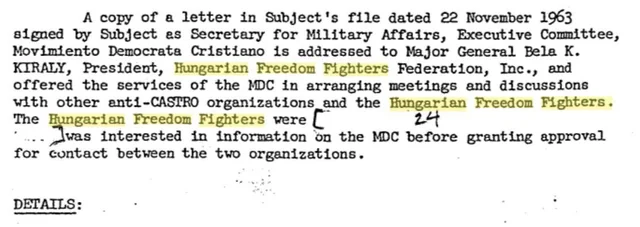
Not to be pedantic or anything, but wasn't the etymology of the word "tankie" vindicated recently when it was released by Trump that the leader of the Hungarian Freedom Fighters ended up being funded by CIA?
Regarding your point of Stalin controlling the Soviet Union and dictating whatever happened with the means of production, I actually have stuff to add: union membership was highest in the USSR than it's ever been anywhere to that point of history, with unions taking care of a lot of stuff such as guaranteeing workers access to housing and healthcare, organizing vacation, ensuring workplace safety, and obviously representing the will of workers: in every factory there was a factory newspaper where workers could submit their complaints or comments on the work organizing, and unions had the power to change the workplace director. As for sources of this, you can have a look at Pat Sloan's "Soviet Democracy", a book written by an Englishman who left the UK to go to the USSR in the Stalin era and lived there for about a decade; also Mick Costello's "Worker Participation in the Soviet Union", a book written after a series of interviews to workers all over the USSR by the author, published 1977 so a very different era, tells a lot about this. I think most of the misconception that "workers had no say in production" comes mostly from western anticommunist propaganda and isn't substantiated by any serious evidence. If you have any works contradicting what I've said above, I'd be glad to look into it.
Lastly, regarding your point of "Soviet Union being the end state of Capitalism and the enslavement of the working class to the owner class": who was said owner class?
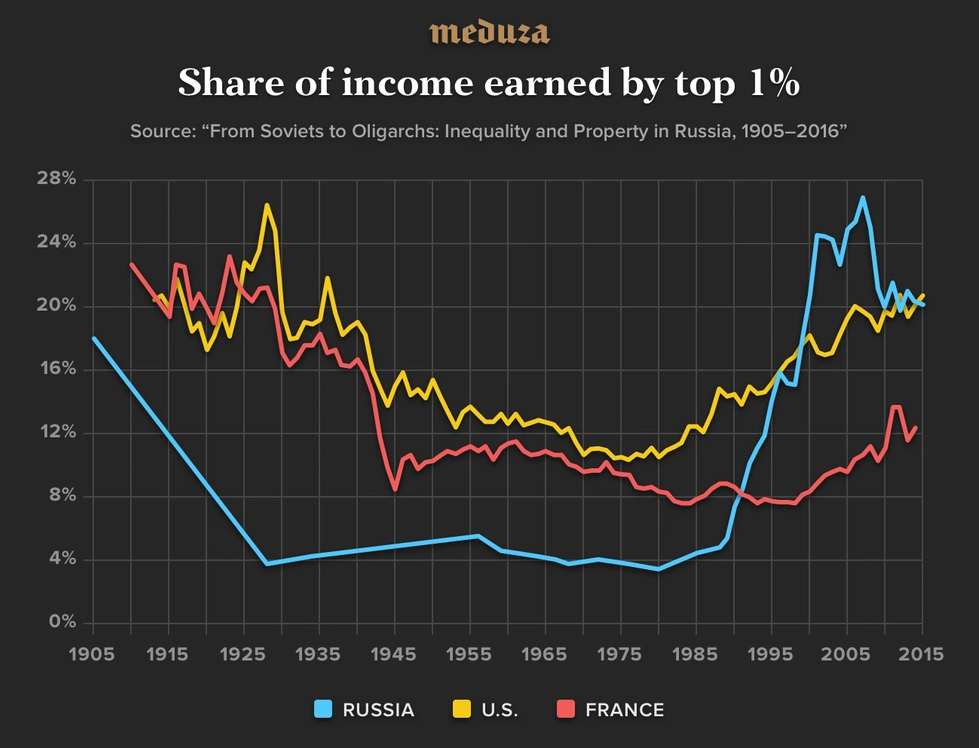
Source for the graph above, hopefully you know Meduza well enough to know that it's not very much aligned with socialism. Wealth inequality has never been lower in any Soviet Union territories as it was during the Soviet Union, not before, not after. In fact, wealth inequality was remarkably low compared to most capitalist countries (again as you see in the graph), and the highest salaries belonged actually not to politicians as you could expect, but to highly trained intellectuals such as University professors or military researchers (my sources for this are Albert Szymanski's "Is the Red Flag Flying" and Robert C. Allen's "Farm to Factory: a Reinterpretation of the Soviet Industrial Revolution). If there were an "owning class vs. working class" dynamic, wouldn't we expect high wealth disparity between workers and "owners", whoever they were? Why, if workers had no say over 70 years in industrial and economic production, was wealth inequality consistently at historic minima and not growing as is the case in proven class-societies such as capitalism (Russia post-1990 per the graph) or feudalism (Russia pre-1929ish per the graph)?