L take considering ChapoTrapHouse got banned from reddit for saying slaves should kill their owners.
comments
Spelling comrades wrong is the most correct part of this meme.
Asking a true southerner to think is like asking water to perform advanced calculus.
comment on
Gettys goes buuuuurg
I don't think I've ever met an English teacher that I would follow into battle.
comment on
Gettys goes buuuuurg
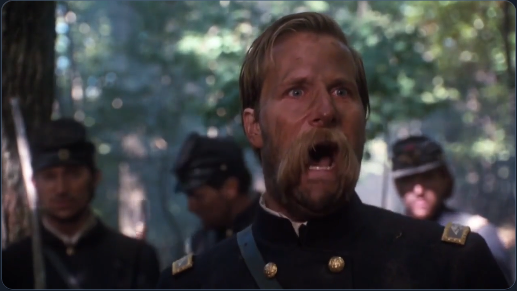
comment on
Gettys goes buuuuurg
Honestly, as far as "Mass call-up to defend the nation" goes, "rhetoric professor" goes hard as an officer candidate. Morale is half the battle, and they're already used to herding unruly young men!
comment on
Gettys goes buuuuurg
BAYONETS!
comment on
Gettys goes buuuuurg
Blows my mind every time. A rhetoric teacher from Maine as the hero of the Civil War.
comment on
Confederate 'law'
In other words the same 'law' that Trump and MAGA are trying to bring back. Make shit up and prosecute people we don't like.
There was more jurisprudence at a witch trial.
comment on
Something true
Because the Confederacy was against states' deciding things for themselves. They wanted to force other states to comply with their demands.
comment on
Thoughts and prayers for them.
Unite the right... What a name. That should do it, thanks!
comment on
Thoughts and prayers for them.
It is just something I read from who knows how long ago. I wish I could provide you with a source. I have no other information. Sorry ❤️
Maybe try searching what happened to known unite the right participants?
comment on
Thoughts and prayers for them.
Where is this from? Or any other searchable info?
comment on
Thoughts and prayers for them.
Not a bit I just don't know their actual names
comment on
Thoughts and prayers for them.
Okay, is this a bit or are they real people now?
comment on
Thoughts and prayers for them.
"Jayonnaise". Holy fuck, I'm dying. Lol!
comment on
Thoughts and prayers for them.
Fun fact that I am incapable of sourcing but read one time: Jayonnaise killed himself after getting caught smuggling fentanyl and Kensworth has reformed himself and makes some sort of content advocating against far right extremism
comment on
And yet they didn't learn a goddamn thing
People from the South whine about how cold it gets in the south. And how hot it gets.
Turns out, spending all your time in AC leaves you with a very narrow window of comfort.
comment on
Thoughts and prayers for them.
Truly brutalized by White Genocide 😭
comment on
Liberté, Égalité, Fraternité!
Son goes on to write one of the most famous novels ever
comment on
One of Lincoln's many burns
Explanation: US President Abraham Lincoln had a very contentious relationship with most of the commanders of the Union Army during the US Civil War. The US Army before the US Civil War was pretty small to begin with - that many of its officers defected to the pro-slavery South did not help matters. Lincoln was largely left with an officer corps which did not have the competence or experience to lead a modern war of the type and scale the US Civil War turned out to be. Some high-ranking officers, on top of that, were so bereft of competence that they did not even realize how incompetent they were, such as McClellan and Joe Hooker.
Lincoln, something of a wit and unafraid of violating 'usual' social etiquette, could make quite cutting remarks on the rotating band of idiots in the Union brass.
The Union's fortunes would improve significantly with the eventual appointment of General George Meade to command of the Union armies, a stolid and dependable officer who had proved himself in combat during the Civil War, and whom Lincoln respected. But the great saviors of the Union's military fortunes would ultimately be General Grant (who would come to command, amicably, over Meade) and General Sherman - both low-ranking pre-war officers who had left the Army and had dead-end civilian careers, but were vindicated in the US Civil War as some of the greatest military minds of their age.
comment on
"B-b-but don't you need our cotton???"
Explanation: In the US Civil War, a major component of the secessionist pro-slavery South was that the European powers - especially France and the UK, which were major purchasers of Southern cotton - would intervene on the side of the South in some manner. With Southern ports blockaded by the Northern navy, Europe was starved of cotton, vital for clothing and industry, making their intervention necessary! Only a matter of time, eh, fellow Southern gentlemen?
However, slavery was deeply unpopular in the UK and France at the time, despite their reliance on Southern cotton. Both the UK and France had elites who were in favor of the South winning the Civil War, but were reliant enough on popular opinion that they could not risk outright support of the South without getting ousted from government. The UK - a parliamentary democracy - more than France - a strongman dictatorship, effectively, under Napoleon III at the time.
Once the North made the Emancipation Proclamation, establishing the fight as not merely the South supporting slavery, but the North, furthermore, explicitly coming out against it, public opinion in France and the UK became so pro-North that all hope of recognition became a distant memory as the North ground the South into dust over the next two years of war.
On top of that, the UK just started growing cotton en masse in Egypt and India in response to the war.
comment on
Based Lincoln quote
As Marx once said,
They [European workers] consider it an earnest of the epoch to come that it fell to the lot of Abraham Lincoln, the single-minded son of the working class, to lead his country through the matchless struggle for the rescue of an enchained race and the reconstruction of a social world.
Lincoln's presidential administration was, unfortunately, dominated by the ongoing issue of the US Civil War and race relations, but even in the midst of that, he still took occasional time and effort to defend the rights of labor unions and workers for basic protections against capitalist abuses. He was not quite an anti-capitalist, but he was also very far from pro-capitalist, regularly expressing distrust of the investor class and its ambitions, and emphasizing that it was labor which the government must support over owners of capital.
Lincoln had plenty of flaws, especially with the benefit of a modern worldview to examine him by, but on the vast majority of subjects, Lincoln was significantly more correct than most of his peers.
comment on
Based Lincoln quote
Oh my God how can one man be this based?
comment on
Based Lincoln quote
When Lincoln was an Illinois state legislator, there was a dispute over the state bank, wherein a couple of wealthy capitalists made outrageous claims of abuse by the state bank that resulted in ambiguity over ownership in their own property, but refused to go through the courts with their claims. The rich folk instead opted to ask the state legislature to perform an examination, which was estimated to cost the state of Illinois over ten-thousand dollars - a few million dollars by today's standards.
Lincoln, himself a lawyer by trade, objected, noting that the usual route was to go through the courts, wherein the loser of the case would pay the costs, but that the rich folk disputing this case were trying to shift the cost of their dispute onto the public coffers, and to put it in the hands of a body which would have the power to shutter or cripple the state bank if they found the case favorable - conveniently leaving private capitalists as the only source of much-needed credit for the poor farmers of Illinois. Lincoln made a speech laying this out pretty clearly and telling them, basically, to fuck off, if they had an actual problem, they could go through the courts instead of trying to play games to eliminate public competition.
The state bank would be shut down by the legislature a few years later, under pressure from a hostile conservative party in the legislature (which piled impossible tasks and ever-restricted resources on the state bank in the meantime to 'prove' it couldn't function), the governor of Illinois, and the Federal government of the period.
view more:
next ›