1
posts
2

3
Hello everyone, I was in my basement a little while ago and saw this pile of soap suds coming out of what I believe is the sump?
This hasn't happened before, but i think it's relevant that we've got a baby so I'm washing a fuckton of bottles and using a fuckton of soap. Could that cause this?
If it's not that, how concerned should I be? Thanks in advance


4
Original post (Thursday, April 30th):
Hello, c/plumbing, I'm back for another round of troubleshooting and need your help again, please.
Background: Yesterday my water heater stopped putting out hot water. Since I own my home, I decided to troubleshoot on my own before I call a professional plumber.
Ninja Edit 1 (additional background): Yesterday when we first noticed a problem, we were getting room temperature water, just warm enough to shower but still somewhat chilly, like the temp you get when you're about to run out of hot water. As of today, our "hot" water isn't even room temperature anymore, it's the same as our cold water (noticeably cooler than it was on Day 1).
(back to the original post)
What I've tried so far: With power turned off, I removed the cover panel and checked the reset button on the top thermostat, but it was not tripped (no click), so today I picked up a multimeter and tested resistance and continuity on both heating elements as demonstrated in this video. Both elements passed both tests - the resistance tests read between 12.7 and 12.9 ohms, and the continuity tests beeped. I also did a ground test, which read no resistance. So far, so good.
Where I'm stuck: At the electric panel I flipped the power back on for my water heater so I could do a voltage test at the thermostats and heating elements as demonstrated in this video. Even though my no-contact voltage tester detects hot wires (first photo), with the multimeter probes touching the topmost screws on the thermostat and/or the two screws for the heating element (second photo) my multimeter reads 0.0 volts in AC voltage mode (third photo). I've tested the multimeter on an electrical outlet and confirmed it reads 124 volts as expected (fourth photo), so I think the multimeter itself is functioning properly. I tried switching the probes, which made no difference (as expected b/c AC).
Any pointers on what I should try next? Since the multimeter doesn't read any voltage at the top thermostat, I'm not sure if this indicates an issue w/ the thermostat or if my testing process is flawed. Thank you!
Photos:


Ninja Edit 2 (more photos from my original testing):
I've also touched the multimeter probes to the screws on the heating element even though I originally only posted photos showing me testing the thermostat - here are the two additional photos that I should've included in the OP:


Edit 3 (terminal-to-ground tested each terminal individually + more photos):
I went back out there and re-checked each terminal individually (terminal to ground) for the top and bottom thermostats and heating elements. In all cases, readings came back between 124 and 126 vac.


I appear to have reached the limit for image uploads on a Lemmy post, but I also terminal-to-ground tested the other terminal for the top heating element and repeated these same tests for the bottom thermostat and heating element, and all of them show between 124 and 126 vac.
Where to go from here:
From these tests I believe I can conclude that all of the components (both thermostats and heating elements) are at least receiving power from the grid, although I am perplexed as to why when I connect both multimeter probes to both terminals at the same time, the multimeter reads 0 vac, which seems different from the second video that I linked above (here's that link again).
Given these latest test results and the fact that both heating elements passed earlier continuity tests w/ the power off and wires disconnected, any ideas what to check next? Is it time to just replace all four components and see if we get our hot water back?
Edit 3.1:
I'll look again for a rogue light switch and check the individual wires and if necessary the conduit cabling as suggested in the comments, then I'll report back. I do have an appointment that I need to scurry off to at the moment, but I'll get back to this in a few hours. Thank you!
Edit 4: After testing the individual wires at the top thermostat, there appears to be a fault somewhere between the top left wire and the circuit breaker. I tested at the circuit breaker and measured normal readings (125.4, 125.7, and 250 vac), so my next step is to investigate under the conduit on top of the water heater like Cataphract suggested. I want to thank everyone for getting me to this point. Your support has been amazing, truly beyond words. I'm about to call it a night tonight, then tomorrow I'll pick up where we left off and continue updating this thread. Thanks again!
Edit 5 (Tuesday, May 5th - after being visited by the electrician):
On Saturday w/ the power off and both wires disconnected from their respective terminals at the circuit breaker and the water heater, I checked for breaks in the wires between the circuit breaker and the water heater, which are about 20 feet apart (ordered some extension leads specifically for this test). In resistance and continuity modes the multimeter shows open line for the white wire and good line for the black wire, after which I'd reached the limits of my ability/desire to continue troubleshooting, so I called and scheduled an electrician to come out on Tuesday (today).
Fast forward to today (Tuesday), electrician comes out, I explain that my multimeter reads 0 vac at the thermostat and detects an open line on that white wire, so I believe it to be a power supply issue. He disagrees w/ my diagnosis, thinks a bad element could cause 0 vac reading at the thermostat, and recommends sending a plumber. The plumber is under the same roof as the electrician, and this company has decent ratings on Yelp, so despite my skepticism I accept his recommendation to have the plumber come out and take a look.
So the plumber is coming out later this afternoon. I'll explain the situation to him and if he agrees w/ the electrician that it's likely an issue w/ the thermostat and/or heating element, I'll let him do his thing and then either we'll have hot water (hallelujah) or we won't (boo).
Stay tuned...
Edit 5.1: Holy shit, we back, baybee let'z gooo!
Okay, so while the electrician was here, he inspected the wire connections on top of the water heater and noted that the wires were not braided, so he re-did them for me and put the caps back on. I fessed up to having disconnected them and putting them back wrong during my troubleshooting adventures. Keep in mind that at this point, I had thought the issue was with the white wire itself, and he thought the issue was one of the heating elements, so neither one of us thought to test the hot water after he tweaked that.
Fast forward 90 minutes, I go wash my hands in the bathroom, and after 10 or 15 seconds I notice the water's getting warm. I immediately run upstairs to test the shower, and holy shit, it's working! She's alive!
Literally me:

I must admit that I'm still perplexed b/c I thought I had ruled out that connection point as a possibility when I tested each end of the white wire from the circuit breaker to the top of the water heater for continuity, but if there has ever been a time when I'm glad to be wrong, this is it.
I would like to once again thank @Darkassassin07@lemmy.ca and @Cataphract@lemmy.ml for their invaluable advice and support. And I would be remiss if I didn't also thank my gf for her patience while we rode this out - in Cataphract's words, an absolute saint! 😘
5
Original post:
So I'm on my way to the store to pick up a voltage tester b/c our showers have been noticeably room temperature today. We own our place so I'm attempting some basic DIY troubleshooting steps before I call a plumber. Found this 4-minute video guide to resetting an electric water heater. At 2:30 into the video, right after the plumber removes the cover plate and insulation, the white plastic cover in the video has two holes, and the top hole supposedly has a big red button to reset it.
I've already flipped off the circuit breaker and removed the metal cover plate. The problem is, on mine the white plastic covering on the thermostat only has one hole, there is no big red reset button on my thermostat. Any tips on where else to look for the big red reset button? If it makes any difference, I am located in the US, and I believe the brand of my water heater is State Select, model number ES652DORT 210.
Side question - should I take steps to protect myself against the outer insulation wrapped around the overall water heater? I kinda just went in there guns blazing and didn't think about gloves, masks, etc.
Photos:


Thanks in advance for everyone's help!
EDIT: Today I learned there are two thermostats, and the big red reset button is on the top one! Unfortunately, pressing it did not click like I was hoping. This leads me to believe I have a bad heating element as suggested in the comments. My next step is to get a multimeter so I can check continuity, resistance, and amperage. Thanks to those who have weighed in so far.
Photos of the top thermostat:


6
7
geteilt von: https://discuss.tchncs.de/post/57229837
Hello! My bathroom faucet has an insert aerator. We attempted to remove it in order to remove the chalk in the faucet, and broke the bottom part off as a result. The keys we have to remove the aerator are now not working, and we can't quite get it out.
Does anybody have any suggestions? We've tried using thin pliers for electronics to grab it and twist, but we can't get a good enough grip. A few photos attached: the remaining part inside the faucet, the broken off bottom part, and the keys that we have.


8
9
This plastic hexagon piece keeps coming loose and causing water to flow down the pipe under the sink.
(lemmy.world)
It's happened twice now. I figure I maybe didn't tighten it enough last time so I went a bit harder this time. Any idea if something else might be wrong? My complete amateur theory is that the hard water buildup is making everything stiff down there, so that rotating the faucet also rotates this piece.
Thanks for your help!

10
One of my shut off valve need to be replaced. It's a metal valve in a copper pipe.
A plumber proposed a solution, by adding plastic fittings on both ends of the valve.
The plumber said the finished project would be like this (from his previous job at another customer's). (see the fittings in blue circles).

I don't know a lot about plumbing code, so I'm seeking advice here. Is it a common practice to add plastic fittings like this?
I'm in Ontario, Canada. Thank you very much 😊
11
12
13
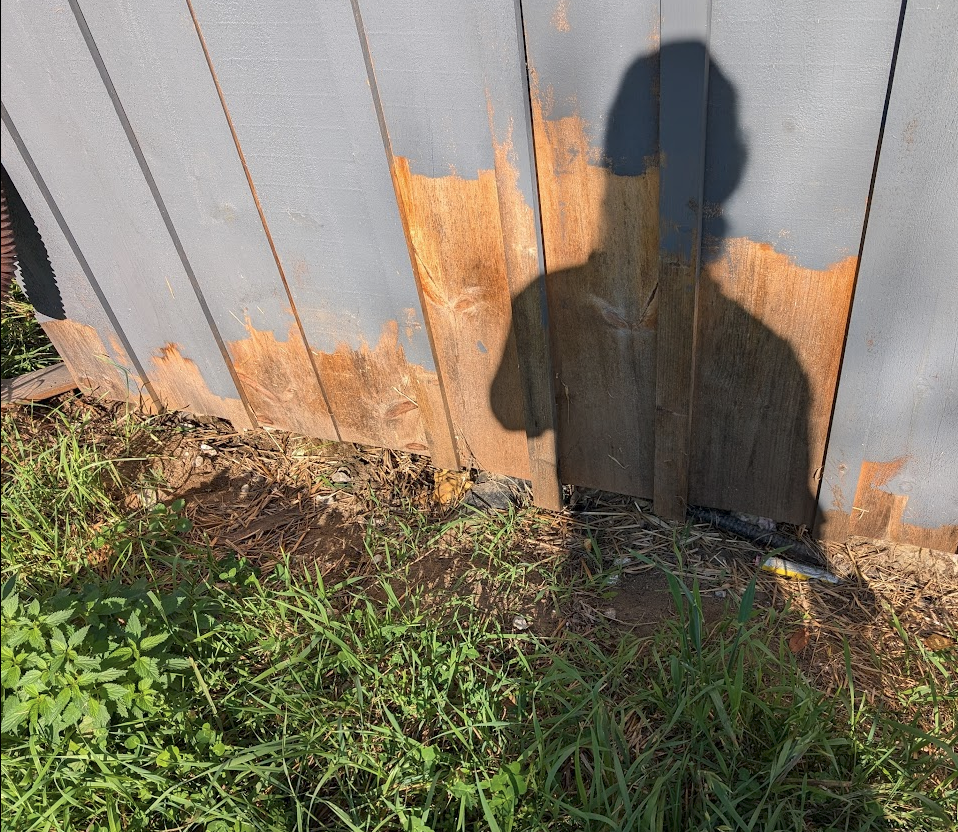
You can just see the top of the drain pipe sticking out to the left of the shadow.
The contractor that built this addition had a little decorative box there so I never saw this until now. It lasted through two winters with that little box and a bale of straw that was put there for unrelated reasons, but I feel like that was dumb luck.
What would you do? Keeping in mind a tear-out and replace is out of the question before spring now.
Thanks,
14
I live in a condo (40ish yo) and recently a neighbor in an adjacent building had a leak and the board suggested that everyone have a plumber come inspect their units. I just inspected and found various levels of corrosion at most joints with the included photo the worst looking of the bunch.
How concerning does this appear?

15
The nut broke off and had a small red ring/gasket between these connectors. I'm an noob but can follow instructions. Please give suggestions. Thanks
Below there is a water valve  which may be used as an alternative if the above (cupper?) pipe is inconvenient to use.
