1


On an unseasonably warm January day, Duff Hallman’s goats and sheep wandered unhurried through the rocky hills of his ranch 30 miles south of San Angelo, Texas, unbothered by the long shadows that swept over the ground. The shadows fell from wind turbines towering 250 feet above, their blades spinning like clock hands over land that has been in Hallman’s family for four generations. From a shady spot in his backyard, Hallman can almost nod off watching them turn. “It slows your pace down a bit,” he said.

At 74, Hallman still feels honored to work the 9,200-acre ranch he owns with his brother and sister, sometimes putting in as much as 15 hours a day. The labor starts at dawn — mending fences, clearing pastures, tending horses and livestock — and is far from lucrative. He doesn’t do it for the money, but out of gratitude to those who kept the ranch going before him. “Somebody worked their tail off to make it happen,” he said. “And I have worked my tail off, too.”
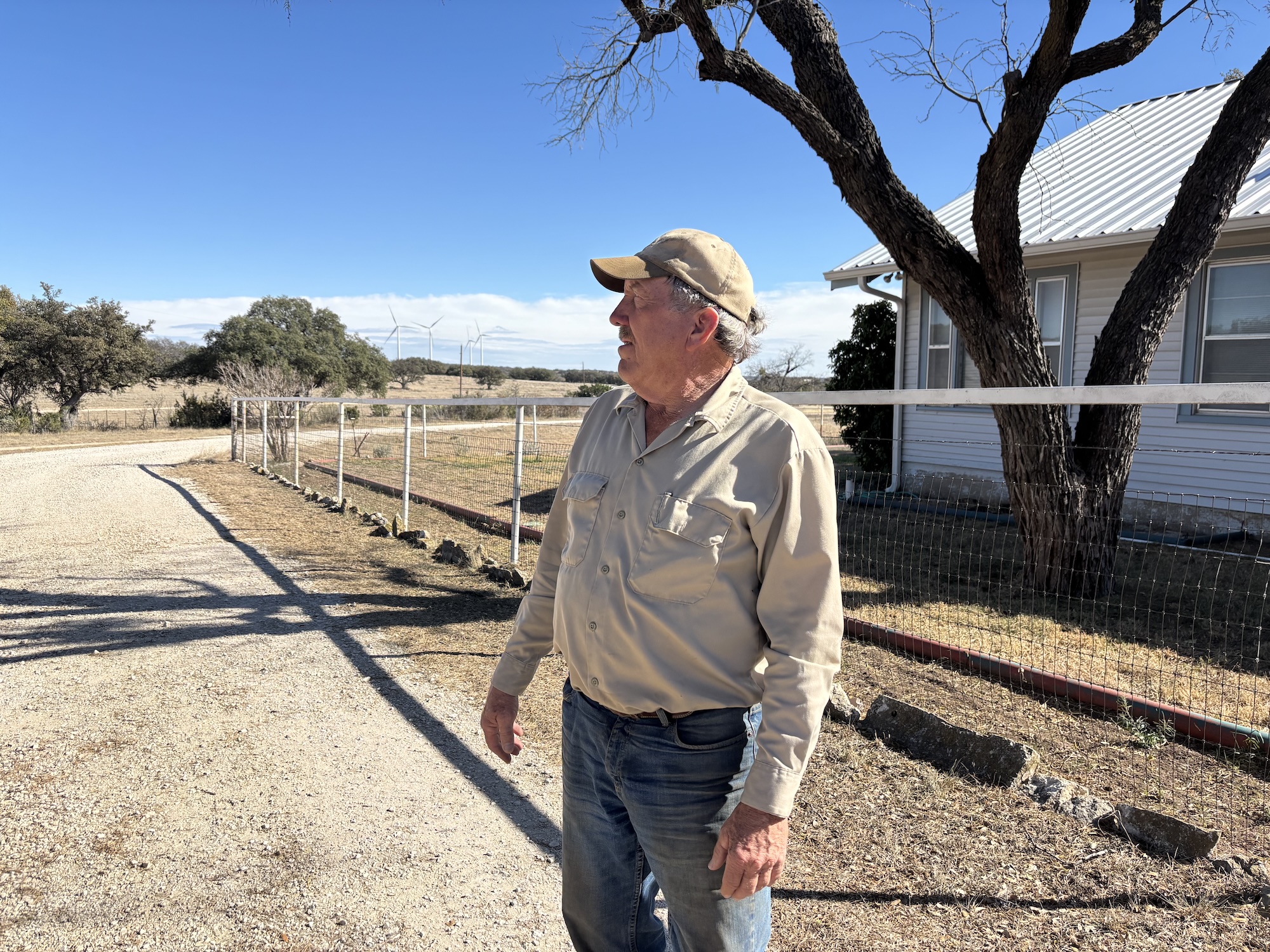
A man in a baseball cap and button up shirt stands on a rural road

Duff Hallman stands on his family ranch, which he owns with his siblings. In 2007, they signed a lease with a clean energy company to bring new revenue. Laura Mallonee / Grist

Standing beneath a live oak, his ballcap shielding tired eyes, Hallman spoke of bluebonnets that carpet the pastures each spring and moonrises that “knock your socks off” — one so bright he thought it was a spaceship. His great-grandfather Sam Henderson, a Texas Ranger, bought the land in 1916; it straddles Tom Green, Schleicher, and Irion counties about four hours west of Austin. Hallman spent his childhood summers there, learning his way around.

He took over after his grandparents died in 1975 and set to work — rebuilding pens and corrals, cutting cedar and mesquite, tending livestock. In the early 1980s, an oil company drilled 15 wells, and the Hallman siblings prospered. “That was a good time,” he said. “They were trying to get it out of the ground as fast as they could.”

But within a decade, the oil began drying up and federal wool subsidies vanished. Suddenly the ranch felt fragile. They needed a new revenue stream — something that might soften the hard years and help keep their children on the land after them — and in 2007, they signed a lease with a clean energy company. They hadn’t even heard of wind rights when the landman called. “We just thought the wind blew across the surface,” Hallman said.

For roughly six months, workers uprooted stones, bushes, and trees; carved 53 miles of road through the hills; and poured concrete slabs for 33 steel towers. The land thrummed with constant motion and dust choked the air. As Hallman watched his ranch transform, he worried that he’d made a mistake.

Little did he know, he had glimpsed the future.
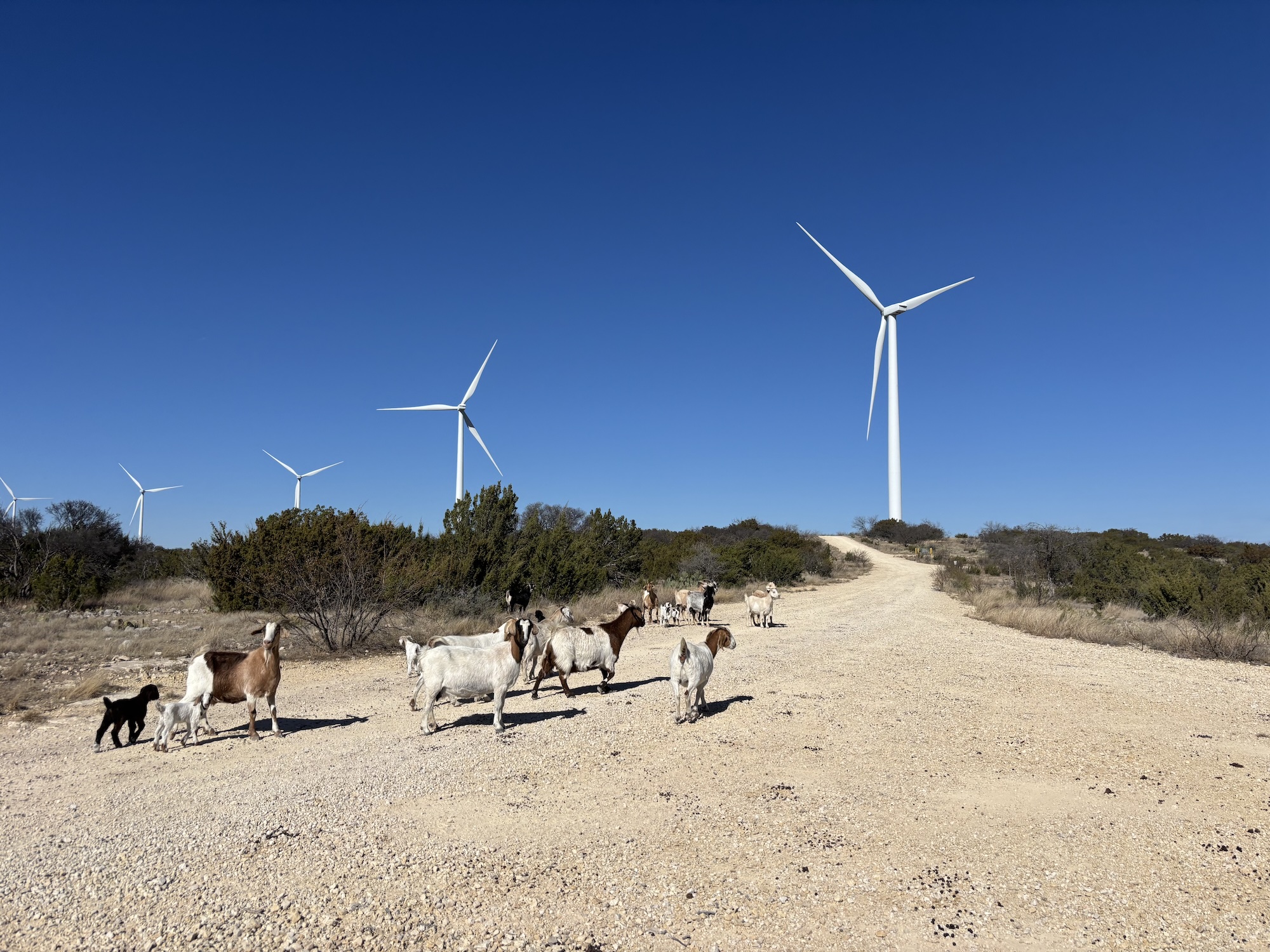
a small herd of goats walks on a path near wind turbines

Goats wander across a caliche road on Duff Hallman’s property, which hosts 33 windmills that form part of the 160 MW Langford Wind farm. The facility began operations in 2009. Laura Mallonee / Grist

Hallman’s doubts reflect a larger reckoning underway in West Texas. Over the past two decades, rural counties that helped meet the nation’s demand for oil have become unexpected linchpins of its clean-energy buildout. Pumpjacks now stand alongside wind and solar farms drawn in part by open range and generous federal incentives. For Schleicher County, where oil production has waned and the tax base dwindled, “renewables” have taken on a double meaning, offering the promise of fiscal stability in a place desperate for economic rejuvenation. But that promise is now complicated by the Trump administration’s rollback of clean energy policy and many of the incentives that fueled the boom.

Texas has been one of the biggest beneficiaries of the Inflation Reduction Act, or IRA. During the three years after the legislation passed in 2022, developers invested some $62 billion in clean energy ventures statewide and announced billions more in planned construction. Projects already constructed or proposed in Schleicher County — including a hydrogen facility once estimated to bring $1.2 billion in tax revenue — were forecast to generate tens of millions for schools, hospitals, and other services.

But those projections rested on one key assumption: The federal tax credits at the heart of the IRA would remain in place. The law expanded and extended earlier incentives through 2024 and established a new system of credits to begin in 2025. This federal support — including additional incentives for installations built in low-income communities and regions with a history of fossil fuel extraction — could cover up to 70 percent of a facility’s cost.

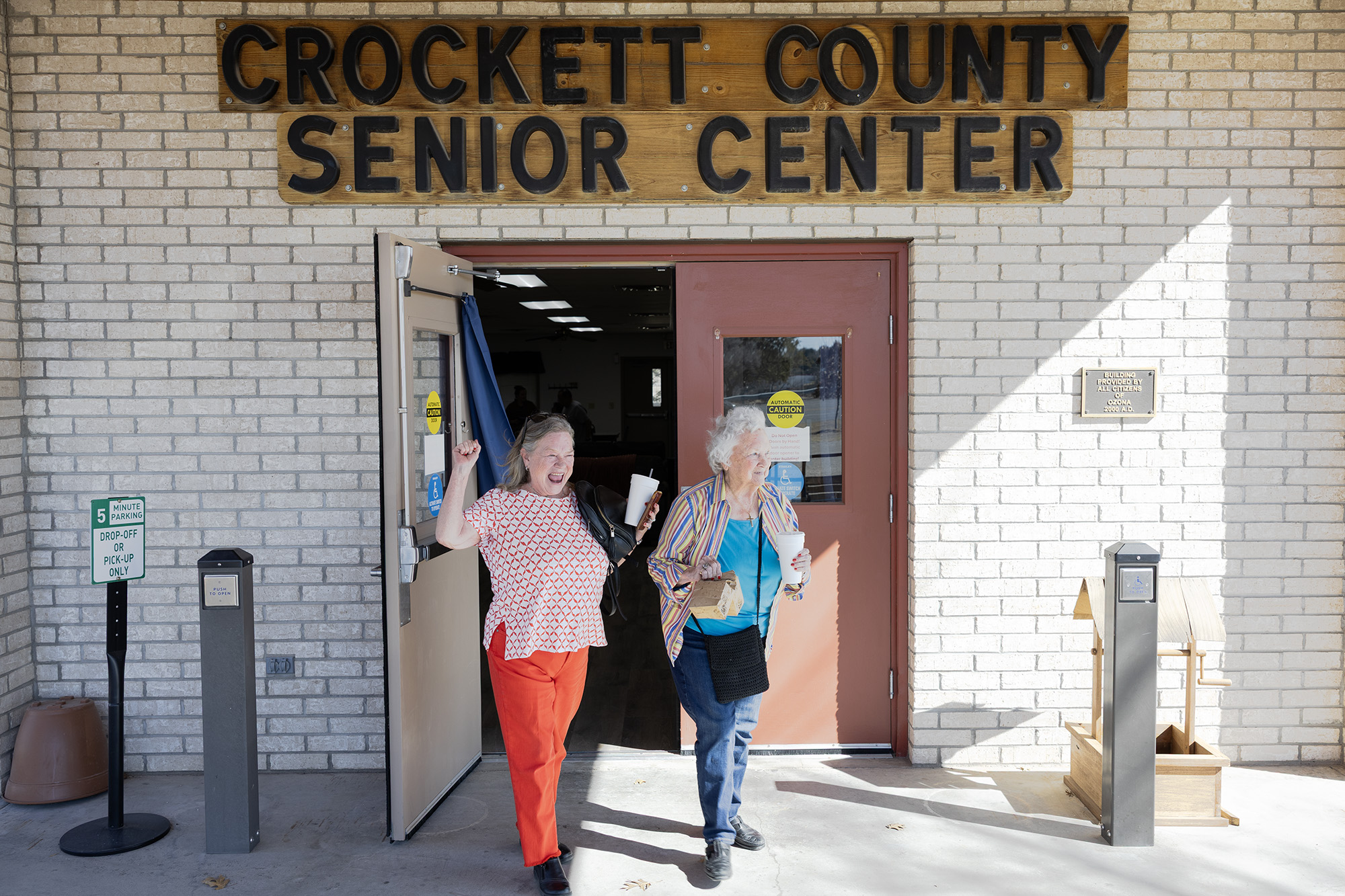
Read NextTwo older women walk gleefully out of a building labeled Crockett County Senior CenterIn rural West Texas, renewable energy brings a windfall for seniorsBekah Stolhandske McNeel
Before the cuts, governments and landowners across Texas stood to collect nearly $50 billion in lease payments and tax revenue from current and planned projects, according to one report, with roughly three-quarters of counties positioned to benefit. Now, many of these developments — and their hoped-for revenue — face a precarious future. More than $4 billion in investment has already been threatened or cancelled. All told, the about-face could eliminate thousands of jobs and shave $20 billion from the state’s gross domestic product by 2035. The climate consequences are equally stark, adding roughly 83 million metric tons of carbon emissions to the atmosphere by some estimates.

One county illustrates what has been gained by the boom — and what could be lost with its passing. Scurry County, about two hours northwest of Hallman’s ranch, is one of the largest producers of renewable power in West Texas. Companies have built roughly a dozen wind and solar farms, with a total capacity of about 2,300 megawatts of power; they are projected to generate nearly $1 billion for the county and local landowners over the facilities’ lifetimes.

County Judge Dan Hicks said clean energy helped stabilize a budget long whipsawed by volatile oil and gas revenues. Some years, without a steady income stream, local officials faced the prospect of closing the library, the youth center, and the golf course. Renewables helped change that. Abatement agreements with developers created reliable, long-term payments that don’t fluctuate with the market or vanish when a manufacturer leaves town, Hicks said. Jobs have been slower to follow, but a support industry is beginning to take shape around the installations. “When your population is 17,000, every job counts,” he said. Eventually, he said, “I’d love to see us become the energy capital of Texas.”

He doesn’t think new wind and solar will come without federal incentives. Yet Joshua Rhodes, an energy researcher at the University of Texas who has studied the IRA’s impact in Texas, anticipates development continuing — albeit more slowly, and at greater cost. That likely means pricier electricity and slimmer returns for rural counties hoping to share in the growth. How much of it will materialize now is uncertain.

Schleicher County Judge Charlie Bradley looks out the window of his cluttered second-floor office in Eldorado, the sand-colored farming town he’s known all his life. The old filling station on the corner, where he pumped gas in high school, has closed. So has the wool warehouse a few blocks south, where he helped process yarn in middle school.

Just north of the courthouse, the yellow-brick elementary school shows its age. Water pools in the basement and leaks through the ceiling, and, as one teacher said, “a lot of the rooms stink.” At lunchtime, kids from the high school next door spill into the surrounding neighborhood, a mix of small houses and mobile homes. A washing machine rusts on one porch. Yards collect trailers, cars, and piles of brush, though many assert pride with Texas stars, decorative windmills, and Christmas lights still twinkling in January.

Bradley grew up here in the 1960s and ’70s, when Eldorado was prosperous enough to support several family-owned groceries, stores, and restaurants. He set out for Texas Tech University and dabbled in six subjects before settling on photography. (“Best seven years of my life,” he said.) After returning home, he ran a portrait studio for a decade, then spent another 10 years chasing storms as an insurance adjuster. He was in the middle of one in 2007 when the retiring county judge called to suggest he run for the job. Bradley said he didn’t know a thing about governing. “Well hell, Bradley,” the judge replied, “Nobody does. If they did, they wouldn’t run.’”
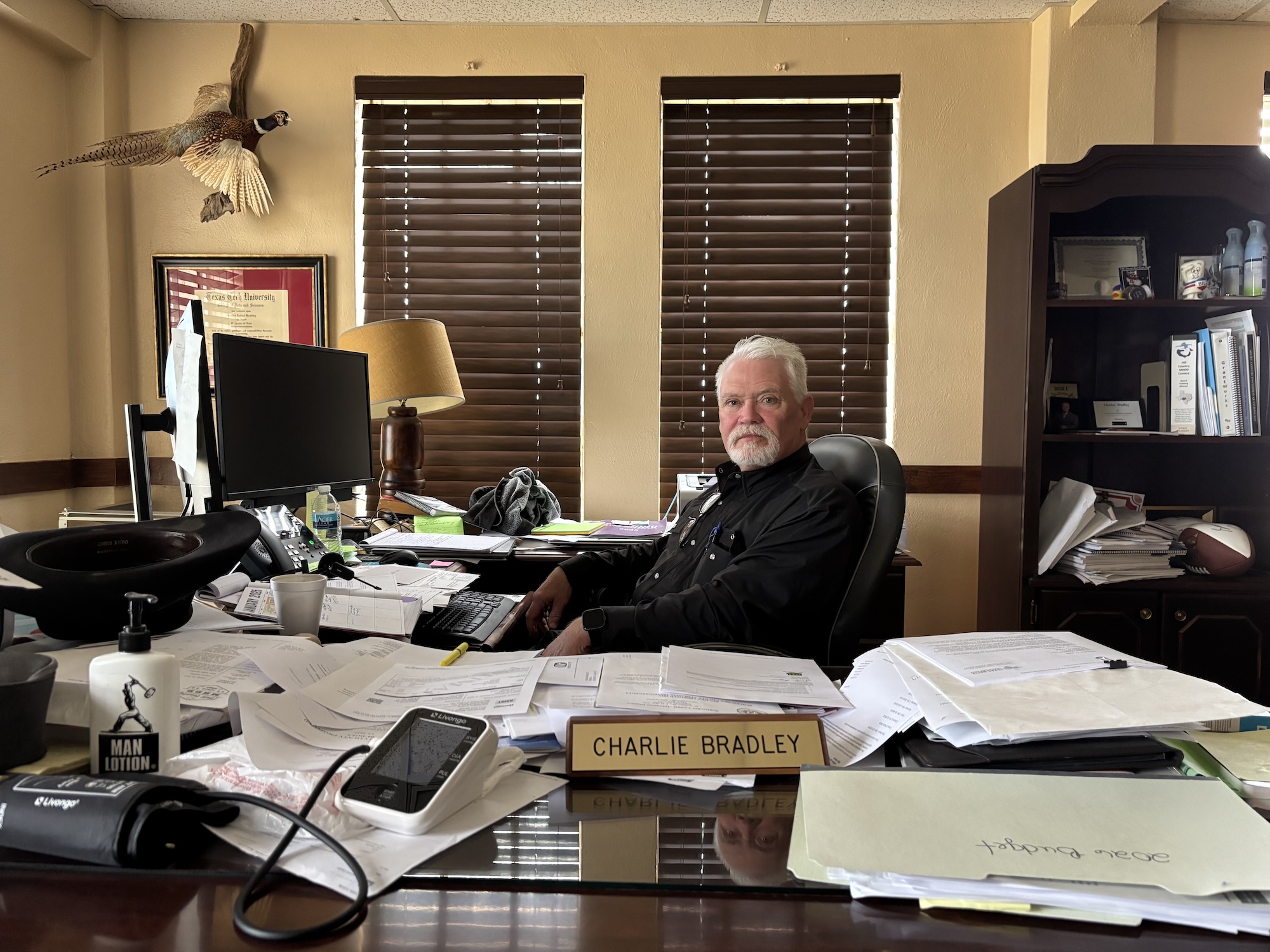
A man sits behind a desk with nameplate for Charlie Bradley

Schleicher County Judge Charlie Bradley sits at his desk in what he calls “the messiest office” on the second floor of the courthouse in Eldorado, Texas. Bradley has held the job since 2009 and is running for reelection unopposed. Laura Mallonee / Grist

By the time Bradley took office in 2009, the county was reeling from the decline of the fossil fuel and sheep industries. Then came fresh blows. A fundamentalist Mormon sect that was the county’s fourth-largest taxpayer was prosecuted for child marriage and lost its property in 2014, putting a sizeable dent in revenue. The next year, the Baker Hughes oilfield services yard — which employed about 80 people — shut down. With property taxes already near the legal ceiling, Bradley had to trim about $300,000 from the budget, hitting roads, bridges, and a meals program for the elderly. Much of what remained of the fossil fuel economy eventually left, too, though a Kinder Morgan gas pipeline announced in 2019 has boosted the tax base. The population has fallen from roughly 3,500 in 2010 to about 2,300 in 2024.

Today, the county runs on $9.3 million. Things are so tight there are just two workers to cut all of its grass, and Bradley has been known to climb on a mower to help out. “It’s real relaxing,” he said. “You can’t hear the phones.”

Renewable energy has provided a modest lift. The 160-megawatt Langford wind farm, which stretches into Schleicher County from an adjoining county, came online the same year Bradley took office, offering a bit of relief amid the losses; it now pays the county about $35,000 annually. The 100-megawatt Live Oak wind farm was built in 2018; in just the past six years, it has contributed nearly $16 million in taxes to local governments, including $7.2 million to Bradley’s budget. A 430-megawatt solar farm rising nearby could add about $225,000 to his budget each year.
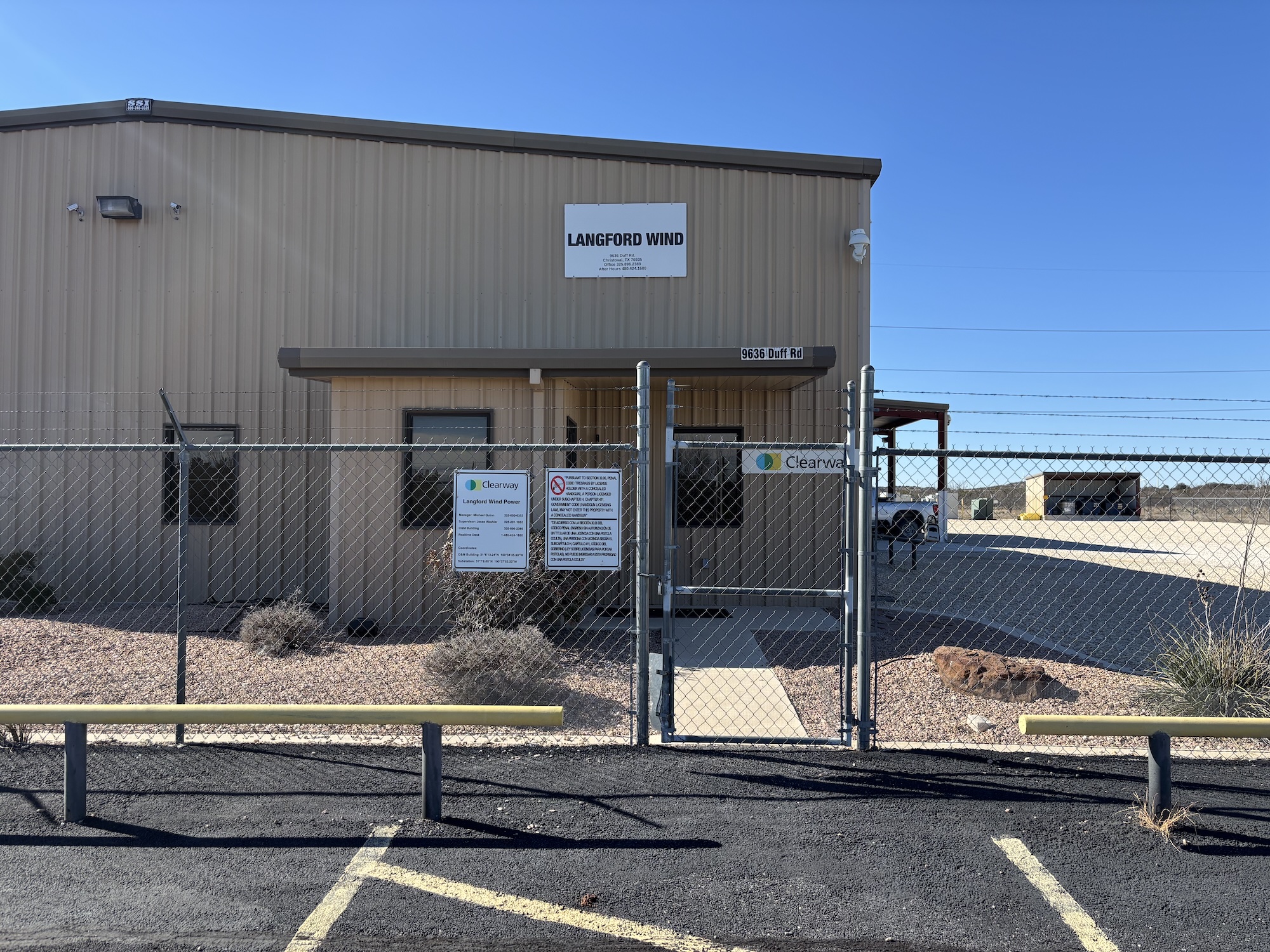
A building with a sign for langford wind beyond a wire fence

An operations building for Langford Wind in southern Tom Greene County. The project’s turbines spread across Tom Green, Schleicher, and Irion counties. Laura Mallonee / Grist

Still, Bradley remains clear-eyed about green energy’s limits. Several companies have signed agreements without ever breaking ground, and those that did haven’t replaced what oil and gas once provided. The projects employ only a handful of workers — nothing like the number the oilfield service yards and gas plants once did.

The modest financial gains have come with friction. Some ranchers, tired of what Bradley called “scraping out a living on six inches of topsoil and rock,” want the money clean energy developers pay to lease their land. They also hope the revenue might help Schleicher County avoid the fate of neighboring Menard County, one of the state’s poorest. Others resent having their tax dollars spent on federal incentives for what they call “alternative energy.” Bradley said he has been asked, “Why in the hell do we want all that stuff? This is ranching land, and it’s always been ranching land.”

The flashpoint came in 2023, when ETFuels began leasing rights for a 500-megawatt wind, solar, and battery complex that would also produce hydrogen to make methanol for shipping — a larger and more complex industrial endeavor than anything Schleicher County had seen before. For many residents, the problem wasn’t the size, but the water. The plant would draw from the Edwards-Trinity Aquifer, the county’s only source, and no one could say how much could be spared. The first exploratory wells came up dry; later ones struck water. The question filled the civic center with tense, packed meetings. But under state law, Bradley had no ability to intervene in the landowner’s drilling. “I can’t tell him what to do with his land,” he said.

ETFuels never broke ground, but something even bigger emerged. In December of 2024, Apex Clean Energy pitched a wind, sun, battery, and “green” hydrogen facility that would produce enough energy to power 700,000 homes and create 90 full-time jobs. This time, the water would come from another county. A presentation outlining the benefits left school board members speechless: The operation would provide as much as $1.2 billion in property tax revenue over 25 years, including $20 million a year for the school district, enough for a new elementary school. In November, the board put a bond package to voters, hoping the Apex project would pay for it. (The measure ultimately failed.)

Apex appears to have scuttled plans to produce hydrogen in Schleicher County, though it’s not clear why. The company, which declined to comment, last promoted the project in June, just before President Trump signed the “One Big Beautiful Bill Act” into law. Among other things, that legislation rolled back the production tax credit of up to $3 per kilogram for clean hydrogen. Experts like Rhodes at the University of Texas doubt many such projects can be viable without it.

Bradley won’t speculate about lost or future revenue. “That egg is not in my basket,” he said. What is in his basket lies just beyond his office window: an elementary school with a leaky basement, two men mowing all of the county’s grass, and a community that’s spent decades waiting for something to take root.

IIf Bradley can see the changes that have come to Schleicher County in recent years, Sandra Pfeuffer can hear them. The sound carries across ranchland where her family once expected only the lowing of cattle.

Her father-in-law leased wind rights on his ranch in Eden, a town in neighboring Concho County, to a renewable energy company in 2008. He did so, Pfeuffer said, because he was dying, and paying estate taxes would have required selling off part of the ranch. Nothing came of the deal, but a decade later, her husband Ray signed a lease with Maverick Creek Wind Farm, which was built in 2020. “It was the worst decision we ever made,” Sandra said.

The four turbines hummed so loudly, and the transmission line buzzed so persistently, that she couldn’t sleep during visits. “I’m not going to lie — mailbox money is great,” she said. “But the mailbox money will never cover the loss of the enjoyment we had in that ranch.”

Pfeuffer is now fighting the rising tide of clean energy developments in eastern Schleicher County, where she lives. She isn’t blind to the irony of her stance. Ranches are dividing all around, she concedes, and times are changing. But she has come to see such projects not as progress but as a threat to the only life she’s wanted. “As a rancher, I feel kind of like a quail,” she said. “Everything’s after you, and it’s only a matter of time ’til you die.”

When ETFuels began drilling wells on her neighbor’s land in 2023, she led the charge against it. She worried about what might be lost beneath the surface. “My fence doesn’t go underground and separate your water from my water,” she said. “It’s wrong for my neighbors to pump half a million gallons a day and cut my water away from underneath me.” (A representative of ETFuels told the county’s water board it could use about 220,000 gallons per day.)

The next year, the Pfeuffers gathered fellow ranchers around their dining table and formed the Edwards Plateau Alliance to “counteract misleading narratives” about renewable energy. Sandra organized meetings, brought in outside critics, and pressed lawmakers to protect groundwater from hydrogen development. “[Companies] go into communities that need a lifeline and they promise the world,” she said. “The money is not worth the peace and beauty that they take away from your property.”

A visit to their 3,300-acre ranch shows what she believes is at stake. A few miles from the turnoff from the main road, a sign reads: “Wind Turbines Destroy Land Value.” Beyond the stately, white farmhouse and its web of gates, rocky pastures stretch wide and still, dotted with live oaks and a few oil pumpjacks. Sandra cut the engine of her all-terrain vehicle in front of one and listened. There is no whoosh or hum, only the rustle of breeze through the grass.
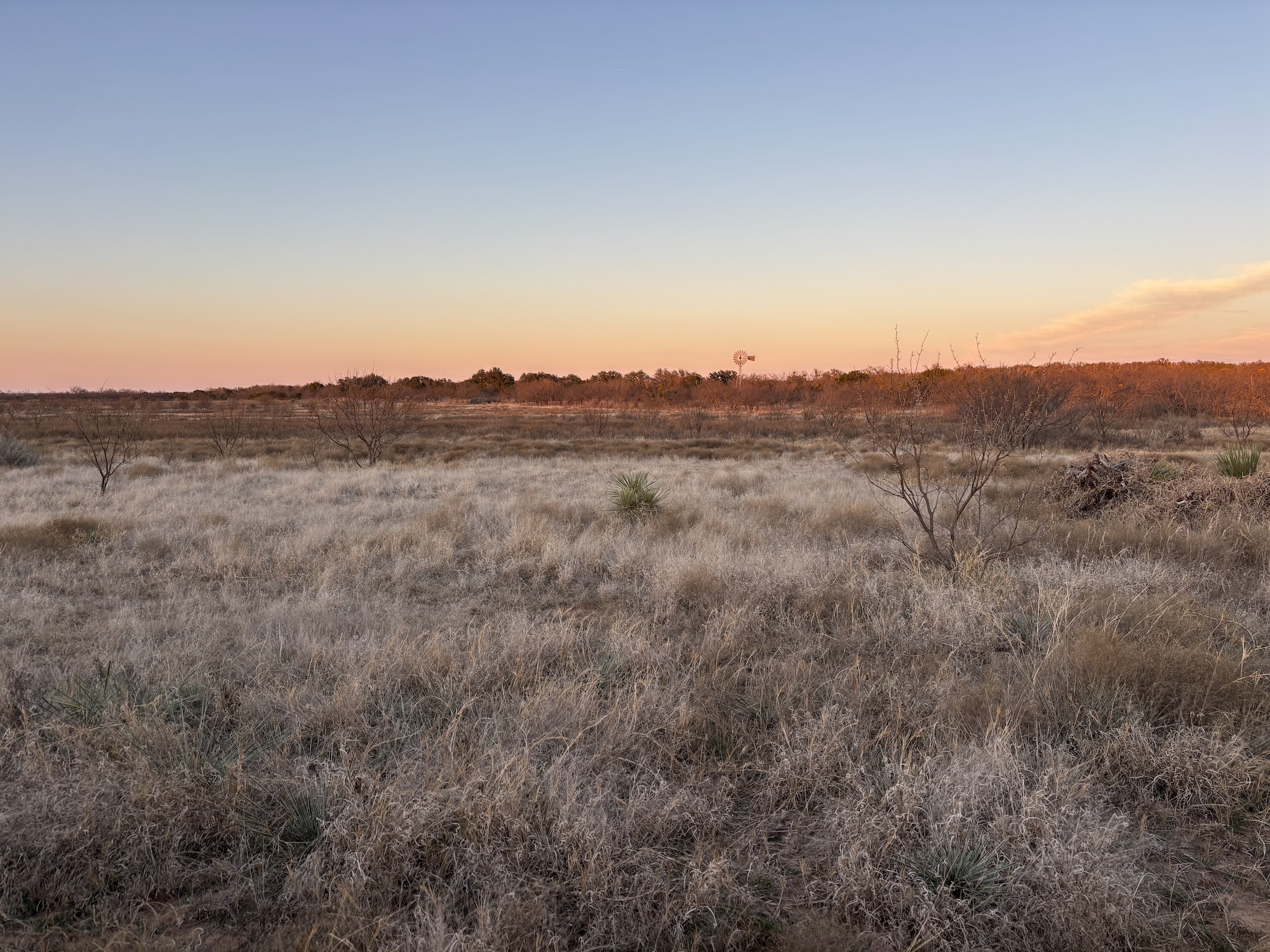
the sun sets over a quiet, grassy field

A water windmill turns on a January evening in Mason County, on the eastern edge of the West Texas region. Laura Mallonee / Grist

The quiet helps explain why the Pfeuffers are so committed to their ranch. They have spent years clearing mesquite and cedar so grass can take hold — not just for profit, she said, but to benefit the land. The work has taught her to pay attention. “Out here, you’re so connected to everything,” Sandra said. “If there’s a rock out of place, you notice.”

She doesn’t see that kind of attentiveness in the push for renewables. To her, it’s just another extractive industry — one that will leave West Texas depleted, its water drained, and its land scarred with concrete, rebar, and fiberglass. Above all, she resents what she sees as urban priorities imposed on rural communities by people who will not live with the consequences. “I don’t come into town and knock down your buildings so I can run my cows,” she said.

The Pfeuffers’ activism has riled other ranchers. Sandra said that her neighbor no longer speaks to her. She’s heard rumors of vague threats, of people at the coffee shop saying things like, “These people who are fighting this, we know where they live.”

Read NextTwo men in business suits stand in front of a white background. They are holding papers.Trump’s $1B payoff to stop offshore wind is even stranger than it soundsJake Bittle & Rebecca Egan McCarthy

While the fight in West Texas plays out in sidelong glances and veiled warnings, in Austin it is reduced to charts, forecasts, and models. State planners say Texas simply doesn’t produce enough energy: Rising electricity use, driven in part by population growth and a boom in data centers across the state, are pushing demand sharply upward even as extreme weather strains the grid. The Electric Reliability Council of Texas, the nonprofit that manages power for about 90 percent of the state’s electric load, expects peak demand to climb from 85 gigawatts to 150 by 2030. To move that juice, the state is building a $33 billion transmission “superhighway” with 2,500 miles of high-voltage lines linking the power plants of West Texas to cities like Dallas.

Discussing the state’s plans, Pfeuffer’s voice hardens. “Texas is so unique,” she said. “Do we really want to destroy it with power lines, wind turbines, solar panels? One day we’re going to wish we hadn’t.”

The future she fears is coming quickly. A 200-mile stretch of high-voltage transmission lines could bisect eastern Schleicher County, not far from her land. More might follow. The buildout seems relentless. “I have to wonder,” Pfeuffer said, “if I’m ever going to sleep again.”

The din and dust that roiled Duff Hallman’s ranch in 2009 have long since faded. What replaced them were steady payments that helped offset the rising cost of ranching. The expense of maintaining the place has crept as high as $217,000 a year. Lease payments — Hallman wouldn’t be specific, but suggested roughly $200,000 annually, split between him and his two siblings — helped cushion them during the droughts of 2011 and 2021, which stripped the fields and forced them to sell their cattle. Not that Hallman has any illusions about its limits. “Is it like having oil?” he asked. “No. Not anywhere close.”

Hallman tells other ranchers who are considering windmills on their own property that he barely notices them anymore. His only complaint is the giant icicles they sometimes sling during freezing rain. Still, he’s happy. Clearway Energy, which owns Langford, maintains the towers; after construction, it paid for the lost trees and reseeded the land — things Hallman said the oil and gas companies never did. The roads it built double as firebreaks. Driving down one in his truck, he gestured toward the scenery rolling by. “These hills are rough and rocky,” he said. “I haven’t lost that much.”

Still, his enthusiasm isn’t always enough to overcome skepticism and deeply held convictions, including the idea that turbines lower property values. He chuckled at that. “I bet you we could get top dollar for our ranch,” he said.

Hallman admitted that the solar farm rising up the road gives him pause. He could earn a little money grazing sheep beneath the panels, but he worries how the facility might impact wildlife and the ecosystem he has worked with a biologist to maintain. He’s as wary of transmission lines and data centers as anyone, and was among those who declined to let ETFuels draw water from his land, choosing instead to safeguard it for the future.

Renewables have helped the ranch, but he knows the land may not stay in the family forever. Every generation brings more heirs, each holding a smaller parcel with a looser grasp of its history. Change is inevitable. One day, the steel columns may vanish, made obsolete by something he can’t yet picture. Hallman shrugged at the thought and smiled. “I don’t know what that’s going to be, but it’s going to be something pretty ‘wow,’” he said. “We’re only limited by our imaginations.”

This story was originally published by Grist with the headline Texas saw a $50B future in clean energy. Then the political winds shifted. on Mar 31, 2026.


From Grist via this RSS feed
2


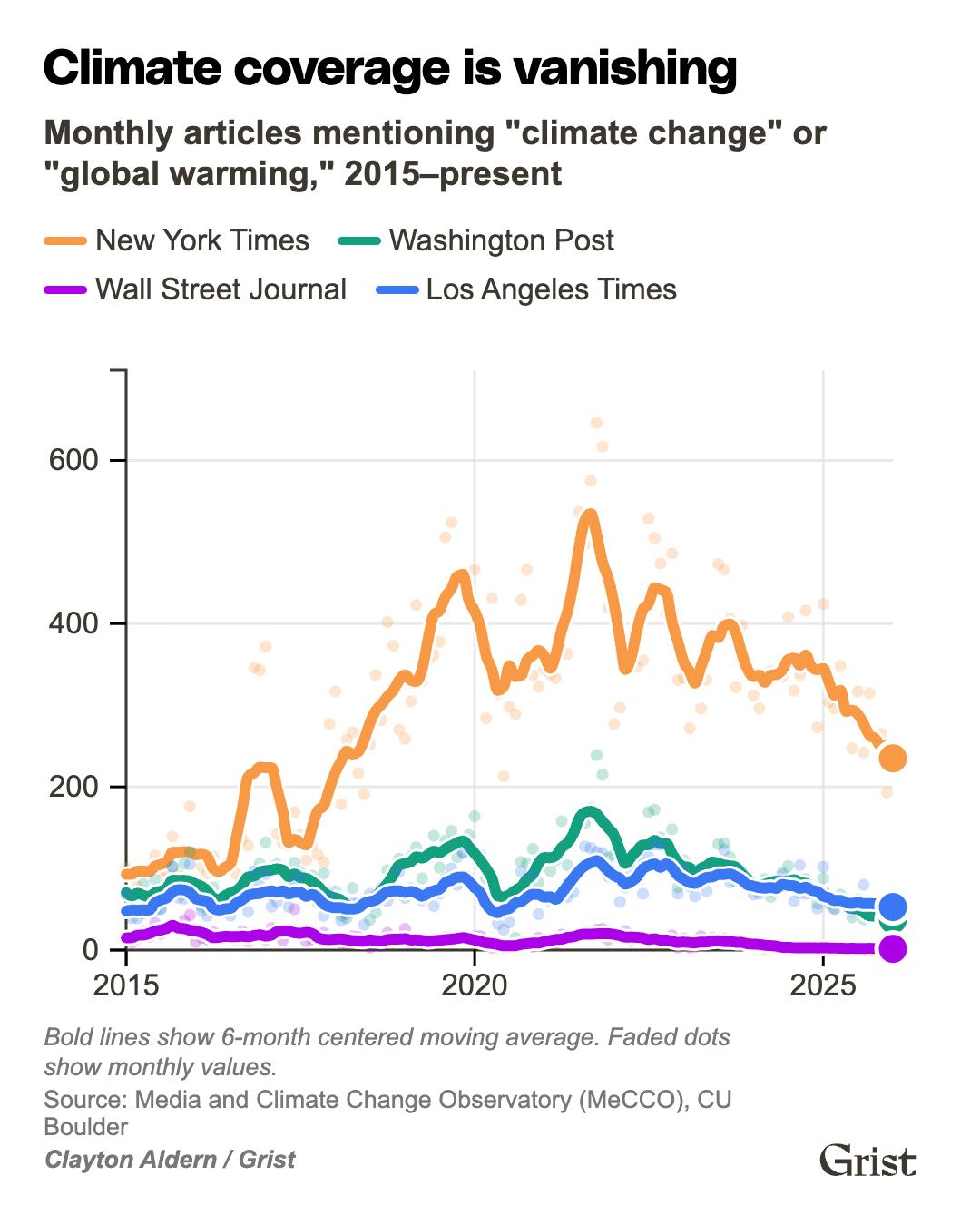
Scientists are pretty sure that Earth is hotter than at any time in the last 125,000 years, but the news media is moving on, trying to keep on top of a fire hose of pressing news — from the daily chaos of the Trump administration to the breaking developments in the war on Iran. The shift in attention started during the COVID-19 pandemic and, despite a temporary rebound, has gathered pace in recent years: Since its peak in 2021, global news coverage of climate change has dropped 38 percent, according to data from the University of Colorado Boulder’s Media and Climate Change Observatory.

Many journalists have been busy digging through 3 million pages of the Epstein files rather than the latest scientific report, though you can still find news about some of the biggest recent findings, including that estimates of sea level rise have been dramatically underestimated and that global warming has accelerated “significantly” over the past decade.

Last year, the first of Trump’s second term, major broadcast networks in the U.S. cut their climate coverage 35 percent compared to the year before, according to a recent report by Media Matters, a watchdog organization. “The competition, the ‘flood the zone’ strategy from the administration, is making it very difficult for anything that’s not super urgent in this moment,” said Allison Fisher, director of the climate and energy program at the nonprofit.

The change in focus has real-world consequences. When media coverage of a topic dies down, it can be hard to drum up enthusiasm for protests and policy changes. It’s out of sight, out of mind, said Anthony Leiserowitz, director of the Yale Program on Climate Change Communication. Normal people don’t spend their time reading scientific papers or talking to a climate scientist over their backyard fence. “Like, literally, billions of people know about climate change only because the media has reported it,” Leiserowitz said.

When writers and editors prioritize — or deprioritize — a particular subject, that sends a signal to both policymakers and the public. “They exercise one of the very most powerful tools in politics, which is to define what topics are talked about and what topics are not talked about, and within that, what range of opinion is ventilated on those topics,” said Mark Hertsgaard, the co-founder and executive director of Covering Climate Now, a nonprofit pushing for more rigorous coverage of climate change. “So of course, when we stop talking about climate change in the press, the public figures, ‘Oh, well, I guess it’s not that important anymore,’ or ‘Maybe they figured it out’ or whatever.”

You can see the recent downswing in climate coverage in the U.S. by looking at some of the country’s biggest legacy newspapers: The New York Times, The Wall Street Journal, The Washington Post, and the Los Angeles Times. While the New York Times has published an enormous volume of articles about global warming, its coverage has plunged, declining by 66 percent since its peak in October 2021, when it published 646 articles mentioning the subject, and this January, when it published 221.

Climate coverage is vanishing

Monthly articles mentioning “climate change” or “global warming,” 2015–present

New York Times Washington Post Wall Street Journal Los Angeles TimesBold lines show 6-month centered moving average. Faded dots show monthly values.Source: Media and Climate Change Observatory (MeCCO), CU BoulderClayton Aldern / Grist

People are noticing the decline. Back in 2022, 35 percent of Americans said they heard about global warming in the media at least once a week, according to data from the Yale Program on Climate Change Communication. As of the most recent data in December, only 17 percent did.

If you take the long view, neglecting climate change is actually the norm in the U.S. mainstream media, Hertsgaard said. Around 2019, though, they began to pay more attention. Young people around the world started skipping school on Fridays to demand their governments take action on climate change, inspired by the Swedish activist Greta Thunberg. Leading up to the 2020 election in the U.S., progressives’ excitement over the “Green New Deal” pressured future president Joe Biden to adopt plans to take on climate change. At the same time, organizations like Hertsgaard’s Covering Climate Now, founded in 2019, pushed media outlets around the globe to connect the dots to extreme weather, providing context about how greenhouse gas emissions had enhanced flooding, fueled wildfires, and worsened drought.

“When you can get those two things together — a surge of media coverage at the same time as a surge of popular opinion and mobilization, and 7 million people in the street — that’s when you can break the climate silence,” Hertsgaard said.

The volume of climate change news dipped during the onset of the COVID-19 pandemic, but it quickly picked up again as world leaders started passing policies to address rising greenhouse gas emissions. Biden made tackling climate change a priority, and in 2022, he signed the country’s first comprehensive climate law, filled with incentives to prompt a faster switch to clean technologies. (It’s been mostly repealed under President Donald Trump.)

Then, just like that, the media’s zeal for covering climate change started fading again, and experts aren’t sure exactly why. Perhaps the passage of major climate legislation in the U.S. led to a decreased sense of urgency. The decline in climate news continued to deepen in 2025, when global coverage fell another 14 percent from the year before, and was especially noticeable in the United States.

After Trump took office with a promise to “drill, baby, drill,” a widespread “climate hushing” fell across the country. Businesses suddenly stopped talking about the climate pledges they’d been trumpeting a few years earlier. Many congressional Democrats avoided talking about climate change directly, with the phrase vanishing from their speeches, social media accounts, and podcast appearances. Then the Trump administration went after news outlets, pulling public broadcasting funding from NPR and PBS stations and threatening to revoke the broadcast licenses of major networks over coverage Trump didn’t like.

“You have corporate media owners who are increasingly fearful of running afoul of the Trump administration that characterizes climate change as a ‘hoax’ and climate action as a ‘scam,’ right?” Fisher said.

Fisher said she was alarmed by the lack of coverage on ABC, CBS, and NBC of the Trump administration’s actions to scale back climate research and environmental regulations, as well as the decline in connecting extreme weather to climate change.

CBS had long led climate coverage among broadcast networks, but that focus changed suddenly late last year, Media Matters found. Earlier in the year, the Trump administration approved a merger between Paramount Global (which owns CBS) and Skydance Media. Brandon Carr, chair of the Federal Communications Commission, suggested the merger would ensure “a diversity of viewpoints from across the political and ideological spectrum” at the network. Soon after the appointment of its new editor-in-chief, Bari Weiss, in October, CBS laid off most of its climate team, along with about 1,000 other employees. One of the network’s few remaining climate segments in the months since focused on polar bear populations thriving in the Norwegian Arctic despite melting sea ice, a common talking point among climate deniers. “Experts say the bears are still in trouble long term, but hey, the experts have been wrong before,” said Tony Dokoupil, anchor of Evening News, to end the segment.

“We know what they’re saying on Fox News — it looks almost exactly the same,” Fisher said. “Beyond the volume, I think this shift in the way the climate story is being told is even more dangerous.”

Read NextCollage of drought, wildfire, and hurricane photos, with speech bubble cut out from centerWhy Democrats aren’t talking about climate change much anymoreKate Yoder

Layoffs have swept across the news industry, with The Washington Post dismissing the majority of its climate team last month, more than a dozen reporters and editors, as part of extensive cuts. Max Boykoff, an environmental studies professor at the University of Colorado Boulder who tracks media coverage, suggested that newsroom decisions to shift their attention away from climate change could be driven by a sense that there’s “climate fatigue” among the public — a weariness around a long-running crisis with no easy solutions. “Editors may be assessing that and putting people on different beats,” he said. The waning enthusiasm from outlets to highlight climate stories has frustrated some journalists: The longtime NBC climate reporter Chase Cain recently resigned from his role, saying he was exhausted from fighting to get his stories on air.

Leiserowitz, at the Yale Program on Climate Change Communication, stressed that the number of Americans who are worried about climate change and want action to cut emissions hasn’t really budged. Even though climate change is a lower priority for voters than it used to be — number 24 out of 25 issues, according to data from the Yale program — that’s mainly because other issues have risen in importance. For liberal Democrats in particular, that includes the protection of democracy, the treatment of immigrants, and the disruption of government services. “It’s just that all these other issues have now leapfrogged above climate change as a voting issue priority,” Leiserowitz said.

Hertsgaard argues that there’s a huge audience out there waiting for more articles about life on a warming planet. Some 80 to 89 percent of people globally — and 74 percent in the U.S. — want their governments to take stronger action on climate change, according to surveys. Outlets around the world are leaning into climate coverage, gaining audiences and making money from it, he argued, pointing to The Guardian and France Télévisions, the French public broadcaster, which saw its ratings improve after incorporating climate change into its weather forecasts. “If you are a smart newsroom, you will recognize that this is a business opportunity, not just a journalistic duty,” Hertsgaard said.

Still, experts said that the big-picture trends driving the decline in coverage of the climate will be tough to turn around in the near future, even as extreme weather continues to draw attention to the consequences of a warming planet. As long as Trump’s in office, there’s likely to continue to be intimidation of the media, climate hushing, and a steady stream of chaos in the news crowding out climate stories, Fisher said.

Leiserowitz, though, is hopeful that the public won’t forget what they learned back when the mainstream media started covering the crisis in earnest. “Just because it’s not being talked about in the media,” he said, “doesn’t mean that it suddenly disappeared or it’s been wiped out of their memory banks.”

This story was originally published by Grist with the headline The planet is overheating. Why is the news looking away? on Mar 11, 2026.


From Grist via this RSS feed
3


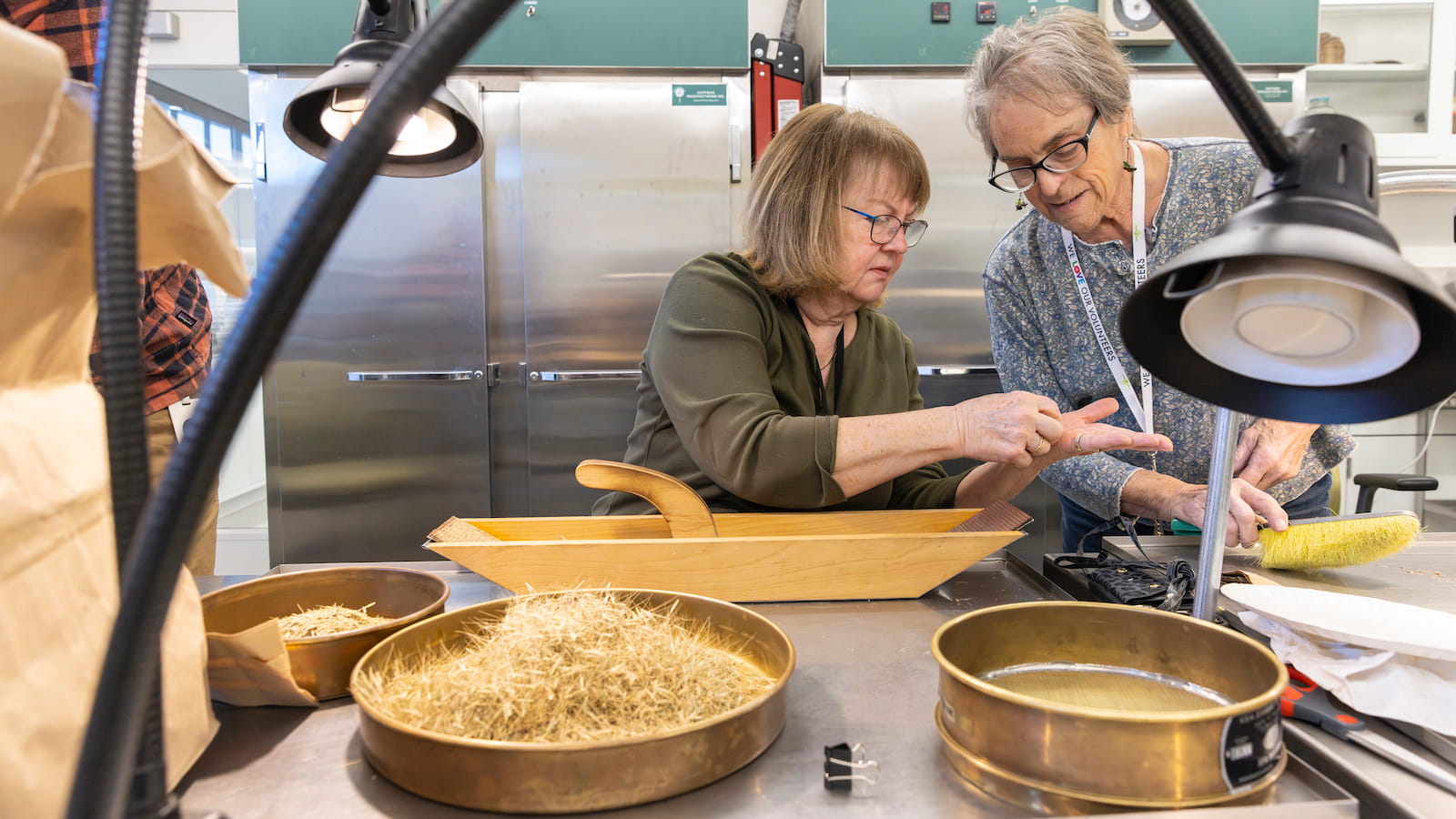
Under the warm light of a hanging lamp, Marty Landorf carefully crumbled the dried flower head of a black-eyed Susan between her fingers, teasing apart the chaff to uncover its puny black seeds. Each one was destined for long-term cold storage alongside roughly 46 million other seeds at the Chicago Botanic Garden.

Every seed in the garden’s vault is different. Some seeds have hooks. Others verge on microscopic. A few carry a sharp, deterring scent. And some, like the airborne seeds of the milkweed, the host plant for monarch caterpillars, are fastened to silky fluff that drifts everywhere, hitching rides on volunteers’ clothes and following them home.

“Fluff is fun,” Landorf said laughing, seated alongside five other volunteers cleaning, counting, and sorting seeds at a long metallic table in the garden’s seed bank preparation lab.

Volunteers handle small seeds inside a Chicago Botanic Garden lab

Carolyn Kuechler, left, and Marty Landorf, volunteers at the Chicago Botanic Garden, work on separating the seeds from the chaff at the seed bank in the Carr Administrative Center. Manuel Martinez / WBEZ

For all their variation, these seeds share a common trait: They’re native to the Midwest. These species genetically adapted over thousands of years and sustain the region’s ecosystems. That evolutionary inheritance makes them indispensable for restoring the nation’s remaining prairies, wetlands, and woodlands.

The problem: Native seeds are in short supply. And climate change is intensifying demand.

“Climate change is affecting our weather and the frequency of natural disasters,” said Kayri Havens, chief scientist at the Chicago Botanic Garden. “Wildfires becoming more common, hurricanes becoming more common — that increases the need for seed.”

In 2024, the Chicago Botanic Garden, a 385-acre public garden and home to one of the nation’s leading plant conservation programs, launched the Midwest Native Seed Network, a first step in improving the region’s fragile seed supply. The coalition now includes roughly 300 restoration ecologists, land managers, and seed growers across 150 institutions in 11 states. Together, they are researching which species are most in demand, where they are likely to thrive, and what it will take to produce them at scale and get them in the ground.

The collaborative is compiling information on seed collection, processing, germination, and propagation while identifying regional research gaps and planning collaborative projects to close them. For example, the network is currently collecting research on submerged aquatic plants such as pondweeds, and other species that are challenging to germinate, like the bastard toadflax, a partially parasitic perennial herb.

“We’re addressing these local, regional, and national shortages of native seed that are really just hindering our ability to restore really diverse habitats, build green infrastructure, and support urban gardens,” said Andrea Kramer, director of restoration at the Chicago Botanic Garden.

Scientist stands in cold storage seed bank at the Chicago Botanical Garden

Sarah Hollis, research assistant at the Chicago Botanic Garden, tours the seed bank in the Carr Administrative Center. Manuel Martinez / WBEZ

Last year, the network undertook its first major project: a large-scale survey of more than 50 partners across the region. The results were stark. They revealed that more than 500 native species in the Midwest are effectively unavailable for restoration. In some cases, it’s because no one grows them. In others, the seeds are available, but the cost — even at a couple of dollars per packet — becomes prohibitive when restoration projects require thousands of pounds. And for certain finicky species, the bottleneck is technical: Researchers and growers still don’t fully understand how to germinate them reliably or help them thrive in restoration settings.

Kramer said that, ultimately, the goal is to connect the people who need seeds with those who know how to grow them. While the network does not sell seeds, it works with organizations and partners that do. “We are using the network to help elevate what we all know and share what we know to make it easier,” she said.

The shortage itself is not new. In 2001, following sweeping wildfires in the West, Congress tasked federal agencies, including the Bureau of Land Management and the U.S. Forest Service — which, combined, manage approximately one-fifth of the nation’s public lands — to craft an interagency, public-private partnership to increase the availability of native seeds. But according to a 2023 report, which identified the lack of native seeds as a major obstacle for ecological restoration projects across the United States, those efforts remain unfinished.

Scientist Kayri Havens stands inside Chicago Botanic Garden science center

Kayri Havens, vice president of science and chief scientist at the Chicago Botanic Garden, poses for a portrait in the Carr Administrative Center. Manuel Martinez / WBEZ

Wildfires have scorched more than 170 million acres in the U.S. between 2000 and 2025, according to the National Interagency Fire Center. In 2020 alone, the Bureau of Land Management purchased roughly 1.5 million pounds of seed to rehabilitate burned landscapes. In a bad fire year, the agency can buy as much as 10 million pounds.

The 2021 bipartisan infrastructure law dedicated $1.4 billion for ecosystem restoration over five years, including $200 million for the National Seed Strategy, a coalition of 12 federal agencies and various private partners established in 2015 to provide genetically diverse native seeds for restoration. The following year, the Inflation Reduction Act invested nearly $18 million to develop an interagency seed bank for native seeds. And in 2024, the Interior Department announced an initial round of $1 million for a national seed bank for native plants.

“The U.S. does have a major seed bank run by the [Department of Agriculture], and it mostly banks crops,” said Havens, the scientist at the Chicago Botanic Garden. “But we don’t have that kind of infrastructure in place for native seed.”

Momentum for establishing a native seed bank stalled following funding cuts by the Trump administration. In early 2025, the Department of Government Efficiency cut 10 percent of the staff at the National Plant Germplasm System, which is home to one of the largest and most diverse plant collections in the world.

Scientist seated inside Chicago Botanic Garden's science center

Andrea Kramer, senior director of restoration at the Chicago Botanic Garden, said the network’s goal is to connect those who have access to seeds to those who don’t. Manuel Martinez / WBEZ

“If something isn’t supported on a national level, then it becomes incumbent on states and regions to do that kind of work,” Havens said. “So that’s why we’re focusing right now in the Midwest.”

The network is the first of its kind in the Midwest, though similar initiatives have been active elsewhere in the country for years. Today, there are more than 25 similar networks operating across the U.S. In the western United States, these coalitions have come together in response to post-wildfire restoration projects.

“One of the reasons why we were among the first is because of this federal land ownership that we have in the West, whereas in the Midwest, it’s more private land,” said Elizabeth Lager, a professor at the University of Nevada in Reno and co-founder of the Nevada Native Seed Partnership. More than 90 percent of all federal land is located in 11 Western states.

Kramer said she hopes to run the seed availability survey again in 20 years and get a different response.

“I want them to say, ‘We have access to all the seed we need,’” said Kramer. “And we can move on to the next challenging question, like, ‘Why isn’t the seed establishing in my restoration? Or, how do we manage the next challenge coming with climate change?’”

This story was originally published by Grist with the headline A regional network is racing to save the Midwest’s native seeds on Mar 2, 2026.


From Grist via this RSS feed
4


Regina is haunted by the specter of mold.

She found the insidious spores in the closet, behind the refrigerator, and around the bathtub for two years after the dishwasher flooded her apartment in Asheville, North Carolina.

The infestation only got worse after Hurricane Helene. Rainwater rushed into her son’s third-floor bedroom at the Evergreen Ridge Apartments through gaps in the window frame, warping and discoloring the wall. After the 2024 storm, faint brown spots dotted the panes, and the trim appeared loose. When the A/C went out last summer, she worried the mess would spread in the hot, humid air. Her son has had allergic reactions to mold before, including itchy eyes and coughing, and the threat of it happening again kept her up at night. She scrubbed the apartment weekly, only to watch the spores creep back. As a single mom who works long shifts as a nurse, she felt she couldn’t keep up with the creeping damage.

“My cabinets are falling apart,” she said. Regina, who asked that her real name not be used for fear of repercussions, walked through her bathroom, pointing out where the damp persisted. “You can touch it,” she said. “It falls apart. And that’s from water damage, obviously.”

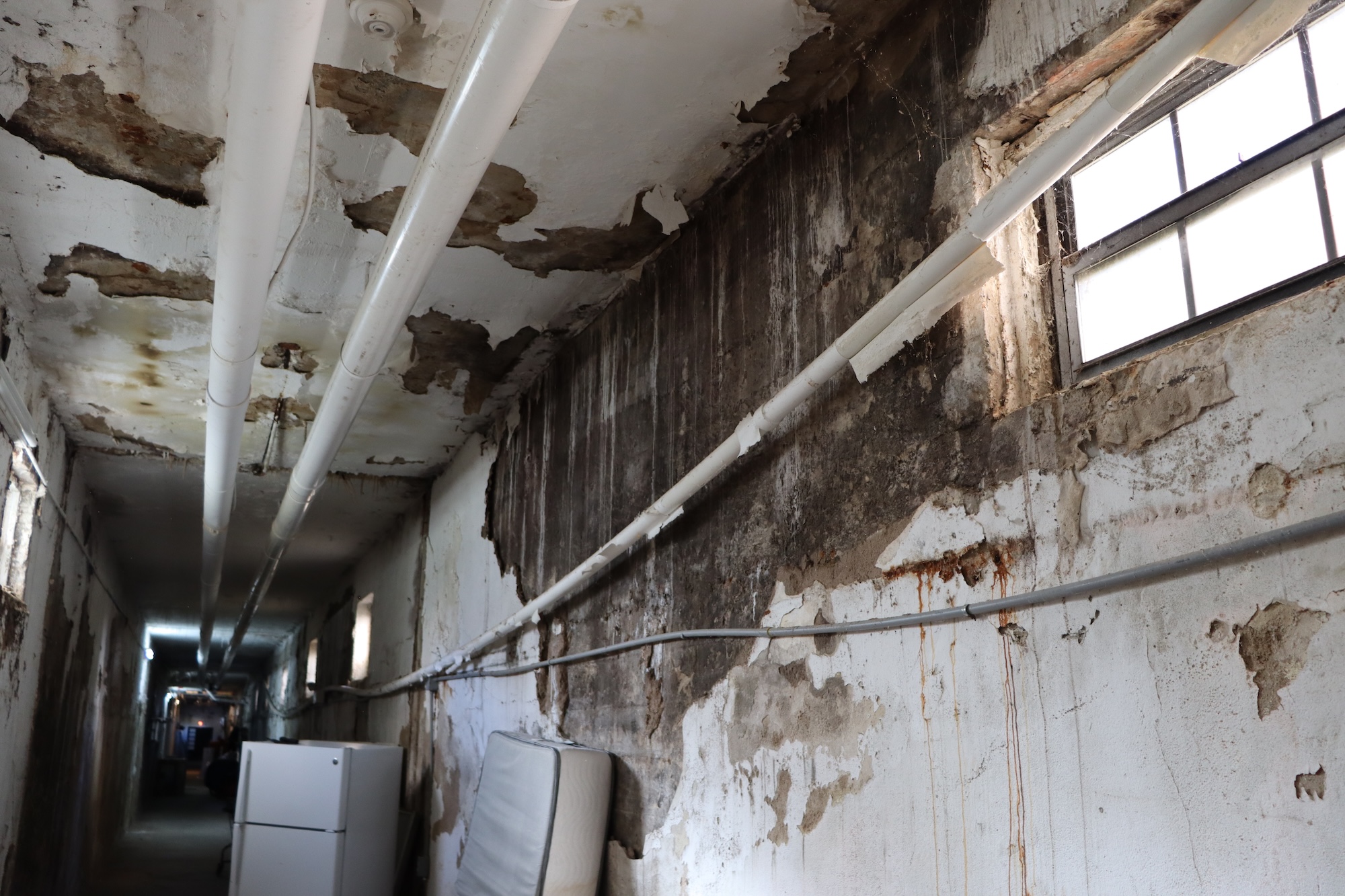
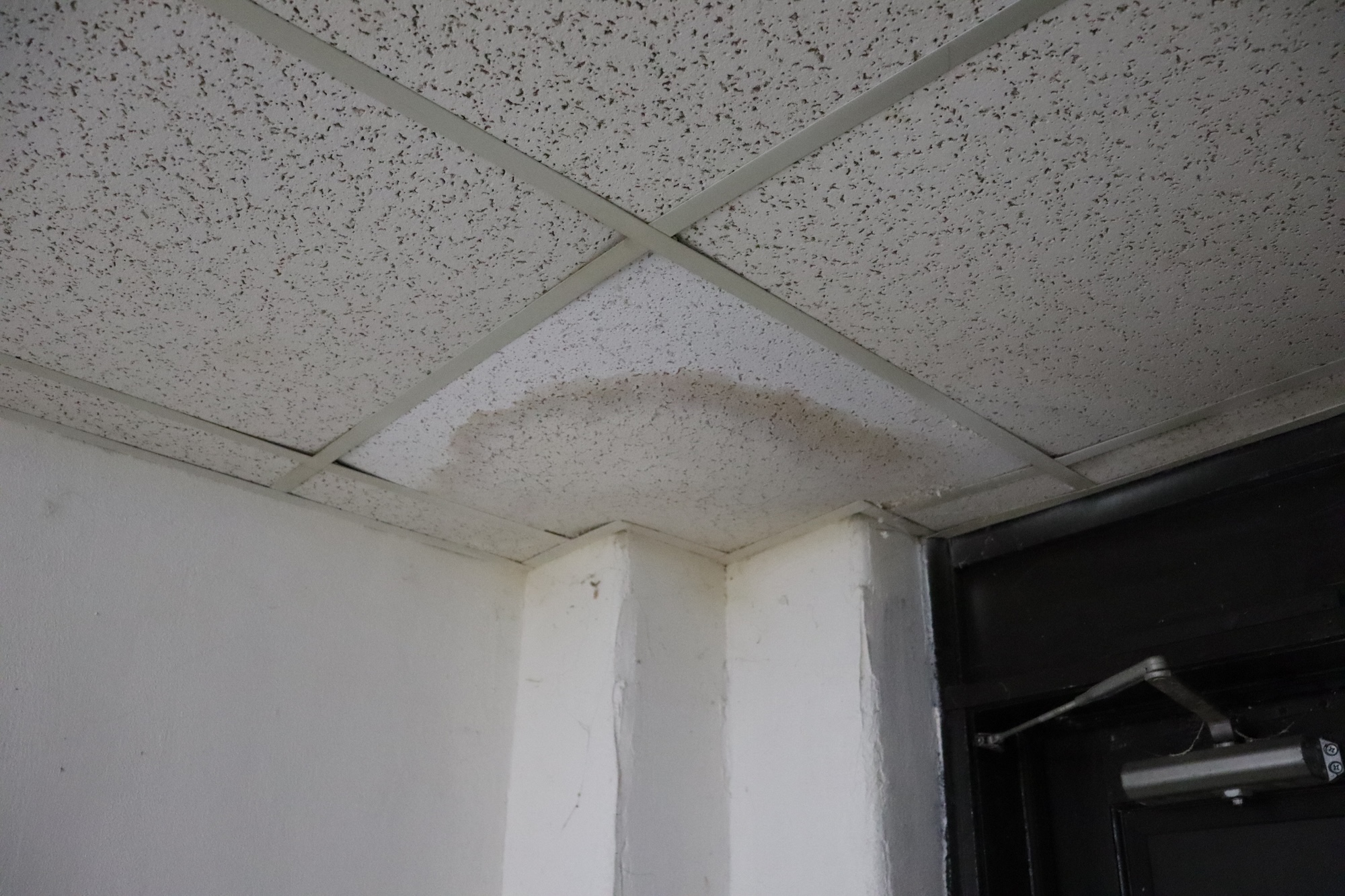
Signs of mold and water damage permeate the complex, which is nearly a century old and once housed a Department of Veterans Affairs hospital. Tenants attribute a lot of it to leaky pipes, but Helene made things worse. Though the complex was on ground high enough to avoid inundation, tenants said Helene’s more than 12 inches of rain poured through windowsills facing the west. The walls of a utility hallway were black and crumbling, a condition, tenants said, that predated Helene, but may have worsened since. Same with the ceiling in the lobby, which sagged under the weight of water damage. An overpowering, musty smell permeated the building and wafted into the apartments. There are three large buildings in the complex, where many apartments are rented by the elderly, those with disabilities, and families with young children.

a stsained ceiling with panels

Regina’s apartment and floor show signs of leaky pipes and water intrusion – a common problem in aging rental housing throughout the Southeast.

a water heater with stains near a pipe attachment to a wall

Regina’s apartment and floor show signs of leaky pipes and water intrusion – a common problem in aging rental housing throughout the Southeast. Laura Hackett / Blue Ridge Public Radio

Regina’s apartment and floor show signs of leaky pipes and water intrusion – a common problem in aging rental housing throughout the Southeast. Laura Hackett / Blue Ridge Public Radio

A hallway with a bucket to catch leaks

Regina’s apartment and floor show signs of leaky pipes and water intrusion – a common problem in aging rental housing throughout the Southeast.

A property manager at the complex declined to comment, and its owner, Shadow Ridge Associates, did not respond to multiple requests for comment.

Mold is a type of fungi, which are moisture-loving in general and thrive in the kind of heat and lingering dampness residents of Evergreen Ridge describe. Outside, these organisms tend to be harmless. Black mold lives in the soil beneath our feet; spores float unnoticed through the air. But when mold infiltrates homes, it thrives in conditions many people find ideal — temperatures between 60 and 80 degrees Fahrenheit and relative humidity above 70 percent.

In the wake of the rains and floods that have repeatedly inundated the Southeast, mold is growing harder to avoid and harder to eliminate. Climate change and the impacts it brings — heavier precipitation, frequent flooding, and increased heat and humidity — are creating the perfect petri dish for mold to thrive, exposing more people to its health impacts.

Despite its prevalence, mold receives shockingly little study. It is expensive to fix, largely untracked as a public health issue, and subjected to building codes and housing safety regulations that lag behind a problem that is no longer confined to the aftermath of disasters. As mold’s ideal conditions grow more prevalent, it remains a big gray area in public knowledge, and both state and federal policy.

Regina’s health concerns finally prompted her to break her lease in December. She’s spending more than she’d like on a new place, but said the peace of mind is worth it.

IIn the aftermath of Hurricane Helene, Duke University scientists saw a chance to fill some of the gaps in what we know about mold. The team, calling itself the Duke Climate and Fungi Research Group, or CLIF, went through flooded buildings in Black Mountain, North Carolina, a small town outside of Asheville, collecting air samples and scraping residue from walls. Floodwaters had reached 27 feet and left a mist that settled into homes and workplaces when they receded. Residents soon began reporting headaches, coughing, and respiratory problems.

Researchers often encounter common indoor molds like penicillium or aspergillus after a flood, but there are innumerable species, and their impacts on human health vary widely. The organisms produce a variety of chemicals. Some, called mycotoxins, remain stable in the environment, while others, known as volatile organic compounds, or VOCs, disappear quickly. Both can affect the human body, including the lungs, liver, and kidneys, but VOCs have been the subject of less study.

How mold affects people depends on more than just the species. It also varies with how much is present and how well-ventilated the space is. Someone’s preexisting conditions also shape their response. For most healthy adults, mold may cause mild symptoms, but for children, older adults, and those with respiratory issues or compromised immune systems, mold-related irritation and infection can be serious and persistent.

“For people with chronic respiratory illnesses or conditions like asthma, substances produced by fungi may worsen their symptoms. That’s what we’re trying to understand,” said Asiya Gusa, a microbiologist at Duke University studying the problem with CLIF.

a chest radiograph showing lungs

A 1963 Center for Disease Control and Prevention radiograph shows a fungus ball in the upper lobe of the right lung — a fungal infection caused by the fungus Aspergillus. Smith Collection / Gado / Getty Images

Environmental factors beyond temperature also play a major role. It’s not just heat that aggravates mold — it’s flooding itself, according to Gusa. What once grew on riverbanks, in trees, and other outdoor locations can now be found indoors.

In addition to her work with Helene, Gusa is also studying long-running accounts of conditions like “Katrina cough,” a suite of respiratory symptoms that include a runny nose and dry cough that Louisiana residents began reporting after Hurricane Katrina.

Understanding the full, moldy picture requires more than expertise in microbiology. It also takes engineers and architects to understand how mold affects structures and test mold-resistant building materials while others analyze fungal DNA and chemical emissions. That’s why the CLIF team takes a multidisciplinary approach and includes engineers and architectural experts. “For scientists,” Gusa said, “we have, like, tunnel vision.” By working together, the team can connect the dots between flooding, building conditions, fungal growth, and human health — an approach that a single-discipline study could easily miss.

Gusa said the team is still studying the fungi the CLIF team found in Black Mountain. So far they’ve identified 65 species, from common varieties often found in water-damaged environments like aspergillus to more mycotoxic examples like ​​Penicillium citrinum. The next step, she said, is to determine if the species are in fact as dangerous to human health when they grow on different building materials. “We plan to test whether these ‘opportunistic fungi’ are resistant to antifungal drugs used to treat disease,” she added in a follow-up email.

The results of those tests could provide a better idea of the threats mold poses to human health and the role climate change might play in its propagation. When Gusa studied cryptococcus — which can infect the brains of the severely immunocompromised — in the past, she found that the heat threshold for the fungus was rising. “Their ability to change their DNA to adapt was much higher when they encountered higher temperature,” Gusa said.Translating these findings into public health guidance will be the next challenge. Agencies like the Environmental Protection Agency acknowledge general risks, but questions about which molds cause which health effects — and under what conditions — remain difficult to answer.

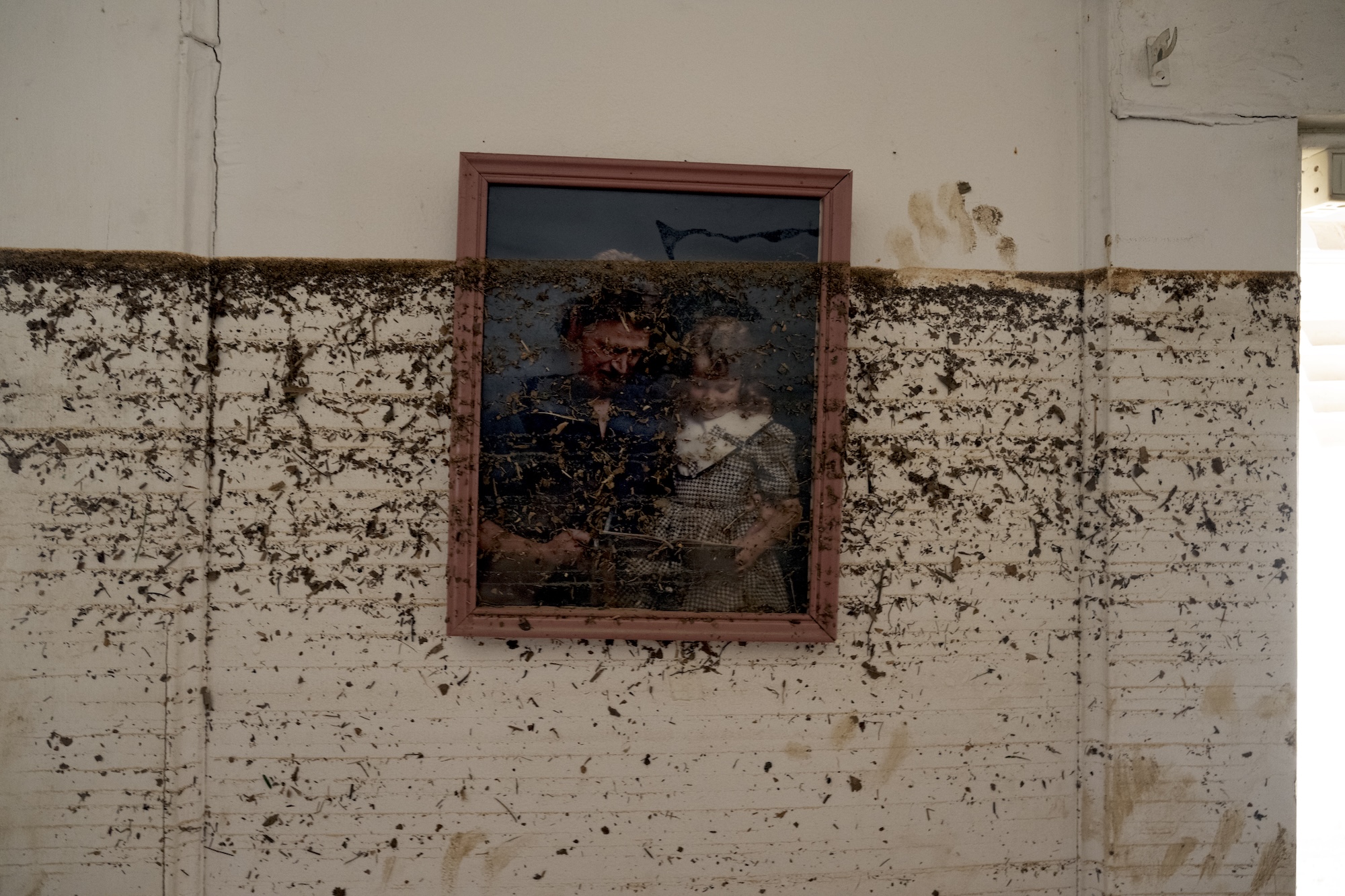
A family photo and walls are covered by mold and mildew showing a the water damage line

Mud and mildew cover the walls of a house damaged by Hurricane Helene in Swannanoa, North Carolina, as seen on September 21, 2024. Marvin Joseph / The Washington Post via Getty Images

Part of the problem is that mold’s health impacts are difficult to track. Fungi aggravate preexisting conditions and cause what are known as nonspecific symptoms like itching, sneezing, and coughing that can be hard to pinpoint and monitor. In other words, mold doesn’t cause a specific disease that health departments can easily track, said Virginia Guidry of the North Carolina Department of Health and Human Services. People like her can only watch for increases in the respiratory ailments, infections, allergies, and other ailments that mold can exacerbate.

“We don’t actually have a great way to track mold cases because those symptoms are fairly non-specific, and it doesn’t often send people to either the doctor or to the emergency department,” Guidry said. A study by the Centers for Disease Control and Prevention found that mold-related symptoms show up most often in people who already have breathing problems. Among those studied, about 3.5 out of every 10,000 people with private insurance and 8.5 out of every 10,000 people on Medicaid reported mold-related symptoms.

Some residents of Evergreen Ridge Apartments report persistent sinus problems and other respiratory symptoms. Those who can afford to move have. But in a state like North Carolina, where legal protections for renters are limited and affordable housing is scarce, many people have nowhere else to go. One Evergreen resident, Dana, said she wakes up every morning with congestion, something she began experiencing after moving in three years ago. It started occurring nightly after Helene, and she regularly coughs up mucus each morning.

“I don’t want to have to wake up every day like that,” said Dana, who asked that her real name not be used for fear of repercussions from her landlord.

Asheville remediation expert Dylan Hunt, who works for a company called Green Home Solutions, has seen extreme weather cause an explosion of household mold. After Helene, he saw black mold appear in places it hadn’t before. Even minor flooding can trigger growth within 24 to 48 hours if it isn’t cleaned up immediately — and when water damage goes unnoticed, mold can continue spreading for months. Depending on how much water a home takes on and how humid it stays inside, spores can spread throughout an entire house within weeks, turning what might have been a small cleanup into a much larger problem.

More from Vital Signs

An illustration of the Phoenix landscape with dust and a translucent doctor in the foreground

In Arizona, a fight against a deadly fungus is under threat from Trump’s health policies

Illustration of a Kenyan girl standing in front of a hospital bed outside with sandflies surrounding her

As aid dries up in Kenya, millions are threatened by the climate-driven disease kala-azar

An illustration of a man sitting in a clinic or hospital with dialysis machines. His face is not visible but he is looking out a window showing an orange heatwave scene. The room scene is visible through an archway with intricate blue and white tile and a sign in a different language. The scene is set in Nepal.

Rising heat, failing kidneys: Climate’s hidden toll on migrant workers

an illustration of a hand picking a water bottle out of a puddle or river. Along the banks, trash such as cans and plastic bags gather. TIny mosquitos dot the expanse of water between banks

In Bangladesh, thousands of volunteers are battling climate-fueled disease at its source

The crisis grew worse over the summer. The region saw a long stretch of hot, humid weather, including Asheville’s hottest July on record (tied with the summer of 1993). Homes that hadn’t experienced flooding started smelling musty, and Hunt’s phone began ringing with complaints of damaged furniture, headaches, and coughs. Drainage pathways shifted after Helene, changing how water moves through the area. Now even light rain can cause water intrusion in some homes.

“Water’s hitting homes in places where it hasn’t hit before,” Hunt said. “A lot of homes, especially the lower levels of homes, will just erupt in a coating of white, fuzzy mold.” Because the damage isn’t always immediate or visible, some people wait months to respond. By then, what might have been a $5,000 cleanup might have grown into a $30,000 remediation project — a frightful amount of money, especially when insurance isn’t always an option. Most companies won’t cover the problem unless it’s the result of a “covered peril” like a burst pipe.

Despite mounting costs and health concerns, mold remains largely unregulated. The EPA does not have an exposure limit, so there’s no federal support for mold testing. Instead, states are left to decide how seriously to take the problem — with about 15 setting their own standards.

That lack of oversight can leave renters with few options. For some, it can even mean starting over. When Helene flooded the three-bedroom house they rented near the French Broad River, Ginger and Amanda Simmons packed up and left. More than a year later, their search for a home has become a frustrating cycle of hope followed by doubt. Many of the rentals they have toured show signs of water damage — a particular concern because their 8-year-old daughter is sensitive to mold and has a history of respiratory problems. In several cases, a place smelled musty or affected their breathing within 20 minutes of being inside.

“I’m nervous to get a rental out here because at this point so many of these houses have had water damage,” Ginger said. “I just don’t know if the owners will disclose it, or fix it, or even know about it.”

When remediation is delayed, incomplete, or simply does not occur, tenants are often left with few options. In North Carolina, the main recourse is to request, in writing, that the property owner address the problem. Turning that into a repair is often an uphill battle, said David Bartholomew, an attorney with Pisgah Legal Services in Asheville.

Because of the high cost, property owners are sometimes reluctant to address the problem, especially in the absence of enforcement.

For renters, requesting a repair means asking a landlord to incur serious expense — and because there’s no federal mold exposure standard, not every state or municipality is ready to back renters up when that happens.

pipes run along the ceiling in a severely damaged building with water damage

An old utility hallway in an Asheville apartment complex shows mold growth pre-dating Hurricane Helene. Laura Hackett / Blue Ridge Public Radio

Bartholomew guessed that there are “easily thousands of people” in Western North Carolina who have had mold issues exacerbated by Helene. Since last spring, he’s seen a 35 percent increase in mold-related legal cases from residents throughout the region. The lack of state and city laws overseeing mold places a heavier burden on tenants seeking remediation, he said.

Tenants must show that a landlord has a duty to rectify the problem, and prove who is at fault, he said. They must also document harm, often with expert testimony about the type of mold involved and medical records showing health impacts and costs. “That can be difficult,” he said.

For tenants living in moldy homes, the risk has become a worry somewhere between bills, work, and life’s other demands, one that grows insidiously with time. As heavier rains and longer stretches of hot, humid weather settle into the South, that mold is becoming less an isolated household problem and more a predictable consequence of a changing climate — one advancing faster than the protections meant to keep pace with it.

This story was originally published by Grist with the headline A hotter, wetter South is becoming a breeding ground for mold on Feb 25, 2026.


From Grist via this RSS feed

5


Jonathan Mertzig was wary when Madison rolled out a fleet of 62 electric buses in the fall of 2024. The city had tested a few of them four years earlier, and it had not gone well. Winter in Wisconsin gets mighty cold, and batteries do not like the cold.

“Operationally, they were a nightmare,” said Mertzig, a member of the Madison Area Bus Advocates. “Every time you got on one there would be an alarm going off. You never knew when one was going to die in the middle of the road.”

Cities across the country have experienced similar growing pains while electrifying public transit. A study conducted in Ithaca, New York, found that range can plummet by about half when the mercury hits 24 to 32 degrees Fahrenheit. That makes Madison, which sees an average of 18 days below zero each year, a tough proving ground. Riders like Mertzig, who experiences severe migraines and avoids driving, need the buses to run no matter what.

This time, they’ve done just that.

Metro Transit, which provides about 9.1 million rides annually, installed overhead chargers on key routes, allowing buses to quickly top off at several stops. Improved battery capacity also lets them go further between plug-ins. The real test came January 23, when the temperature dropped to -4 F, shutting down the University of Wisconsin-Madison — but the buses kept running.

That said, the rollout has not gone flawlessly. Last year the transit agency apologized when the overhead charging system malfunctioned, sidelining buses. In January, maintenance issues forced it to reduce service on two routes, but officials insist cold weather was not a factor.

Just a few years ago, electric buses routinely faltered in cold conditions, reinforcing doubts about whether they could replace diesel and natural gas-burning fleets in northern cities. Now, with better batteries and strategically placed chargers, Madison is at the forefront of a small but growing number of cities testing whether those doubts still hold. Making the technology work through a long Midwestern winter could reshape how others approach electrification. Some 3.6 million commuters nationwide rely upon buses to get around. With transportation accounting for roughly 28 percent of the nation’s greenhouse gas emissions, transit agencies are looking for alternatives to polluting machinery that creates a particular health risk around bus stops. Madison is among more than 100 U.S. cities that have pledged to reach net-zero emissions by 2050. Electric buses are key to that goal.

Metro Transit’s first experiment came during a broader effort to launch a system that could carry more riders with lower emissions. The city rolled out three electric buses — which cost $1.3 million and were funded in part through a federal grant — in 2020 to see how they’d do in daily service. Although the pilot introduced Madison to zero-emission transit and helped build institutional know-how, the Proterra buses were dogged by battery and maintenance issues. The city has since purchased coaches built by New Flyer.

“We had no real success with Proterra,” said Joshua Marty, the agency’s facilities manager. Beyond the range challenges, his team had trouble sourcing parts and maintenance from the company, which declared bankruptcy in 2024.

Batteries have gotten significantly better in the short time since Madison decided to go electric. “Energy density has been increasing at roughly 7 percent per year over the last decade,” said Eric Kazyak, a mechanical engineer and professor at the University of Wisconsin, Madison. That boost has helped the 60-foot buses become the workhorses of Madison’s fleet. They work the city’s Bus Rapid Transit lines, and fill in on popular routes near the university campus.

A Metro Transit bus parked beneath an pantograph “quick charger at the end of the line. Just 15 minutes during regularly scheduled layovers allows each coach to travel as far as 258 miles a day.

A Metro Transit bus parked beneath an pantograph “quick charger” at the end of the line. Just 15 minutes during regularly scheduled layovers allows each coach to travel as far as 258 miles a day. Photo courtesy Metro Transit.

Buses that work Route A — which runs east-west across the city — can stay out for most of the day because they recharge during routine layovers at each end of the run. The driver settles beneath an overhead pantograph “quick charger” for about 15 minutes. That boost allows each coach to travel as far as 258 miles a day. By the time it reaches the end of the line, the battery has dropped by 15 to 20 percent — a gap the charger refills in as many minutes. At night, the fleet returns to a dedicated depot with 16 slightly slower, but still plenty zippy, quick chargers.

The north-south Route B does not yet have overheard charging hardware, so buses trundle around for four hours before returning to the depot with roughly 25 percent on their battery. The city plans to add pantographs to the route at some point, a move that would nearly double the time those rigs spend carrying passengers. Still, even the coldest winter days don’t reduce range by more than 10 percent compared to a balmy summer afternoon.

Between 60 and 70 percent of the fleet is typically running at any given time, with the rest in for maintenance and cleaning or being used to train drivers — a figure that Cody Hanna, the transit agency’s transit maintenance manager, said is unaffected by weather. The biggest challenge has been getting parts for the buses, which are more complex than their diesel counterparts and trickier to diagnose when something goes sideways. “With an electric bus, it could be an inverter, it could be a motor, it could just be a bad wire, could be a bad sensor,” he said. “There’s so many different things that are talking to each other.”

While on-route charging has been a boon for Madison, it could be cost-prohibitive for smaller cities. “This is a really good idea,” said Max Zhang, a mechanical engineer and professor at Cornell University who led the study in Ithaca. “At the same time there’s also cost issues. Those charging stations, my understanding is they’re not cheap.”

Pantograph chargers typically cost roughly the same as the $1.5 million that Madison spent on each bus. Yet they might have actually saved the city money. Without them, Hanna said, Metro Transit would need to triple the number of buses running on Route A from 18 to 54.

Those tradeoffs are playing out at a moment of federal retrenchment. The Trump administration has sought to curb electric bus investment. An analysis by the nonprofit advocacy organization Transportation for America found that only 3 percent of federal “low or no emission” program grants awarded last year went to zero-emission buses.

Nonetheless, other frigid cities, including Minneapolis and Duluth — once a poster child for the technology’s failures — are expanding their clean energy fleets, and Milwaukee has embraced on-route charging.

But Mountain Line in Missoula, Montana, might be furthest down the road. Although it doesn’t get as frigid there as it does in Madison, the city experiences a week or two of temperatures below zero each year. Missoula also sits in a valley, trapping diesel exhaust. It began the transition toward electrification in 2018, and has since replaced about 90 percent of its fleet — putting the city well ahead of its goal of being entirely electric by 2034.

Read Nexta wawa convenience store sign with its logo visibleHow gas stations can become the best place to charge your EVBenton Graham

Jordan Hess, the transit agency’s CEO, began working with electric buses in 2016 as transportation director at University of Montana. Back then, the buses would recharge on the route much like those in Madison. Missoula’s coaches have batteries big enough to complete runs without topping off. It also helps that Mountain Line, like Metro Transit in Madison, uses diesel-powered heaters to keep passengers warm.

“They’re a little bit like chickens,” Hess said of the buses. If the temperature falls below zero, “they start squawking. You start taking precautions, and you start thinking about heat. I think of electric vehicles the same. [It] can get pretty darn cold before you have a lot of problems.”

The buses have also brought changes for operators. Shanell Hayes has driven diesels and electrics in her three years with Metro Transit. Last winter, while returning to the depot to recharge, the lumbering bus suddenly topped out at 35 mph, then 20, and then just 2. She pulled over to wait for a supervisor, who followed her the last mile to the bus barn. It took an hour, testing her faith in the technology. Still, she likes how the behemoths handle snowy, icy conditions. Regenerative braking uses the motor to help slow the vehicle, sending power otherwise lost as heat back to the battery. It allows for a lighter touch on the brake pedal.

“I just take my foot off the gas and just allow it to slow down on its own,” Hayes said. “That way I can use my brake minimally without sliding.”

Rabbit Roberge was in his first week driving when he pulled up to a pantograph charger at the western end of Route A on a cold January morning. He drives a Toyota Prius, so he’s familiar with regenerative braking and the benefits of electric propulsion. He’s a fan of the tech. “They’re smoother,” he said of the buses. “They’re not as loud. They’re just all-around nicer to drive.”

Riders, too, seem to have embraced the change, though there have been challenges. Susanne Galler, who has been riding regularly since giving up her car in 2000, was still getting around on crutches after a bike accident in 2024 when she noticed that most of the seats in the e-buses require a step up to reach them. She also has seen one bus require a tow, and another that died at a stoplight. Still, she considers the transition to zero-emissions machinery as a “positive step.”

Kira Breeden, a doctoral student at the university, regularly takes the Route A to campus, particularly when it’s too nasty to ride her bike. She finds the buses to be dependable.

“I think it’s a really good system,” she said. “I’ve heard occasionally people complain about the timeliness of buses, but I’ve never had any issues, except for one snowstorm my first year, which makes a lot of sense, because it was dumping snow.” That storm occurred in March 2024, before the electric fleet rolled out, so it was probably a diesel bus that left her stranded. It’s a reminder that cold weather can sideline any machine.

Support for this story was provided by The Neal Peirce Foundation, a nonprofit dedicated to supporting journalism revealing ways to make cities and their surrounding regions work better for all people.

This story was originally published by Grist with the headline Electric buses are passing a brutal cold-weather test in Wisconsin on Feb 23, 2026.


From Grist via this RSS feed

6


A Russian court is continuing to hold an international advocate for Indigenous peoples on terrorism charges despite international calls to release her immediately.

Daria Egereva, who is Indigenous Selkup from Russia, is co-chair of the International Indigenous Peoples Forum on Climate Change, which represents Indigenous peoples’ perspectives at United Nations gatherings. She was arrested by Russian authorities on Dec. 17, just weeks after returning from the COP30 climate conference in Belém, where she advocated for greater participation of Indigenous women in climate negotiations.

Last week, the Basmanny court, a district court in Moscow, held a hearing where it decided to continue holding Egereva until at least March 15. Egereva is one of two Indigenous advocates jailed and could face up to 20 years in prison. The name of the second Indigenous advocate jailed has not yet been made public, according to one of Egereva’s attorneys. Egereva’s court hearing was also closed to the public, and court documents with details about the charges are sealed. The Basmanny District Court of Moscow did not respond to an email seeking comment.

“The detention of Daria Egereva raises concerns about arbitrary detention and the application of counterterrorism legislation against those exercising their fundamental freedoms,” said Thameen Al-Kheetan, spokesman for the U.N. High Commissioner for Human Rights. He declined to say whether the U.N. is working diplomatically to release her.

“People must never face criminal prosecution for engaging in advocacy or exercising their legitimate rights to freedom of expression,” Al-Kheetan said. “Egereva and all those detained for exercising their human rights must be released immediately.”

In addition to her leadership of the International Indigenous Peoples Forum on Climate Change since 2023 and participation in multiple climate change conference gatherings, Egereva worked on climate policy as a member of the U.N. Framework Convention on Climate Change, or UNFCCC, and participated in the U.N. Permanent Forum on Indigenous Issues and Expert Mechanism on the Rights of Indigenous Peoples

Arrest and persecution of U.N. advocates are common across the globe. Every year, Al-Kheetan’s office publishes a report of alleged intimidation and reprisals against people who participate in the U.N. system. The report covering incidents from May 1, 2024 to April 30, 2025 described dozens of examples across 32 different countries, including China, Israel, and Thailand. The report emphasizes that its data is not comprehensive; some incidents were excluded because of concern that those named might face further persecution.

Russia, in particular, has been criticized by the U.N. for its treatment of Indigenous advocates. “We are concerned by reports that Indigenous activists in Russia have faced detention for their human rights work,” Al-Kheetan said.

In October 2024, the U.N. Human Rights Council urged the country to uphold international human rights law, calling out its designation of 55 Indigenous organizations and other groups as “extremist.” Among the groups considered extremist by the Russian government are the Aborigen Forum network and the Centre for the Support of Indigenous Peoples of the North, both groups of Indigenous rights advocates that Egereva was involved with before they were shut down by Russian authorities.

Prior to last week’s hearing, nearly three dozen Indigenous organizations and U.N. forums signed a letter to Russian President Vladimir Putin requesting her release. “Her work contributed to constructive, respectful, and peaceful dialogue between Indigenous peoples and state delegations,” the letter said. “Her role was strictly coordinative and facilitative in nature, supporting orderly engagement within official negotiation processes.”

The letter’s signatories included groups like the Indigenous Peoples Rights International, which recently spoke out on Indigenous peoples facing arbitrary arrests as they defend their territories and called for better monitoring and reporting on their detentions and criminalizations. “We monitor carbon and restored forests — but not the Indigenous defenders who are killed, jailed, or criminalized,” said the organization’s executive director, Joan Carling, at the U.N. Environment Assembly in December. One tally by the organization Global Witness estimated more than 700 Indigenous environmental defenders “were killed or disappeared” according to data collected between 2012 and 2024.

Under Putin, Russia has outwardly supported Indigenous peoples by creating an official Day of Indigenous Minorities. But according to the International Working Group of Indigenous Affairs, Putin’s government has also eroded Indigenous rights by eliminating official recognition of some Indigenous territories, shutting down Indigenous organizations, and driving activists to seek asylum abroad.

“Ms. Egereva’s activities were exclusively professional, nonviolent, and institutional in nature, firmly grounded in dialogue and cooperation, and conducted in full accordance with officially recognized procedures,” the letter from Indigenous groups to Putin continued. “Her detention undermines confidence that Indigenous Peoples are able to fully participate in recognized international and United Nations processes without fear of retribution.”

This story was originally published by Grist with the headline Two months after being arrested, this Indigenous climate leader remains imprisoned in Russia on Feb 19, 2026.


From Grist via this RSS feed
7


Kathleen Watts’ flowers bloom much brighter now that the wind no longer blows black. Pulling weeds in the garden outside her redbrick house, she recalled when coal dust would sometimes drift through her quiet corner of northern England, a rolling patchwork of farms and villages under the shadow of what was once the United Kingdom’s largest coal-burning power station.

“When the dust came our way, we’d have to come out and clean our windows,” said Watts, who has lived in the North Yorkshire village of Barlow for more than 30 years. “And when we’d get snow in winter, there’d be a lot of black over it.”

Thankfully, she said, the wind usually blew northeast, pushing the station’s smoke and dust toward Scandinavia. Locals liked to joke that the air pollution was mostly Norway’s problem. There, it caused bouts of acid rain that damaged forests and poisoned lakes.

The U.K. has quit coal — a lengthy process culminating in the closure of the country’s last deep-pit coal mine in 2015 and the shutdown of the U.K’s last coal plant in 2024.

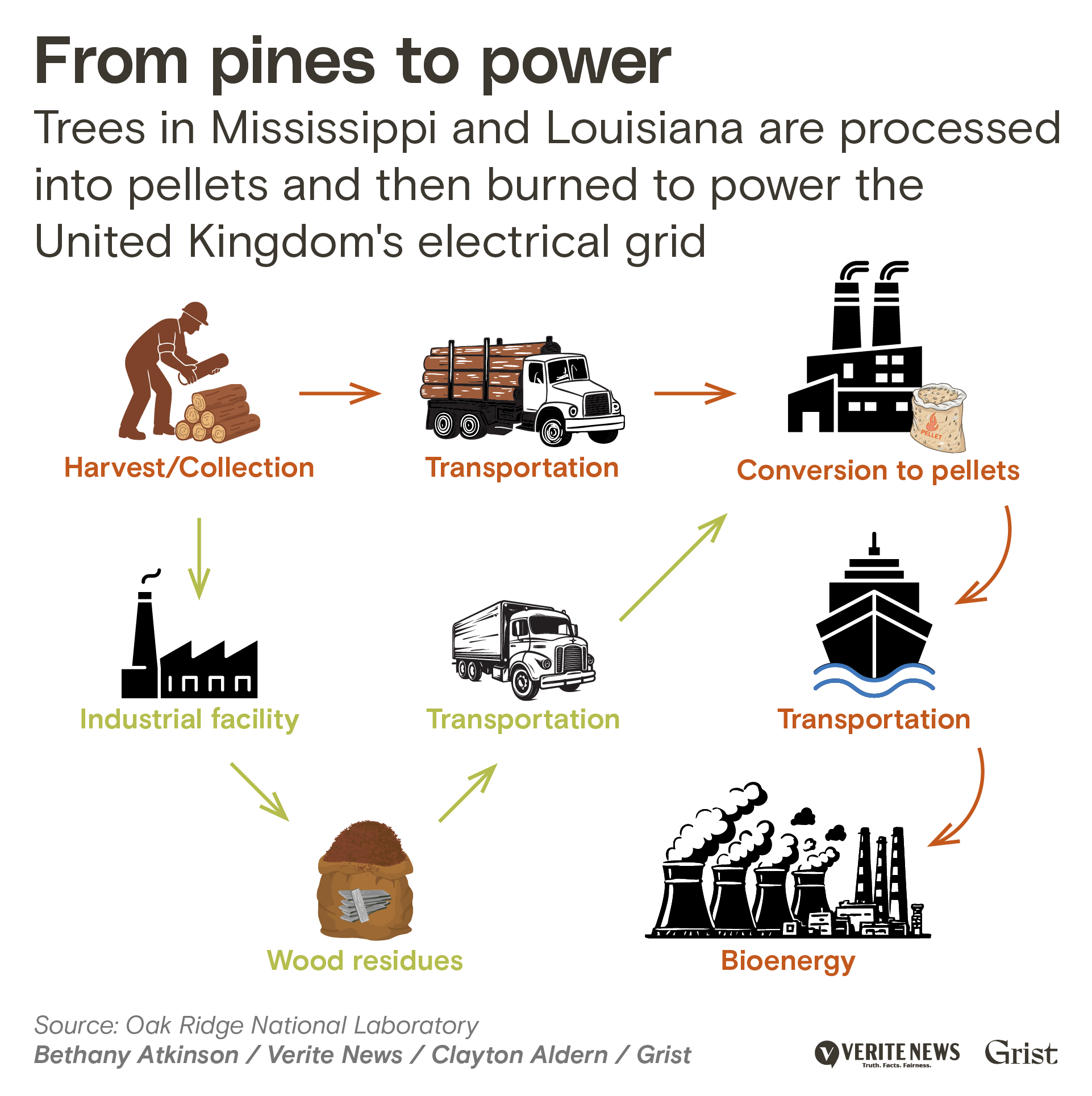
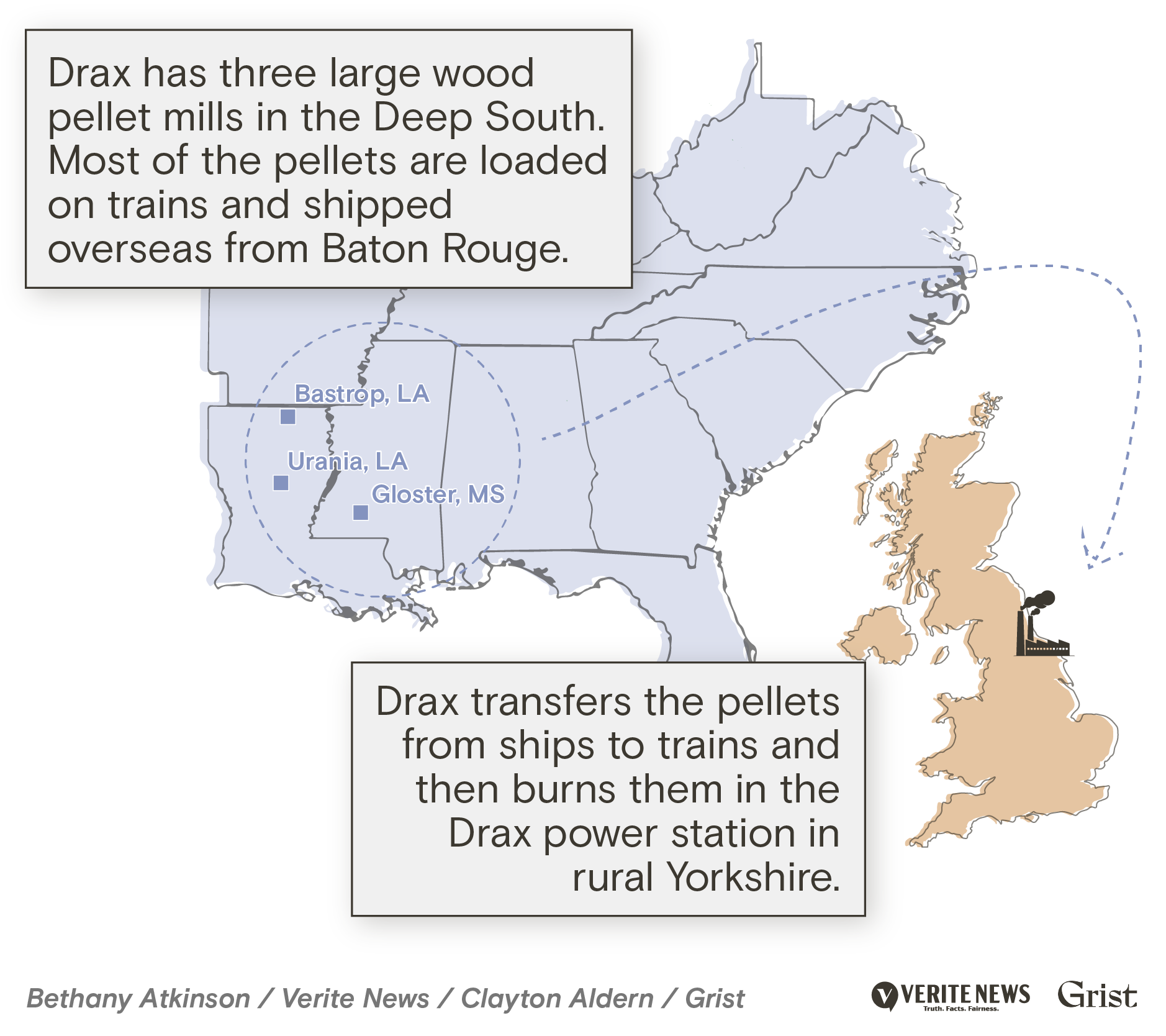
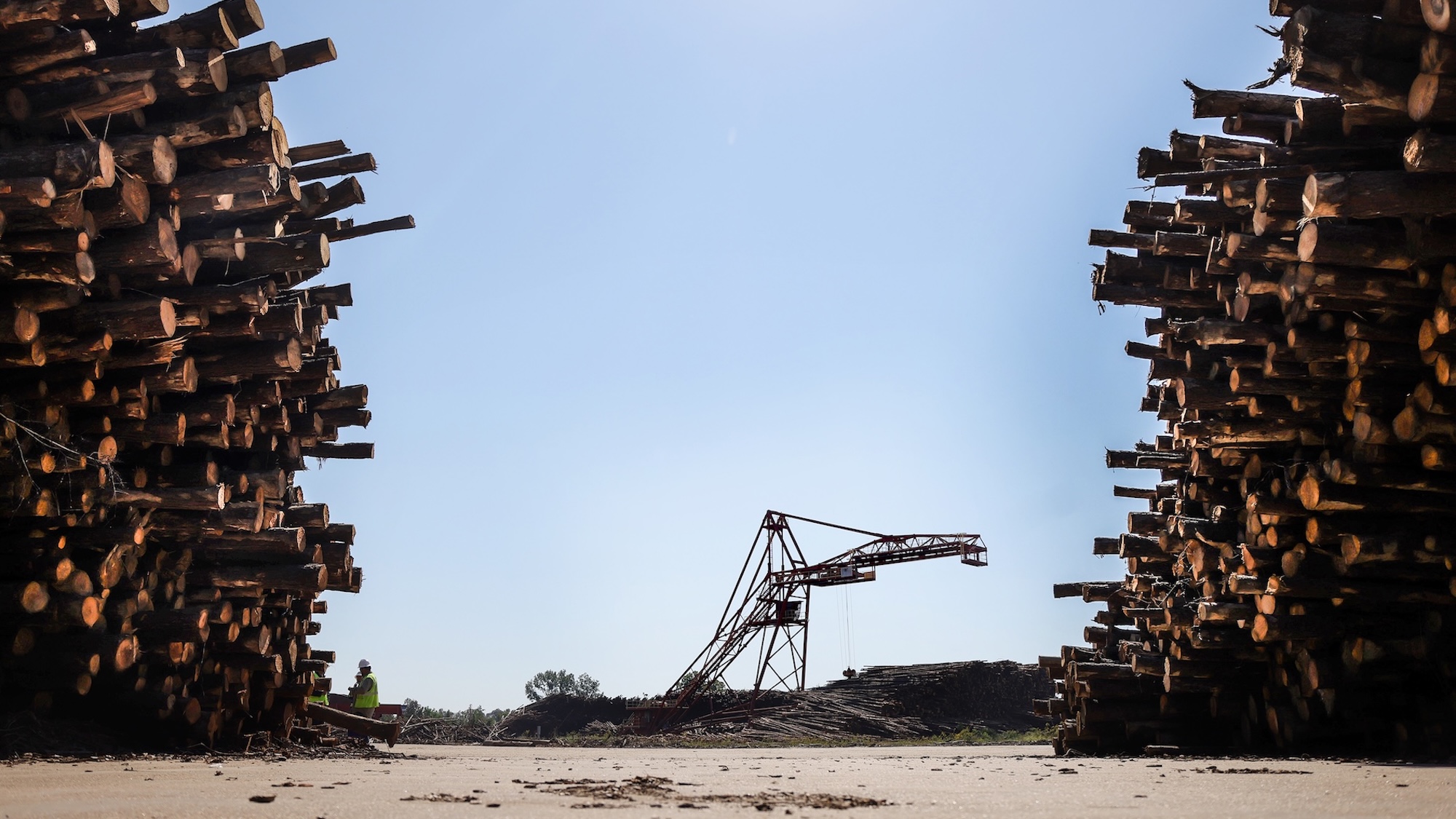
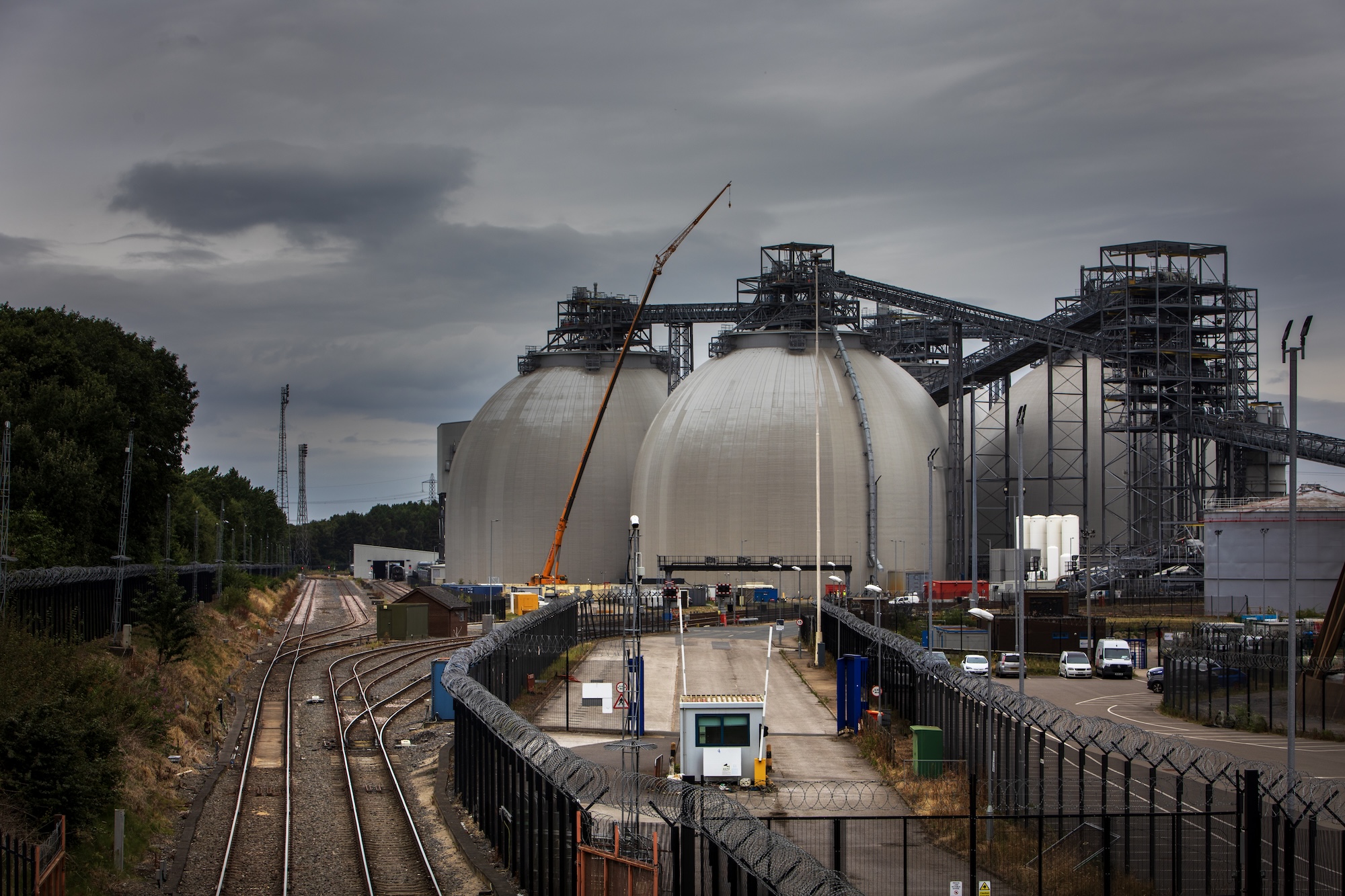
The giant station near Barlow, however, is busier than ever, fueled now by American forests rather than English coalfields. Trees felled, shredded, dried, and pressed into pellets in Louisiana and Mississippi are shipped across the Atlantic Ocean, loaded onto trains, and then fed into the station’s immense boilers. Operated by Drax Group, the station gradually stopped burning coal until it made a full switch to wood in 2023. It now burns enough pellets to generate about 6 percent of the country’s electricity.

a field of purple flowers next to big smokestacks

Purple flowers crowd a field near the Drax power station in Drax, England. The former coal plant now runs entirely on wood pellets, which the company markets as “sustainable biomass.” Tristan Baurick / Verite News

The U.K. government, in a bid to meet its ambitious climate goals, is giving Drax the equivalent of $2.7 million a day in subsidies to keep burning pellets, which the company touts as “environmentally and socially sustainable woody biomass.”

But a growing number of Brits aren’t buying it. After years of celebrating the shift away from coal, U.K. residents are realizing that wood pellets aren’t the cleaner, greener alternative they were supposed to be.

“I still have difficulties in my little brain figuring out how you can grow wood at the other end of the Earth, chip it, ship it to here … and then burn it, and say, ‘Isn’t that nice and green?’” said Steve Shaw-Wright, a former coal miner who serves on the North Yorkshire Council.

Burning wood for power instead of one of the dirtiest fossil fuels offers the illusion of sustainability and robust climate action, said William Moomaw, an emeritus professor of international environmental policy at Tufts University. But in reality, it’s doing more harm to the environment than burning fossil fuels, he said. “England is off coal — isn’t that wonderful?” Moomaw said. “But there’s no mention of the fact that it’s because they’re now burning wood from North America, which emits more carbon dioxide per kilowatt of electricity than does coal.”

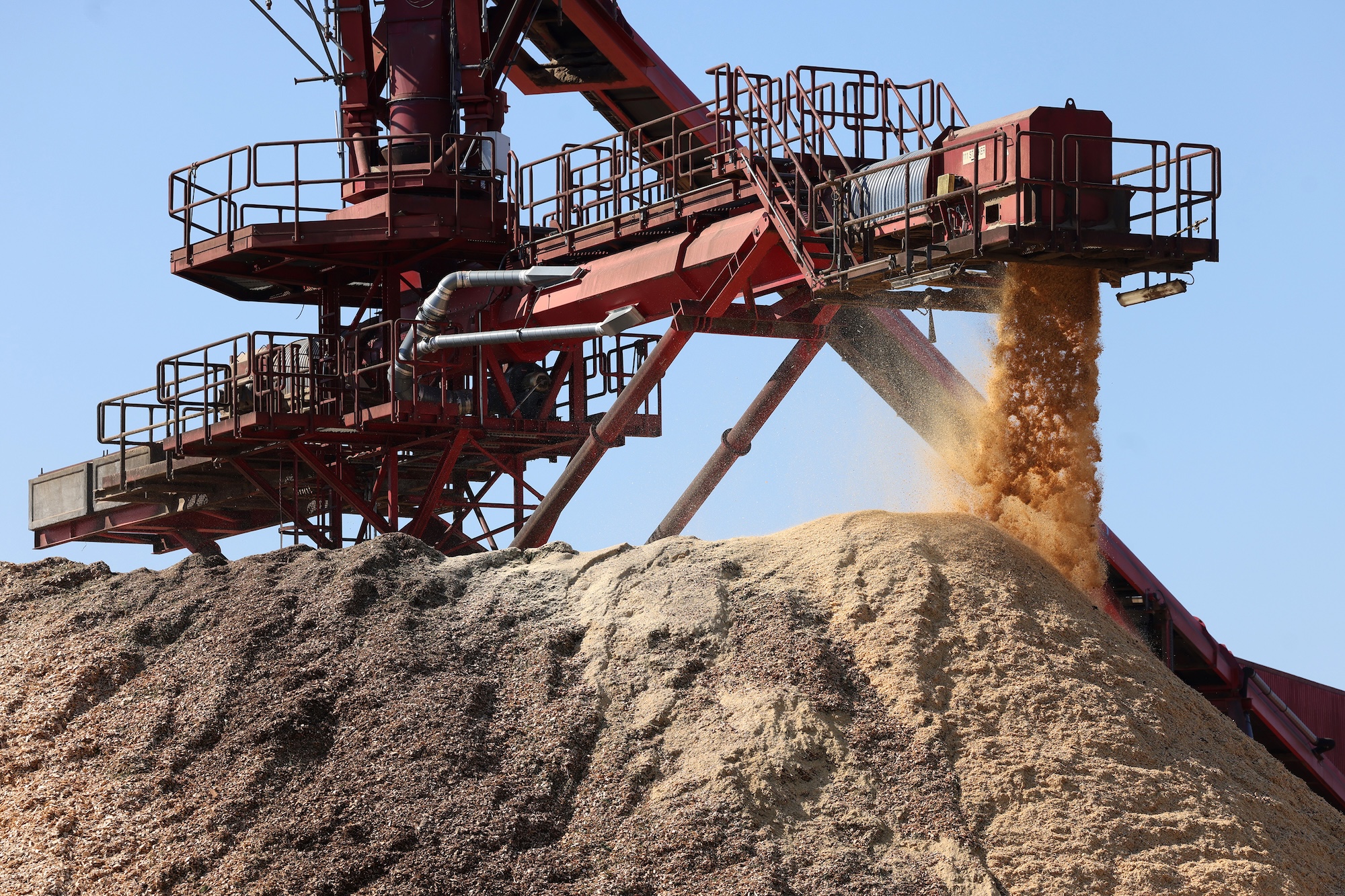
a large piece of equipment shreds wood, generating dust

Sawdust piles up at Drax’s wood pellet mill near Urania, Louisiana. The mill presses sawdust into pellets that are burned in a former coal plant in Yorkshire, England. Eric J. Shelton / Mississippi Today

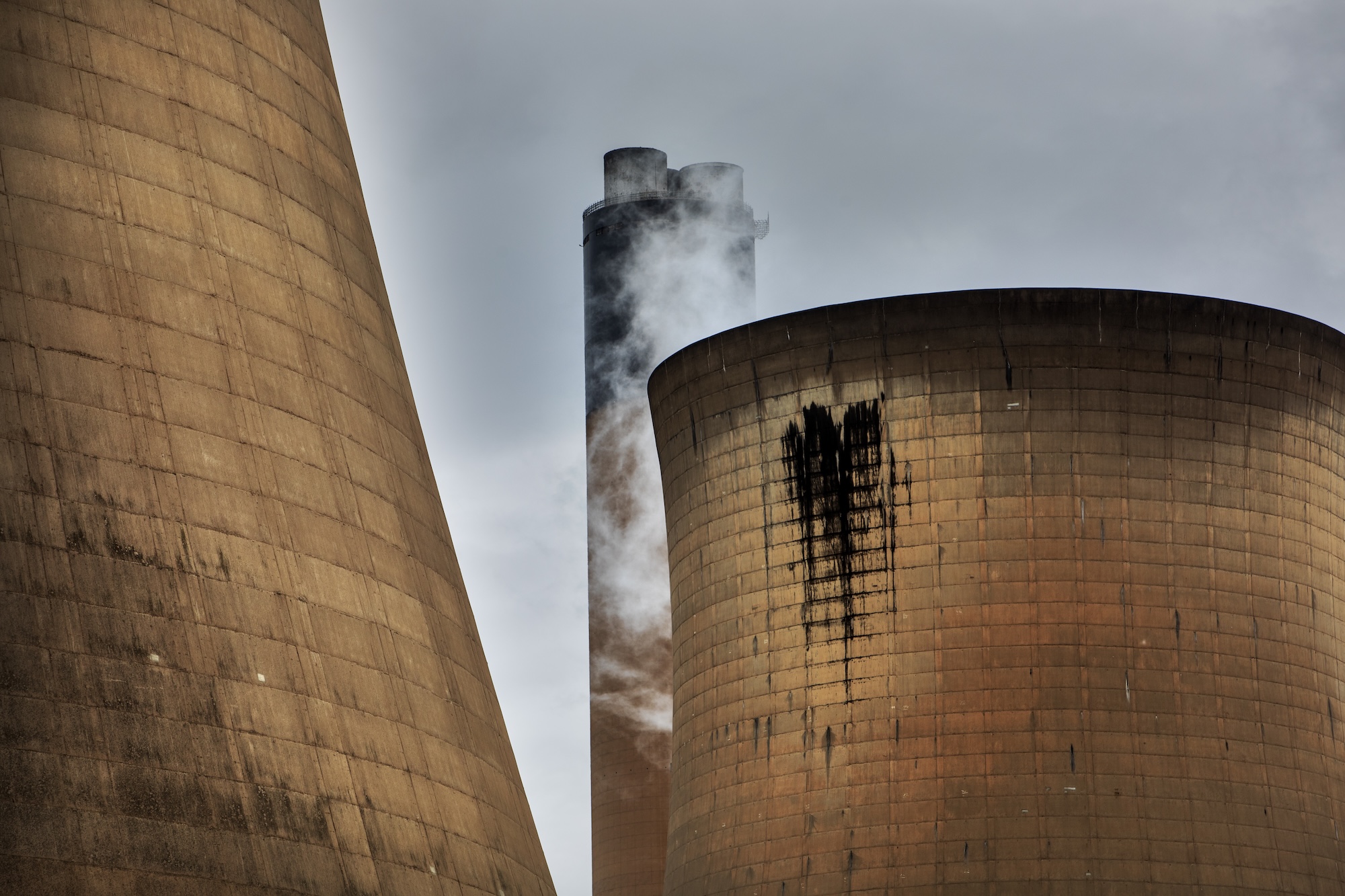
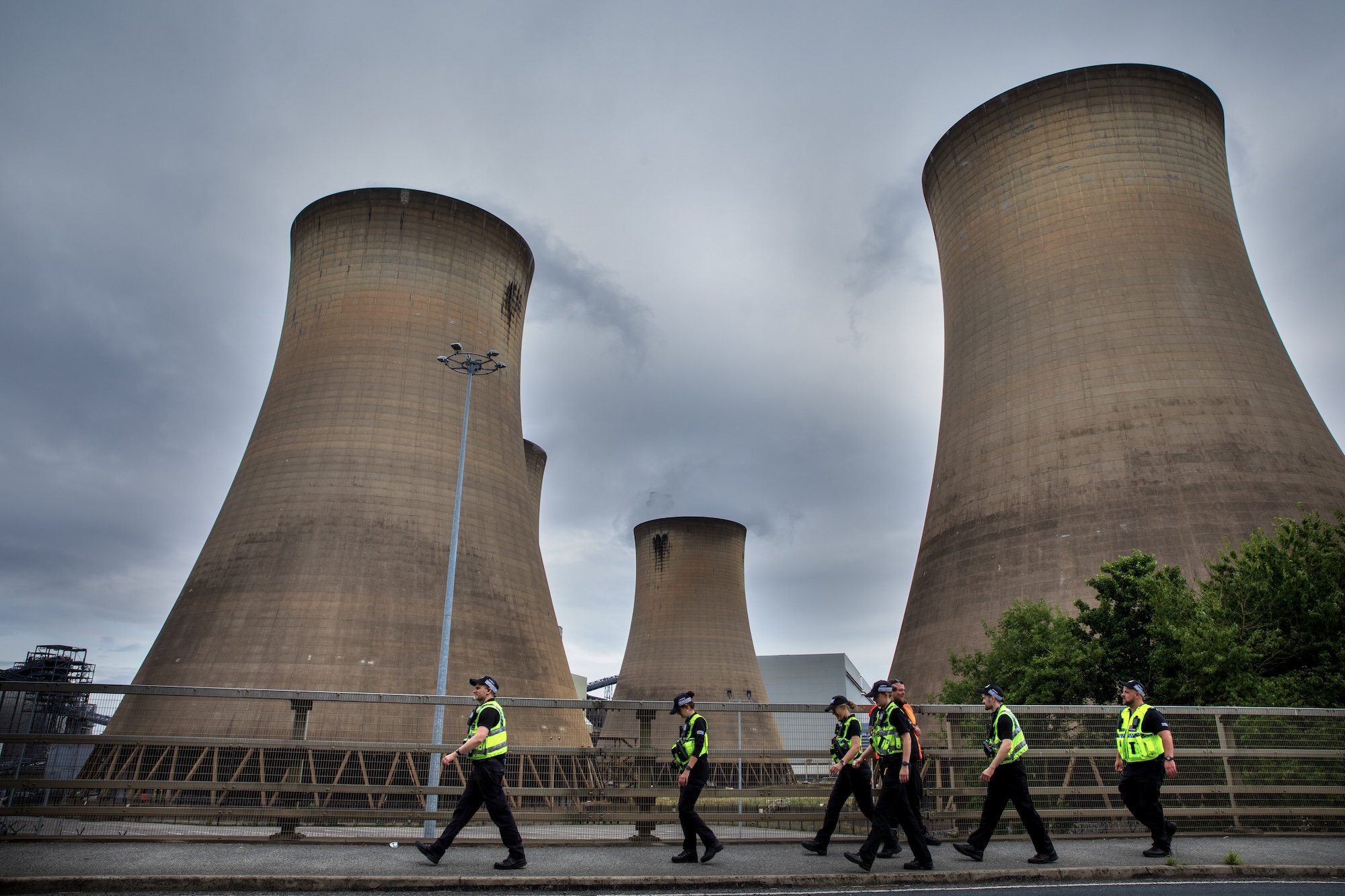
The Drax station in North Yorkshire emitted more than 14 million tons of carbon dioxide in 2024, making it the largest single source of CO2 in the U.K., according to a report last year from the climate research group Ember. That amount is more than the combined emissions from the country’s six largest gas plants and more than four times the level of the U.K.’s last coal plant.

A Drax spokesperson called Ember’s research “deeply flawed” and accused the group of choosing to “ignore the widely accepted and internationally recognized approach to carbon accounting,” which is used by the United Nations and other governments.

But several scientists say burning wood can’t help but produce more emissions. Wood has a lower density than coal and other fossil fuels, so it must be burned in higher volumes to produce the same amount of energy. Between 2014 and 2019 — a period when coal was in steep decline — the country’s CO2 emissions from U.S.-sourced pellets nearly doubled, according to a report by the Chatham House research institute in London. “Almost all of this U.K. increase was associated with biomass burnt at Drax,” the report’s authors wrote.

The station’s cross-continental supply chain is also heavy on emissions. For every ton of pellets Drax burns, about 500 pounds of CO2 are released just from making and transporting the product, according to Chatham House. About half of Drax’s supply chain emissions are tied to production, while transportation via trucks, trains, and ships accounts for 44 percent, according to the company’s estimates.

Flow diagram titled 'From pines to power' showing the wood pellet supply chain. The circular process begins with harvest/collection (worker with chainsaw and logs), moves to transportation (logging truck), then to an industrial facility for processing, which produces wood residues. These materials are transported again to conversion facilities where they become pellets, then transported by cargo ship overseas to bioenergy facilities (power plants with smokestacks) in the United Kingdom's electrical grid. Arrows connect each stage in the process.

Flow diagram titled 'From pines to power' showing the wood pellet supply chain. The circular process begins with harvest/collection (worker with chainsaw and logs), moves to transportation (logging truck), then to an industrial facility for processing, which produces wood residues. These materials are transported again to conversion facilities where they become pellets, then transported by cargo ship overseas to bioenergy facilities (power plants with smokestacks) in the United Kingdom's electrical grid. Arrows connect each stage in the process.

The switch from coal to pellets created a new pollution problem in Louisiana and Mississippi, where most of the station’s fuel is produced. Drax’s pellet mills have repeatedly violated air quality rules at its two Louisiana mills, located near Bastrop and Urania, and its mill in Gloster, Mississippi. The mills emit large quantities of formaldehyde, methanol, and other toxic chemicals linked to cancers and other serious illnesses, according to regulatory findings and public health studies. Residents of these poor, mostly Black communities say the mills’ dust and pollution are making them sick. In October, several Gloster residents sued the company, alleging that Drax has “unlawfully released massive amounts of toxic pollutants” in their community for nearly a decade.

The Drax spokesperson said the company is improving its mills’ pollution controls in line with a longstanding dedication to “high standards of safety and environmental compliance.” On its website, Drax says the company is “committed to being a good neighbor in the communities where we operate,” offering funding for environmental education programs, ensuring its wood is sourced from “well-managed forests,” and supporting land conservation efforts, including the establishment of a 350-acre nature reserve near Watts’ home in Barlow.

Much of the timber that Drax harvests comes from private lands in the Southern United States that function more as tree farms than natural forests. But in recent years, Drax has sourced an increasing share of its wood from western Canada, including from British Columbia’s treasured old-growth forests.

Map showing the wood pellet supply chain from Louisiana and Mississippi to the United Kingdom. Three locations are marked in the Deep South: Bastrop, LA; Urania, LA; and Gloster, MS, where Drax operates large wood pellet mills. Arrows indicate that pellets are loaded on trains and shipped overseas from Baton Rouge. The map shows the journey across the Atlantic Ocean to the UK, where Drax transfers pellets from ships to trains and burns them at the Drax power station in rural Yorkshire.

Map showing the wood pellet supply chain from Louisiana and Mississippi to the United Kingdom. Three locations are marked in the Deep South: Bastrop, LA; Urania, LA; and Gloster, MS, where Drax operates large wood pellet mills. Arrows indicate that pellets are loaded on trains and shipped overseas from Baton Rouge. The map shows the journey across the Atlantic Ocean to the UK, where Drax transfers pellets from ships to trains and burns them at the Drax power station in rural Yorkshire.

In 2024, Drax agreed to pay a nearly $32 million penalty after U.K. energy regulators determined the company had been misreporting data on where it sources its wood and how much of it comes from environmentally important woodlands. The practice of pelletizing Canada’s mature trees appears ongoing, according to a recent report by the environmental group Stand.earth. Citing logging data from 2024 and 2025, the group claims Drax has been accepting truckloads of trees from British Columbia that were hundreds of years old. Drax downplayed the report, emphasizing that the logs were legally harvested and of insufficient quality to go to sawmills.

Drax sees itself as one of the most environmentally conscious companies on the planet. “Sustainability is the cornerstone of long-term success and the transformation of our business,” said Miguel Veiga-Pestana, Drax’s chief sustainability officer, in a statement.

While most pellets Drax makes in the U.S. are derived from logged trees, the company also uses sawdust and other leftovers from lumber mills. The company supports forest thinning, a practice it says can ease crowding in densely planted timberlands, improve the health of the remaining trees, and diversify habitat for wildlife.

“By ensuring that we source sustainable biomass, and that we embed sustainable practices into every facet of our operations, we can build lasting value,” Veiga-Pestana said.

smoke escapes a large smoke stack

Water vapor escapes a cooling tower at the Drax power station in Drax, England. The station is the largest wood pellet-burning facility in the U.K. and was originally developed to burn coal. Gary Calton / The Guardian

The value of the entire utility-scale wood pellet industry depends on what many scientists call an “accounting loophole” entrenched in some of the earliest international policies aimed at combating climate change.

During the 1990s, the United Nations’ Framework Convention on Climate Change and the Kyoto Protocol established land use and energy use as two separate categories for counting a country’s greenhouse gases. To avoid double counting wood burning across both land-use and energy-use categories, the U.N. assigned wood pellet emissions only to the land-use sector, believing that normal forest regrowth would keep pace with the modest harvests for pellet production. The wood pellet industry at the time was tiny, selling the bulk of its products to homeowners with small pellet-burning stoves. Any carbon released by burning would be balanced by new trees that work as natural CO2 absorbers, the thinking went.

The effect, though, was that regulators would count CO2 from burning oil and coal, but CO2 from burning timber could stay off the books.

“Drax and other bioenergy companies took that and said, ‘Look, we have no impact — we’re instantly carbon neutral,’” said Mary Booth, director of the environmental organization Partnership for Policy Integrity.

Read NextEquipment to move logs in between two giant piles of logs at a biomass facilityEurope gets ‘green energy.’ These Southern towns get dirty air.Tristan Baurick

This exemption was incorporated into the Kyoto Protocol, the first international treaty that set legally binding greenhouse gas reduction targets. Experts were soon warning of troubling consequences. In a study published in the journal Science in 2009, scientists said the exemption was an “accounting error” that could spur deforestation and hinder attempts by governments to curb emissions.

“The error is serious, but fixable,” said Tim Searchinger, a Princeton University energy policy expert, in a statement at the time. “The solution is to count all the pollution that comes out of tailpipes and smokestacks whether from coal and oil or bioenergy, and to credit bioenergy only to the extent it really does reduce greenhouse gas emissions.”

Other scientists challenged the industry’s claim that planting trees would neutralize power station emissions. According to a study from the Massachusetts Institute of Technology, it can take 44 to 104 years for forest regrowth to pay back the carbon debt from pellet burning. While the planet waits decades for the trees to regrow, glaciers melt, seas rise, and weather from droughts to hurricanes grows more extreme.

a truck turns the corner of a road through a wooded area

Trucks haul lumber in and out of the Amite BioEnergy wood pellet production facility operated by the Drax group in Gloster, Mississippi, on September 24, 2025. Kathleen Flynn / The Guardian

Despite these warnings, the European Union latched on to wood burning as a relatively quick and cheap way to meet tighter climate mandates. Rather than blanket the landscape with wind turbines and solar panels, countries could dust off old coal plants and put them on a diet of “carbon-neutral” pellets.

The shift toward bioenergy accelerated in 2009, when the European Union set a target of getting 20 percent of its energy from renewables by 2020. Pellet demand in Germany, Belgium, Italy, and other European countries immediately began to increase, but in the U.K., the growth was explosive. Between 2012 and 2018, the U.K.’s pellet consumption surged by 471 percent, according to the U.S. Department of Agriculture.

The U.K. left the European Union in 2020, and it remains the world’s biggest buyer of wood pellets. In 2024, the country imported nearly 10.3 million tons, a record high spurred partly by a dip in pellet prices.

Wood burning has helped the U.K. come within striking distance of its goal to eliminate oil and gas from its electrical generation by 2030. Nearly 74 percent of the national grid is powered by what the government calls “low carbon” energy sources. Wood pellets and other forms of bioenergy supply about 14 percent of the low-carbon mix, with wind, solar, and hydropower accounting for the rest.

Every workday, Ian Cunniff climbs into his orange overalls, pounds his helmet tightly on his head, and steps into a cage that drops 459 feet into a maze of dark tunnels littered with old machinery.

The stout Yorkshireman is one of the last miners still working in the coal pits, but now his job is to lead tours along the rich seams he once risked his life to dig out. Cunniff is a guide for the National Coal Mining Museum at Caphouse Colliery, a former West Yorkshire mine dating back to the 1790s. His last “real” mining job was at Kellingley Colliery, the U.K.’s last deep coal pit and a major feeder of Drax’s power station before it switched to wood.

In the depths of the Caphouse mine, Cunniff grew wistful over the coal still embedded in the walls. The seams once provided nearly everything a man and his family needed, he said. “It was your future; it was your retirement. So much of it has never been touched.”

A man in mining gear looks wistfully into the distance in the middle of a march

Miners, union members, and the local community take part in a protest march in 2015 in Knottingley, England, marking the end of deep-pit coal mining in Britain. Christopher Furlong / Getty Images

Wood pellets didn’t kill the U.K.’s coal industry. It began to wither as the country shifted from cheaper, imported coal in the 1980s to natural gas in the 1990s. Coal’s decline left gaping holes in Yorkshire’s economy and social fabric. The wood pellet industry has contributed some jobs and tax dollars, but it can’t replace what the region once had, said Shaw-Wright, the county council member.

“With coal, you didn’t really need to get an education much because you were going to get a job at the pit,” he said. “And if you had a job at the pit, you would have it for life.”

At its height between the two world wars, the industry employed 1.2 million people in the U.K. In some northern England counties, 1 in 3 residents was employed in coal mining. The Selby Complex, a group of deep-pit mines near the Drax power station, employed about 3,500 workers before it shut down in 2004. The industry also supported cooperative groups that funded social halls, community brass bands, libraries, sports clubs, and welfare programs for injured miners and their families.

In contrast, the Drax-dominated bioenergy industry employs about 7,400 people across the U.K., including about 1,000 people at the Drax station. The increasingly automated industry has seen its job numbers fall by more than a third since 2014, according to data from the U.K.’s Office of National Statistics.

A similar trend is playing out in Louisiana and Mississippi, where the three Drax wood pellet mills employ far fewer people than the older pulp and paper mills that once played a dominant role in the Deep South. The paper mill in Bastrop, for instance, once employed 1,100 people. Drax’s pellet mill near the town has just 71 workers on its payroll.

Read Nexta dead end sign near a house in a residential area with greeneryThe biomass industry promised these Southern towns prosperity. So why are they still dying?Tristan Baurick

Shaw-Wright appreciates the economic activity the wood pellet industry brings to Yorkshire but said most of the region’s recent job growth actually comes from a surge in distribution centers for online retailers — a trend that has turned Yorkshire into the country’s “capital of warehousing.” Many of these massive facilities now sit on former coal fields, including the old Kellingley Colliery, yet the work of unloading and sorting parcels doesn’t provide the pay, stability, or sheer number of jobs that mining once did.

After giving another tour, Cunniff rested in the colliery’s old locker room. He knows coal isn’t coming back, but he doesn’t believe cutting and burning trees to power the grid is any better — for Yorkshire or the planet.

“So you’re taking away what’s cleaning the atmosphere, and you’re burning it?” he said. “That’s the big picture, isn’t it?”

The Drax power station is the dominant feature across several miles of North Yorkshire countryside. Its 12 cooling towers are each big enough to hold the Statue of Liberty. Every day, about 17 trains full of pellets arrive to top off four storage domes with a combined 360 million-ton capacity. The pellets are pulverized as fine as flour and blown into several boilers. Stored in hangar-like structures in the station’s center, the boilers consume some 8 million tons of pellets each year with fires that reach 2,500 degrees Fahrenheit.

Just outside the station’s 3 miles of razor-wire fencing is a village, also called Drax, with one tiny pub. Inside, there was little love for the big neighbor.

“They’re taking wood from where they shouldn’t be taking it,” Tony Emmerson said as he sipped a beer at The Huntsman’s bar. “I think we should go back to coal, personally. We’ve got a hundred years of coal right here just waiting to be burned.”

Many of Drax’s post-coal era promises — lower energy bills, cleaner air, and a decarbonized grid — have proven hollow, Emmerson said.

“They get all this tax money but we don’t get cheaper power bills,” said Peter Rust, The Huntsman’s owner. “And they say they’re carbon neutral, but how’s that possible when you have to bring the pellets across an ocean?”

train tracks near giant storage domes

Trains unload wood pellets into giant storage domes each day at the Drax power station in Yorkshire, England. Gary Calton / The Guardian

The growing doubts about the wood pellet industry are seeping into public debate, leading the government to rethink its support for Drax. Last February, Prime Minister Keir Starmer’s government decided that the current subsidies for Drax would be cut in half in 2027. The subsidy renewal, which lasts until 2031, also requires Drax to increase the proportion of “sustainably sourced” biomass from 70 percent to 100 percent. Michael Shanks, the energy minister, told Parliament that the government made the move because Drax was making “unacceptably large profits” and “simply did not deliver a good enough deal for bill payers.”

Shanks, however, emphasized that wood pellets will still play a key role in powering the U.K.’s grid, and he welcomed Drax’s new efforts to bolster its green credentials. That includes a massive investment in carbon capture and storage technology. For years, Drax has been planning a pipeline that would divert about 8.8 million tons of the station’s CO2 emissions into storage under the North Sea. Reduced subsidies, though, are likely to slow these projects, the company has warned.

Many Yorkshire residents knew exactly — and proudly — where the Drax station’s coal came from. They’re much less sure about where the wood is sourced. Watts, the gardener in Barlow, assumed the trees were grown on English farms. Shaw-Wright was also far off the mark, thinking the pellets came from Australia. At The Huntsman, guesses were slightly closer, with people calling out South America and Eastern Europe — regions that together supply only 10 percent of the station’s fuel. The fact that the U.S. meets nearly 80 percent of the station’s demand was a surprise to many.

Environmental groups, meanwhile, have been campaigning for a broader understanding of the industry’s impacts. U.K.-based Reclaim the Power and Biofuel Watch have been highlighting the concerns about emissions as well as the pollution affecting mill towns in Mississippi and Louisiana.

Several groups had planned to stage a large protest outside the Drax station in August 2024. Drawing hundreds of activists from around the country, the “Drax Climate Camp” was to feature five days of “communal living and direct action.” But police preemptively arrested 25 protesters and halted a convoy of vehicles carrying tents, composting toilets, wheelchair-accessible matting, and other gear. Activists staged a much smaller protest outside the police station where their fellow campaigners were held, but the groups decided the camp couldn’t continue without the equipment.

protesters with signs against drax

Climate protesters hold signs outside a police station in York, England, in August 2024. Several of their fellow activists were arrested during preparations for a protest near the Drax power station in rural Yorkshire. Gary Calton / The Guardian

police march near cooling towers for drax power station

Police patrol outside the Drax power station in Yorkshire. Dozens of officers were called to the station in 2024 to prevent a planned protest encampment. Gary Calton / The Guardian

The aborted protest got Shaw-Wright thinking more about the connection between the pellet mills in the Deep South and the electricity that lights his home.

“Louisiana, that’s where they make the ‘gumba’ and they love cooking crocodiles, right?” Shaw-Wright said, half joking. “I think people will be surprised where the wood comes from and … know nothing of how it’s produced or what it entails. We need to be educated more about the communities that, in essence, benefit the Drax power station. And we all benefit from it. But if it’s at the expense of others, it gives you a different perspective.”

Rust, the pub owner, wasn’t so reflective, but he was deeply disappointed the camp was quashed. “I thought we were going to get loads more customers,” he said. “I bought loads more bottles when I heard about it. I thought finally Drax was going to do some good for me.”

This story was originally published by Grist with the headline The UK quit coal. But is burning Louisiana’s trees any better? on Feb 6, 2026.


From Grist via this RSS feed

8


When the Forest Service approved the sale of nearly 70 acres for commercial logging in southern Illinois’ Shawnee National Forest in late 2024, Sam Stearns was furious. The Shawnee is the only national forest in the state, and one of the smallest in the nation. The agency initially billed the so-called McCormick Oak-Hickory Restoration Project timber sale as a “thinning” operation to remove older trees and make room for younger saplings. Logging operations contribute to habitat loss, and Stearns found the Forest Service’s justification lacking.

“Never in the history of this planet has a forest been logged back to health,” said the 71-year-old Stearns.

Stearns, who is the founder of the preservation group Friends of Bell Smith Spring, planned to oppose the sale. He began keeping an eye out for the agency’s public comment period, which provided residents like him an opportunity to voice their concerns. For months, he and other local environmentalists scoured the web and local newspapers for mentions of the sale to prepare for the comment period, but the McCormick Project never turned up.

It would turn out that the Forest Service advertised the project under a completely different name. The sale was titled “V-Plow,” and by the time advocates realized it, they were already a week into the project’s three-week comment period. In the past, advocates said comment periods for logging operations lasted as long as 45 days. Court documents would later reveal that the agency initially didn’t receive any bids. It eventually awarded the contract to an interested buyer in Kentucky in June 2025.

The following month, Stearns and other environmentalists sued the agency to block the plan. They cited the presence of endangered bats and potential impacts to a nearby national natural landmark and alleged that the Forest Service had violated the National Environmental Policy Act, or NEPA. Earlier this fall, a federal judge temporarily blocked the project before allowing the logging to proceed. The case is still pending, and a spokesperson for the Forest Service declined to comment due to the ongoing litigation.

The legal battle is part of a broader clash between fast-tracking projects and ensuring environmental reviews as required by federal law. NEPA mandates that federal agencies consider the environmental impacts of projects, but it includes a provision for “categorical exclusions” that let agencies bypass full reviews and limit public participation for minor proposals.

“This can be a legitimate process, for instance, when used for routine things where the impacts are minimal and well established, like campsite or trail maintenance,” said Garrett Rose, a senior attorney with the Natural Resources Defense Council. “Unfortunately, this administration has been working to aggressively expand the exemptions available to [the Forest Service], and minimize disclosure of projects impacted by categorical exclusions.”

In 2023, the Biden administration attempted to use these shortcuts to speed up permitting for projects like renewable energy and broadband internet. Earlier this year, President Donald Trump began pressing the Forest Service to fast-track timber harvests on public lands. In one executive order, he directed the Forest Service to adopt categorical exclusions developed by other agencies to “reduce unnecessarily lengthy processes.” That means, for example, the Forest Service could use categorical exclusions developed by the Department of Agriculture’s rural development agency for wastewater treatment plants or transmission lines, according to Rose. The order also instructed the Forest Service to develop new exclusions for “thinning” projects related to wildfire mitigation.

Advocates fear the agency is applying categorical exclusions more widely than before for logging projects to comply with Trump’s directive. Local watchdog groups across the country are scrambling to make sure the public has a chance to provide input when logging and oil and gas extraction are approved on public lands.

Ryan Talbott, a conservation advocate with Wildearth Guardians in the Pacific Northwest, said the Forest Service recently cited categorical exclusions developed by the Tennessee Valley Authority to approve a logging project in Mount Hood National Forest, which excused it from the standard robust public comment process. The agency also utilized the same categorical exclusion to move a project forward in Alaska’s Tongass National Forest.

“This all comes back to Trump’s timber executive order,” Talbott said. “They’re looking for every possible avenue to expedite timber production.”

In Indiana, environmentalists recently scored a rare victory against the Forest Service. In September, a federal judge stopped a logging project in the Hoosier National Forest, siding with local advocates who argued the agency’s plan violated NEPA. The ruling found that the Forest Service did not properly weigh the environmental impacts of a proposal to log 4,000 acres and clearcut 4,000 more, among other actions, within Indiana’s only national forest.

In Illinois, however, Stearns’ lawsuit is still ongoing. A Kentucky logging crew harvested about half of the nearly 70-acre timber sale in late August before temporarily halting in early September due to Stearns’ lawsuit. The loggers have yet to finish the job.

Standing at a distance from the cut hillsides in late November, Stearns said the Forest Service is bad at a lot of things, but they’re good at one thing: cutting down trees.

“Even if they were getting a premium price for this wood, which I know they’re not, those trees would be much more valuable standing, contributing to the health of an ecosystem, than they’ll ever be cut like that,” he said.

Editor’s note: The Natural Resources Defense Council is an advertiser with Grist. Advertisers have no role in Grist’s editorial decisions.

This story was originally published by Grist with the headline How the Trump administration is fast-tracking logging in Illinois’ only national forest on Dec 16, 2025.


From Grist via this RSS feed

9


The farmers and ranchers who descended on City Hall in Jacksonville, Texas, had been told to “leave their pitchforks at the door.” While everyone ultimately arrived unarmed, the attendees of the June 19 board meeting of the Neches & Trinity Valleys Groundwater Conservation District were ready for a fight.

In the hallway outside the boardroom, wives tried to cool their husbands with handheld paper fans that flapped uselessly amid a sea of silver hair — stoic men with sweat-slicked brows beneath weathered cowboy hats, veterans’ insignia, and red MAGA ball caps. Near the chamber door, a uniformed officer stood sweating through his shirt, trying to enforce the fire marshal’s 150-person limit while the crowd swelled behind him. The sign-in table, barely visible through the crush, had already collected nearly 100 names — almost all were there to speak out against the water permits requested by two shadowy LLCs tied to hedge fund manager Kyle Bass and his investment group, Conservation Equity Management Partners.

The permit applications submitted by Bass’ Redtown Ranch Holdings LLC and Pine Bliss LLC collectively request permission to withdraw approximately 15 billion gallons of water annually from the Carrizo-Wilcox aquifer in East Texas, an amount residents fear will run their wells and farms dry. Without taking off their “Don’t Tread on Me” T-shirts, the citizens of six East Texas counties where Trump took around 80 percent of the vote last November are now turning to their state government to protect them from billionaires.

A photo shows a crowded room with some sitting and some standing, and one woman holding up a sign reading "keep your straws out of our aquifer!"

Residents pack the boardroom at the Neches & Trinity Valleys Groundwater Conservation District meeting in Jacksonville, Texas, on June 19. Reid Bader

Jacksonville sits about two hours southeast of Dallas. With a population just shy of 15,000, it’s the largest city in Cherokee County, one of the three counties represented by the Neches & Trinity Valleys Groundwater Conservation District. The trees in the county are lush and tall, and the Neches and Trinity Rivers gently flood the landscape with a predictability that local farmers use to their advantage. The county’s tight-knit residents typically vote Republican, they’ve told me over the years, to protect their freedom from government overreach. But as they watch water conflicts breaking out all over Texas, they feel their communities are being overwhelmed by heavy industry and profiteering. Some locals have started making the case that it’s not government overreach for the state to step in when the fight’s not fair.

Melisa Meador, who identified herself as a wife, mother, Christian, and pecan farmer with 600 acres near Bass’ Redtown Ranch — one of the LLCs looking to pump groundwater — took a prophetic tone in her testimony to the conservation district board. “Those who endlessly accumulate sow the seeds of their own destruction,” Meador said at the podium with the cadence and poetry of a revivalist. “Today’s water barons join river to river, well to well, until all water flows through their meters. Their thirst for profit can never be quenched.”

For his part, Bass feels he’s being mischaracterized. “I’m not coming at this as a robber baron, and I’m not coming at this as someone who intends to do any harm whatsoever,” he told me in the hall after taking a break from being public enemy number one inside the Jacksonville boardroom. “If they come back to me and say, ‘You’re going to do harm, you need to reduce your permit,’ I’m a very reasonable person.”

He’s not shy about his intentions for the water, though he insists that he does not already have buyers lined up. The water, should he get it, could be transported out of East Texas to any number of bone-dry cities west of the Carrizo-Wilcox. Unless the government wants to hang a “closed-for-business sign on I-35,” he said, there has to be some solution to the statewide water shortage. Really, he said, the amount of water he’s talking about exporting is a drop in the bucket — less than 1 percent of what the state needs.

A photo shows a woman speaking at a podium, and behind her in the crowd, Kyle bass sits listening.

Investor Kyle Bass, center, leans forward to listen to a speaker at the meeting in Jacksonville. Reid Bader

“I mean, we’re talking about a large amount of water in this area, but a very small amount of water as it relates to the state,” Bass said. “The state has a real problem.”

He’s right. Droughts have always been part of Texas weather, but with climate change, they’ve grown longer and hotter. Meanwhile, increasingly unpredictable torrents of rain are flooding canyons and tributaries but doing little to refill the aquifers under parched, hard land.

West Texas is getting drier, heading toward all-out catastrophe for high desert cities and the state’s treasured spring-fed rivers. The Panhandle and Gulf Coast are scrambling for new water sources as agriculture and industry outpace local basins and aquifers. As drought conditions persist, the primary urban corridor, Interstate 35, has boomed with massive, thirsty tech companies that exhaust local water supplies in metropolis-adjacent exurbs. And the Edwards Aquifer — the massive limestone tank under southwest Texas — cannot support more growth, rendering San Antonio desperate for imported water. Like ravenous wolves, the thirsty cities are on the prowl for water. And there, underlying the lush forests and riverbeds of East Texas, sits the Carrizo-Wilcox — a big, juicy pig, with no one standing guard.

San Antonio struck first, running its 140-mile Vista Ridge pipeline and pulling 16 billion gallons per year from the Carrizo-Wilcox, causing wells in some rural counties to sputter. Fast-growing Austin suburbs also began sinking proverbial straws into their surrounding counties, laying pipe to keep up with exploding development. In Lee County, just east of Austin, the San Francisco-based water asset management firm Upwell Water announced plans to build a pipeline so big that the cities of Bryan and College Station, along with Texas A&M University, jointly filed suit to stop what they see as a groundwater grab.

Read Nexta line of four houses reflected into a body of waterThe little-known Nevada company making millions off the Western water shortageJake Bittle

There’s more to the pipeline palooza than just competition for scarce resources. There are also fortunes to be made. Conservationists, well drillers, and even industry insiders have started comparing the rush on the Carrizo-Wilcox to the oil frenzy of the Texas Permian Basin or the California gold rush. But this time, the boomtowns won’t spring up next to the pumps. The real fortunes — and the real growth — are happening hundreds of miles away, in cities that may never lay eyes on the rural wells quenching their thirst.

Sitting on top of a gold mine doesn’t mean that every resident of East Texas could be about to strike it rich. The infrastructure to pump and export billions of gallons of water is more than most farmers and ranchers could afford — so they can’t drain their own land. Nor will water exporters need to pay them top dollar for their largest tracts. All an exporter needs is a couple of acres and some antiquated property rights.

In Texas, landowners enjoy the “rule of capture,” a doctrine based in Roman and Old English law giving them the right to harvest whatever groundwater flows under their property, even if it causes problems for their neighbors. This regularly did cause problems between neighbors — especially if one neighbor was an industrial farmer — so in 1940, Texas established groundwater conservation districts to serve mostly as monitors and arbiters. As regulatory bodies, they are ill-equipped to impose strong enough penalties to stop an operation like Bass’. District boundaries often follow county lines, a demarcation which, many have pointed out, means nothing to the water flowing below. If the district tells you no in one county, you can just go next door.

Some in Texas, including some Republican lawmakers, would like to see that change. Following the June 19 meeting in Jacksonville, the Neches & Trinity Valleys Groundwater Conservation District ultimately opted to kick Bass’ permit request to the State Office of Administrative Hearings, a referee in complex regulatory fights that’s intended to give citizens, companies, and government entities a legal forum for high-stakes disputes — like who gets to pump 15 billion gallons of East Texas groundwater. The hearing has yet to be scheduled, in part because of lawsuits filed by many of the people and businesses who could be affected. But the outcry in Jacksonville sparked a growing awareness that every single Texas politician represents one of two kinds of places: districts that need water, or those that stand to lose it.

A man in a cowboy hat stands on the bank of a river, with his back to the camera

State Representative Cody Harris stands on the banks of the Trinity River in July. Harris has proposed an overhaul of the state’s century-old “rule of capture” law. Elizabeth Conley / Houston Chronicle via Getty Images

“We cannot compromise one region for another,” state Representative Cecil Bell said to another packed room, this time at the Texas Capitol in Austin. The House Natural Resources Committee convened on July 15 specifically to talk about Bass’ permits, but found themselves wrestling with the statewide dilemma as well. The 11-hour hearing was like a marble and brass version of the Jacksonville meeting, complete with air-conditioning problems in the Capitol annex. Many of those who showed up in cowboy hats to Jacksonville were now in suits and ties. In addition to the 13 members of the committee, six state representatives and two state senators stayed seated on the dais until nearly midnight — a startling show of interest in a topic usually delegated to staffers and lobbyists.

That night, several expert witnesses and more than one state representative suggested that it might be time to rethink the rule of capture and move toward a more modern means of regulation that can balance the needs of neighbors and water systems across the state. But property rights in Texas are sacrosanct, and folks in rural Texas don’t necessarily trust the government — even the one they voted for — to regulate in their favor.

Industry veteran Johnnie Parker, owner of a wastewater cleaning company near the area Bass wants to pump, attended the hearing in Austin — he was one of the few attendees who’d stuck with jeans and a ball cap instead of a suit — and expressed doubts about whether the legislature or even the State Office of Administrative Hearings would ever side with rural East Texas. “To me it’s a circus when it comes to these hearings and whatnot. … There’s a lot of things that happen behind closed doors that the general public doesn’t get to see,” Parker said, sitting on a bench in the vaulted, echoing hallway outside the hearing. He rubbed his fingers together to indicate the power of money. “Until the legislature gets together and decides they want to change the laws on how these things are regulated, this is just a smoke screen.”

A photo shows a man in a ball cap speaking at a podium in front of a crowded room

Johnnie Parker speaks at the Neches & Trinity Valleys Groundwater Conservation District board meeting in Jacksonville. Reid Bader

Most of the testimony indicated that regulation should fall to the groundwater conservation districts, which would need “more teeth” to protect their jurisdictions. That might be the most politically feasible way forward. The legislature this year already raised the maximum fine allowed for overpumping, from $10,000 to $25,000. It also considered a bill to increase funding for groundwater research, which could help develop tools for better real-time monitoring of water levels in high-demand aquifers like the Carrizo-Wilcox. High-quality monitoring could give the groundwater conservation districts the data they need to say no to big projects that are deemed unsustainable. Additional legislation could help those denials hold up in court when property owners dispute them.

Representative Cody Harris represents most of the area where Bass wants to pump and also happens to chair the Texas House Natural Resources Committee. After the hearing, he filed two bills in the special legislative sessions Texas convened in July and August — one bill to prohibit water exports from East Texas and another to fund a study of the Carrizo-Wilcox to determine just how vulnerable it is to over-pumping. The clock ran out on both bills, but Harris feels confident they will fare well in the 2027 legislature, which many expect to be dominated by water issues.

But the Austin hearing underscored an uneasy feeling growing in some rural communities. While the science and governance of millions and billions of gallons were extensively debated, barely a question was asked about the millions and billions of dollars to be made selling that water. Back in Jacksonville, speaker after speaker had scoffed at the idea that Bass would walk away from profit if it hurt his rural neighbors. But in Austin, it was only Parker, out in the hall, talking about the influence money would have on the future of water in Texas. For him and others raising concerns, the water wars are the latest example illuminating the power big money can wield over politics when regulation — usually anathema to free-market conservatism — isn’t strong enough to keep it in check.

This tension between political principle and existential threat was evident back in Jacksonville at the hearing on June 19, when Miria Dean — who lives 2 miles from Redtown Ranch — chatted with others who’d arrived too late or given up trying to get on the list of speakers inside. She told me she saw Bass’ plans as “greed, pure and simple.” What’s legal and what’s right aren’t always the same, she said. Then she paused, smiled, and added, “Happy Juneteenth, right?” We regarded each other, both taking in the significance of the holiday that happened to coincide with the hearing. Slavery was once legal in this country, but it had never been right.

When I asked who should intervene to stop Bass, Dean recoiled at the idea of big government. But her stance was more complex than that. “We still want the government’s hands off. We don’t want their nose in our business. We want them to step in, but only as far as we want them to step.”

Even capitalism, the guiding ethos of small government, is no longer a free pass. “Capitalism is a great thing,” one speaker said at the Jacksonville hearing. “Unfettered capitalism is bad.” The crowd applauded.

This story was originally published by Grist with the headline How a billionaire’s plan to export East Texas groundwater sparked a rural uprising on Nov 19, 2025.


From Grist via this RSS feed