[–] 2 points 2 days ago

Yes, or start raising the potential problems much sooner.

To any anti AI millennials I try to point out that there’s a direct line from google search (which millennials were crazy about in the day) to AI.

  • source
  • [–] 7 points 3 days ago

    I mean generally, how much computational power is lying around in discarded smart phones?

    How much I reached potential is there in some sort of clustering solution to distribute the load such that 2-6 smartphones can get some real work done?

  • source
  • parent
  • context
  • [–] 14 points 1 week ago

    The jokes about starting some random religion aside, it really isn’t that far fetched that being steadfastly anti AI includes enough values and beliefs about the world to form some sort of religion. Maybe weak on metaphysical beliefs, but again, leaning a bit more in that direction from an anti AI position seems pretty natural.

    Humanism, naturalism and whatever you want to call it, if averting from the tech industry’s latest “progress” is non-secular, then let that be a religion.

  • source
  • [–] 3 points 1 week ago

    Awesome, thank you!

    I was wondering, as a completely naive person, if a large enough square gravity wave would be capable of “moving” objects faster than the sites of light, where this is permissible because it wouldn’t be movement but space time bending.

  • source
  • parent
  • context
  • [–] -1 points 1 week ago* (last edited 1 week ago) (5 children)

    Is this about the capitalisation?

    If so yes. Evolution of language is a thing. Older people just have to accept it at some point. But this just seems like a needle regression for the sake of doing something different. Does it come from some smart phone behaviour or something?

  • source
  • parent
  • context
  • [–] 14 points 1 week ago (5 children)

    Ok, that’s a nice one from XKCD.

    Thoigh I’m not sure I appreciate the hover over joke - it seems to imply a square gravity wave would have noticeable physical effects?

  • source
  • [–] 12 points 1 week ago

    I think you’re definitely onto something here about the tone and string being a psychological buffer. It was kinda the point of Trek.

    And Nu Trek just being a catastrophe in the end. Yea, most likely.

  • source
  • parent
  • context
  • [–] 5 points 2 weeks ago

    Hmmm. I saw something in my YouTube feed about something similar (but with different specifics). I’m going to guess there’s some “sceptic” misinformation campaign push, perhaps because of the El Niño?

  • source
  •  

    Realistically, how much more does AI for coding have to get out of leaning and training more for formal verification (with eg Lean, Rocq etc and their interop with mainstream langs)

    If AI hasn’t really pursued this strongly, then maybe a good amount, right?

    I can imagine a scenario where you no longer review the code but a simulation of all the behaviours of the system, perhaps before any code has been written, and then you can trust the output will have accordingly …?

    What practical limits of formal verification are there for this?

    And for the anti AI folks, I’m anti AI too and I don’t use it or want to use it at all. I’m thinking about the future here.


    After watching ep 6, I was wondering …

    SpoilersIt seems that like with the Oklahoma bombing parallel, they’ve set up a war on terror or 9/11 parallel with the Mars uprising. The depiction of the president and how they received the information seems fairly obvious I think.

    The interesting part, I wonder, is that the whole season has been about Mars and all its characters making us sympathetic to them. So I wonder if they’ve just snuck in a war on terror allegory from the terrorist’s perspective with the US as the clear enemy by slowly building up the sympathy with Mars over time and then flipping the switch in ep 6. Feels quite bold and interesting to me! I imagine the conclusion to the dynamic won’t say too much that’s clearly politically controversial, but it seems like the idea is there - just how easy it can be to find yourself a “terrorist” against a super power.


    Just remembered that this was a thing.

    If you don’t know who Bill Joy is, AFAIK, basically a grey beard who made vi (predecessor to vim), contributed to early BSD and founded Sun microsystems.

    The actual article is paywalled. Here’s an internet archive capture (pre paywall): https://web.archive.org/web/20160107134319/https://www.wired.com/2000/04/joy-2/

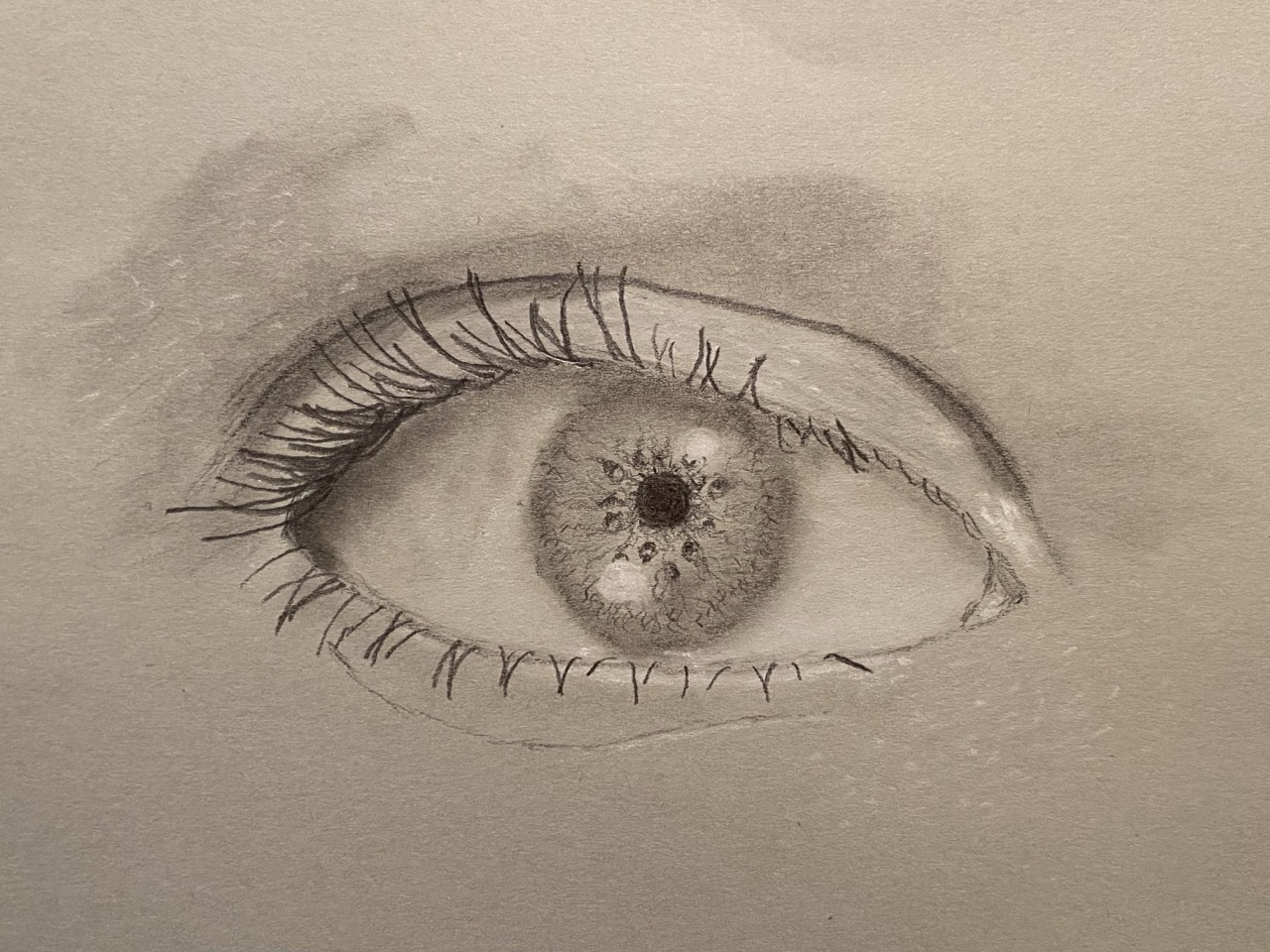
    Eye (lemmy.ml)
     

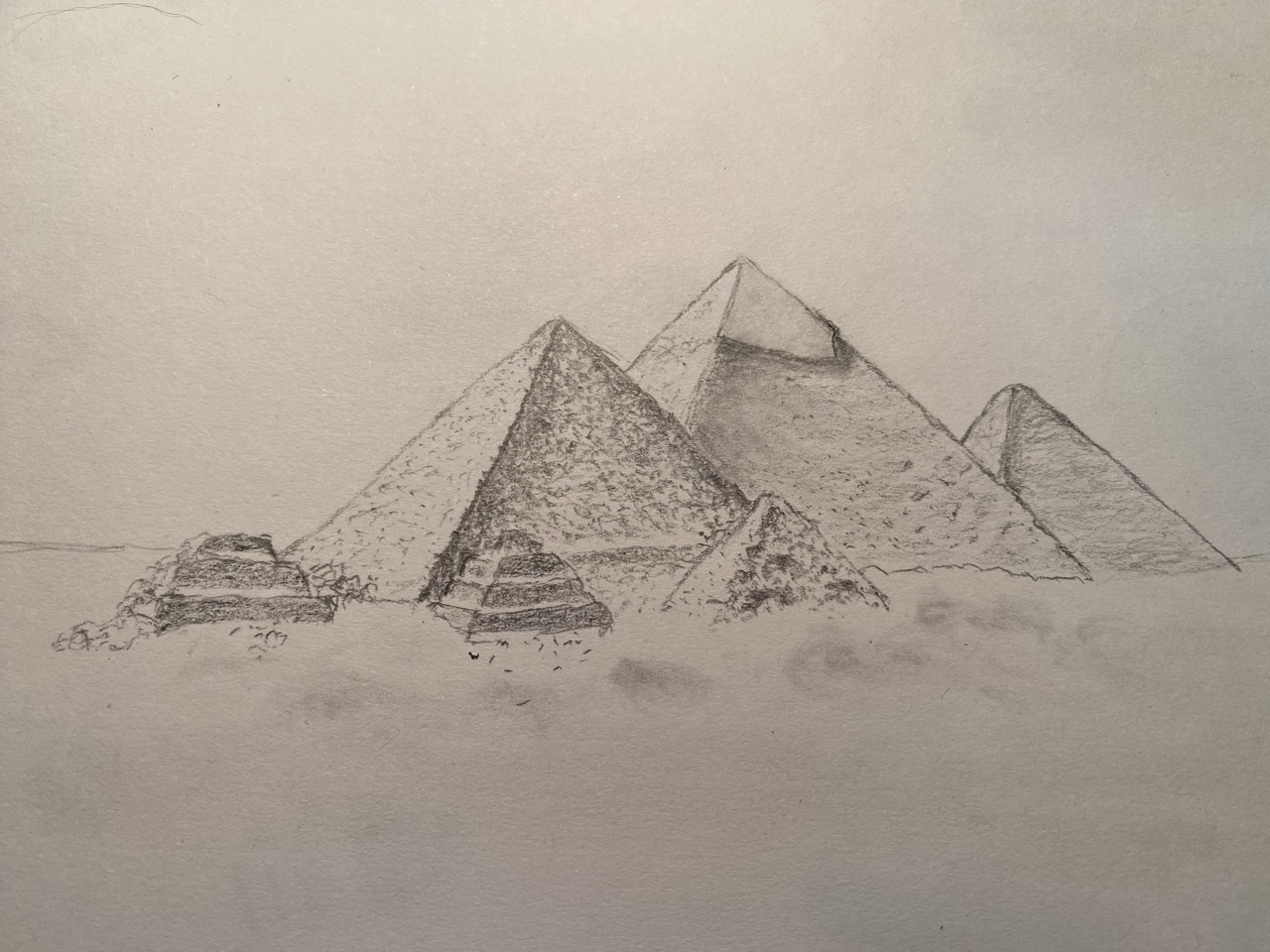
    Learning to draw. After some spheres (and pyramids) I thought I’d try an eye (always wanted to draw eyes).

    After a couple of attempts at irises I thought I’d try grey paper with a white pencil (that’s pretty pale) and some white charcoal to give me more range and leeway to add some highlights.

    The highlights on the eye didn’t quite work out but I’m happy with the rest.

    Feedback and tips very welcome. Happy to talk about what I’m doing too.


    cross-posted from: https://lemmy.ml/post/5531003

    A follow up from my previous post on book 1

    I do have to apologise ... this rant turns out to be pretty negative


    So finished book 2 last night, just writing some off the cuff thoughts.

    Thoughts on the show

    First, I think I'm settled now in being a show fan first, which I'm sure is odd or strange for many book fans. But, for the first two books, I prefer the show and think it's doing a good job at adapting the books. Reading the books after seeing the show has made me miss things the show did and understand the challenge the show has had not just with compressing things into a tight TV schedule but managing the difficulties of adapting these books which include, IMO, pretty glaring flaws or at least awkward elements. Unfortunately, I've now got a pretty clear prejudice against book fans that heavily criticised or hated the show ... with all of the understanding/sympathy in the world, I think they just weren't ready to watch an adaptation and weren't being reasonable about how good or bad the first two books are.

    Rest of season 2

    Otherwise, for the rest of season 2, I'm in a curious position. I know how the second book ends, and so can see some of where the show is headed, but it's also going in some other directions almost certainly influenced by later books. I'm guessing it's bringing in a lot of book 3, and from what I can tell about where book 3 sits in the series (IE, it was supposed to be shorter and kind of wraps up this opening act of the series) I'm guessing it's going to try to wrap adapting all of book 2 and 3 ... so in a way I don't really know what's going to happen, which is cool, except I'm betting Egwene gets rescued and maybe something about Fain gets revealed? Will we get a battle in the sky though, will Lanfear kinda help Rand??

    Thoughts on the book itself

    So, for me, I lump book 2 along with book 1. Overall, it's a somewhat clumsy and seemingly rushed intro into the world and the series, probably written under a cloud of doubt and with an urge to publish quickly. I rank book 2 lower than book 1, largely because I don't think it achieves much and feels a lot like set up and info dump without a clear purpose or coherent story in its own right. For me, the sudden appearance of Moraine at the end, after Lanfear's sudden appearance and revelation, both with some info dump, along with Rand just jumping around the map without any real clear reason as to why it was happening, was all rather telling.

    Reading it, I got the impression that the book was the clumsy/bad adaptation of the show (honestly serious). Like, Rand magically falling into the portal world and having a slightly B-tier fantasy sequence with Selene, who was obviously dodgy and likely lanfear, seemed like a cheap vehicle to get Rand to Cairhien. The portals then seemed like a cheap mechanism to get Rand to Falme while also being able to have the revelation of Machin Shin kinda following him. The whole multiple worlds and multiverse of timelines seems like it was supposed to be telling us something, at least thematically, maybe leading up to Rand's certainty that he's never sided with the dark one in a past life. But it never hit for me ... all I can hope for is that it comes up again in the series. The deal with Fain being mysteriously evil and yet not concluding it in anyway through plot in the book to then be clarified by a Moraine info dump, again felt like Jordan just needed this to be clear for later stories and didn't quite know how to do it.

    Despite the kinda cringey super saiyan deus ex machina ending of book 1 ... we get ... another super saiyan ending in book 2? Fighting in the sky with magic swords or something again? Despite having blown the horn, the outcome of the battle still somehow depended on Rand winning the match? Also, somehow, out of no where, Rand is a master swordsman against Turak (and Ba'alzamon)? In the first book, I guess we can infer that the ending was intended by Ba'alzamon ... but I don't know what I'm supposed to glean from his fight in book 2 ... is Rand just powerful now without much explanation cuz "Dragon" ... cuz that's how it feels.

    Personally, these are not satisfying endings, and the ending of season 1 compares rather favourably to both of the first two book endings. For a series that is celebrated for its magic system, and by implication not having a bad soft magic system, the first two books literally end with Rand being able to do things mostly involving flying in the sky like Goku that make no sense and have no set up other than "it's his fate to fight in the final battle". I say that as someone who's rather fond of soft magic systems ... but this literal deus ex machina stuff is the cardinal sin of soft magic and is not working for me it all. Like when the horn was blown, and hereos came out of nowhere swearing allegiance to Rand, even though that's what the horn is supposed to do ... and then Ba'alzamon appears out of nowhere and Rand starts fighting ... I was honestly thinking ... "really?!"

    Sense of the series over all

    I'm hoping my general contextual critique is accurate, and that these first 3 books are really an introduction that aren't representative of the series because they weren't written with the knowledge that the series was going to happen.

    I always set out to read at least up to book 4 (and hopefully book 6), as many say that's when the series actually starts (I'm guessing it's the beginning of the second act of the series) ... and I will still do so ... as the first two books have definitely set up a very interesting world that I'm a fan of already.

    Looking ahead though, I'm starting to wonder about the series as a whole. The slog is well known (however controversial), and I'm already starting to write off books 1-3. So, it's a 14 book series, where 1-3 are clumsy/flawed set up (my critique ATM) and 7-10 are "slog", leaving 4-6 and 11-14 ... so it's a more or less conventional double trilogy book series?? I know I'm being harsh here (and uninformed!!), and maybe I'm just bitter from book 2, but I'm starting to wonder how much the whole "the series doesn't start until book 4, oh and there's a slog 3 books later" is way too casually brushed off ... like I think I would have preferred a greater warning about what books 1 and 2 are and feel somewhat mislead. Maybe I just don't like Jordan's style ... I'm definitely curious to find out, but I feel like the first two books have structural issues that deserve (from the little I've seen) more commentary.

    Back to the show

    Thing is, as I said, I'm a show fan first, and it's actually the show that has set up the world for me with the books kind of being an awkward supplemental of additional detail.

    For instance, Egwene in Falme is awesome in the show, and it felt like Jordan didn't quite appreciate the depth of the character moment he had created, with her being tortured etc kinda being brushed over as mostly info dump ... except of course when Egwene is free and loses her shit, which was a very nice way of clearly showing the effect of her experience, but also felt somewhat contrived because we had to infer how bad it must have been for her. In the show, if they free her, I am going to feel her liberated rage when she realises what vengeance she can do.

    Generally, the character development of the girls is wonderful in the show and Jordan's treatment shows its sexism age. THe amount of talk of who gets to marry Rand, as well as hair combing ... was pretty cringe. Also, the seanchan do not come off as brutal in this book as I think book fans remember, it's often very after the fact when I feel like at least one clear depiction would have been rather impactful.

    Fleshing out Liandrin and Moraine and Lanfear in season 2 has been awesome as well ... really smart choices it seems. Even leaving out Perrin's wolfbrother stuff with Elyas until season 2 seems smart in hindsight as he is pretty much not a focus of book 2.

    General story thoughts and questions

    Ok, so what was ba'alzamon's plan? Without getting into more critique of the books, because I could be really off base here ... but either the book is being intentionally mysterious, or I totally missed something, but I did not feel like ba'alzamon was a threat in this? Is the idea that many things surprised him ... Fain's extra double shadow nature ... Lanfear's interference ... Mat blowing the horn? When Ingtar revealed he was the darkfriend I had already forgotten about the prologue and that he was the obvious candidate ... largely I think because it really wasn't clear that any plan was pushing things around too much.

    Putting the show together with the books ... I'm guessing it's a relatively big reveal later on in the books that the dark one is actually just Ishamael (which has been fairly clearly hinted at in the books). The show seems to have no cared for that mystery too much (which I've liked) ... I'm curious to see where it goes and for what purpose in the books.

    I'm pretty sure it's me ... but I am not feeling the whitecloaks at all as an element of the world. Their involvement in book 2 was confusing to me ... did I miss something? But also, I guess I just don't like Fanatical Christian tropey stuff.

    From book 1, I was always curious if Shadar Logoth and the Ways would become things ... and I'm pleased to see that they are. Fain being a Shadar creature, that is so against the dark that it is its own kind of dark is super cool to me. And Machin Shin and Siadin are some sort of thing ... right?! That the seanchan are an alternative forked culture was also super cool ... I just wish it was more fleshed out in some way ... and I'm guessing they come back and are a permanent part of the world.

    Generally, as any WoT fan probably things, the diversity of cultures and angles especially on what "the dark" even is wonderful! Going on from that, I feel like the book is trying to hint at me that the relationship between the Dragon and the Dark is not so clear cut. For instance, I wouldn't be surprised if there's a revelation that Ishamael and the Dragon have had their roles reversed in previous ages. This is probably what's keeping me in the series the most ... what is Jordan going to do with his "evil" and "hero" dynamic here.

     

    cross-posted from: https://lemmy.ml/post/4738844

    Just finished the first book ... thought I'd post some quick thoughts and hopefully get some fun discussion

    The TV adaptation

    Generally, my feeling of reading the book after seeing season 1 of the show is that, though it's been a while since I saw season 1, it felt like a much better adaptation than I would have guessed given its negative reception. Yes there were changes, especially at the end, but generally it was a pretty faithful adaptation of the story whereas I got the impression that it was doing huge injustices to the main story. As for the ending in the book, well, I'm not sure that could have worked on TV, and honestly, I did not enjoy the ending of the book and probably prefer that of the TV show. Season 1 had clumsiness and seemed to stumble in its writing and direction and fail to capture the tension of the story ... but in the end, to me, much of that seems to have been first-season-jitters and the shortness of the season.

    The only problems I have with the adaptation, at a distance, are the delaying of the Perrin Wolfbrother progress into Season 2 (which I'm guessing was a common problem), and, to some extent, Morraine losing her powers. For me, Perrin and the wolfbrother stuff were some of the most enjoyable of the book, so I'm not entirely sure why that was pushed back out of season 1, though I'm sure time constraints were a big factor. As for Morraine losing her power, AFAICT that's a mechanism to get her into season 2 more (keeping in mind I haven't read book 2), which I'm personally behind. Somewhat tangentially, Rosamund Pike was probably the actor that shone through into their character in the book the most ... as in I heard her voice when she spoke in the book.

    I seem to recall debate about the appearance of the weaves and that they are visible at all ... generally I like being able to see the weaves in the show and more or less "saw" it that way as I was reading the book.

    The Book

    So ... my immediate impression is that I'm not sure I actually even liked the book.

    I'm eager to read on though. The series and world has more or less been sold to me by its reputation, the show (including season 1 to be fair) and that the first book is widely regarded as not the best of the series. But, after finishing the book, I'd say it's now more likely than not that I won't end up finishing the series because I can imagine it becoming unsatisfying at some point (however reflective the first book is of the rest of the series).

    I mentioned that the ending would not have been appropriate for a direct adaptation to TV, and part of my reasoning/bias there is that I didn't enjoy it. It was clearly rushed, kinda cartoonish and a few too many deus ex machina's for my liking. A telling aspect of it for me was that I didn't have a clear image at all in my mind as I was reading and was instead just absorbing plot points. By contrast, at least with the show, I got clear image of what happened.

    "The Green Man" was never not funny sounding from the first time it came up and I was honestly confused thinking it might be some weird typo or something when it first appeared. That it was more or less a cross between an Ent and Tom Bombadil didn't help. The appearance of the two foresaken out of nowhere like Scooby-Doo villains felt rather off as well. And I'm not sure how I feel about Rand's going Super Saiyan to fix everything. Giving that to Egwene and Nyneave seems like a sensible idea, especially as a way of alleviating some of the itchy gendered vibe in the book, and, at least, as a way of giving them something to do in the ending. From the ending of season 1 I have the feeling that it's an intentionally Pyrrhic victory, and I liked Morraine's suggestion that the artifacts revealed by the eye may have been there for protection not to be collected ... but overall it felt like a quickly thought up ending designed to climactic and get us along to the next book.

    Besides the ending, the obvious LotR borrowings were always a turn off for me, but I can forgive them. There definitely felt like some bloat, especially Rand and Mat's journey to Caemlyn and maybe the whole road from the Two Rivers to Caemlyn. The dialogue and characters surprisingly felt more childish or YA than I expected. I forget how old the 5 two rivers characters are supposed to be, but I was surprised that the dialogue felt the way it did compared to the show.

    Surprisingly, apart from Perrin as a wolfbrother, the other character that I came to like was Mat. Season 2 Mat seems closer than Season 1 Mat (I know they're different actors) to the impression I got of him in book 1. I've heard he becomes a well-liked character ... and just from book 1 I wouldn't be surprised if it turned out that Mat was the main character of the series and Rand kind of falls into the background as the literally larger than life "Dragon" always off doing Dragon things.

    Generally, though, Jordan seems very good at managing character perspective and I did enjoy his ability to put me in the action from a certain person's perspective ... it reads quite well and compellingly ... is this something the series is known for in fantasy?. Otherwise, romance doesn't seem to be his forte thus far. I understand he has a military background, and that soldiers can to be scarred with a certain utilitarian take on romance/intimacy. I kept thinking that Jordan was injecting that kind of experience into the WoT, which is perhaps fitting for the turmoil the characters were going through ... but still it came off as awkward.

    One final note of praise ... Ogiers are definitely a cool fantasy race. I'm not a fantasy buff, so I don't know how original they are/were ... but I'm so down.

    Overall, I'm definitely going to keep reading, but my impression is that I'm hoping the series' writing stabilises. On a broad birds-eye level, the book has done well at setting up this whole world and only showing us parts of it and setting up the very clear idea that the battle has only just begun, even to the point of being a tad too explicit with Loial's declarations of their being ta'veren and having destinies around which the world bends ... wondering if there'll be any subverted tropes there.

    Newbies Questions (non-spoilery please) or Fellow first time readers' speculation time

    • Seriously ... what was up with "The Green Man" ... is it something that just gets forgotten or did Jordan admit that it was awkward?
    • I seem to recall that one of the foresaken at the end admitted to Ishamael already being free and walking around yet it didn't seem to be acknowledged by anyone. Given that the show has gone with Ishamael being the main/only agent, I'm guessing that this comes to the fore in book 2.
    • I guess that this could only be answered with spoilers that I don't want to hear ... but I keep wondering about Shadar Logoth (perhaps being a sucker for dark mysterious things that aren't obviously "The Dark One") ... anyone have any non-spoilery thoughts or speculations on what is actually going on there or what meaning it has or whether it will play a role further in the series?
      • Even if you now know ... what did you think about it when you first read the first book? Obviously there's Mat and his Dagger, which has left something of a Petrov's Gun in the way that it somehow got the foresaken into the Green Man's place (though I guess that could be easily explained by what Morraine says about the way that darkfriends and fades could sense the dagger from afar)
     

    cross-posted from: https://lemmy.ml/post/4530565

    Seems we’ve got two communities !wheeloftime@lemmy.ml and !wotshow@lemmy.ml.

    Got nothing against multiple communities and diversity etc, but in this case I’m thinking it might be unnecessary? Was there an argument amongst mods?

    If true, I don’t know what to do exactly, but figure some discussions around what people would prefer might help.

    For me, I’d collapse down to one community, merge the moderators, and create some basic spoiler guidelines to separate non-book readers from book discussion and spoilers for the show etc.

    view more: next ›