https://piefed.social/post/2215171/comment/12141440#comment_12141626
Many late-coming technologies are issues of concept. Slow-sand filters are incredibly simple, for example, but require an understanding that did not arise until the 19th century (some possible examples in Mesoamerica excepted). Gliders are not actually particularly difficult to acquire the materials or tools to make, especially in cultures that use kites, but require, again, an understanding of the principles involved to provide controlled flight (with gliders requiring precise balance of lift and drag, whereas kites primarily need only light weight and wind stability). Fire pistons are conceptually advanced and were not discovered in Europe until long after they were in Southeast Asia, despite some Southeast Asian cultures which produced and used fire pistons being literal stone-age cultures, in terms of available material tools.
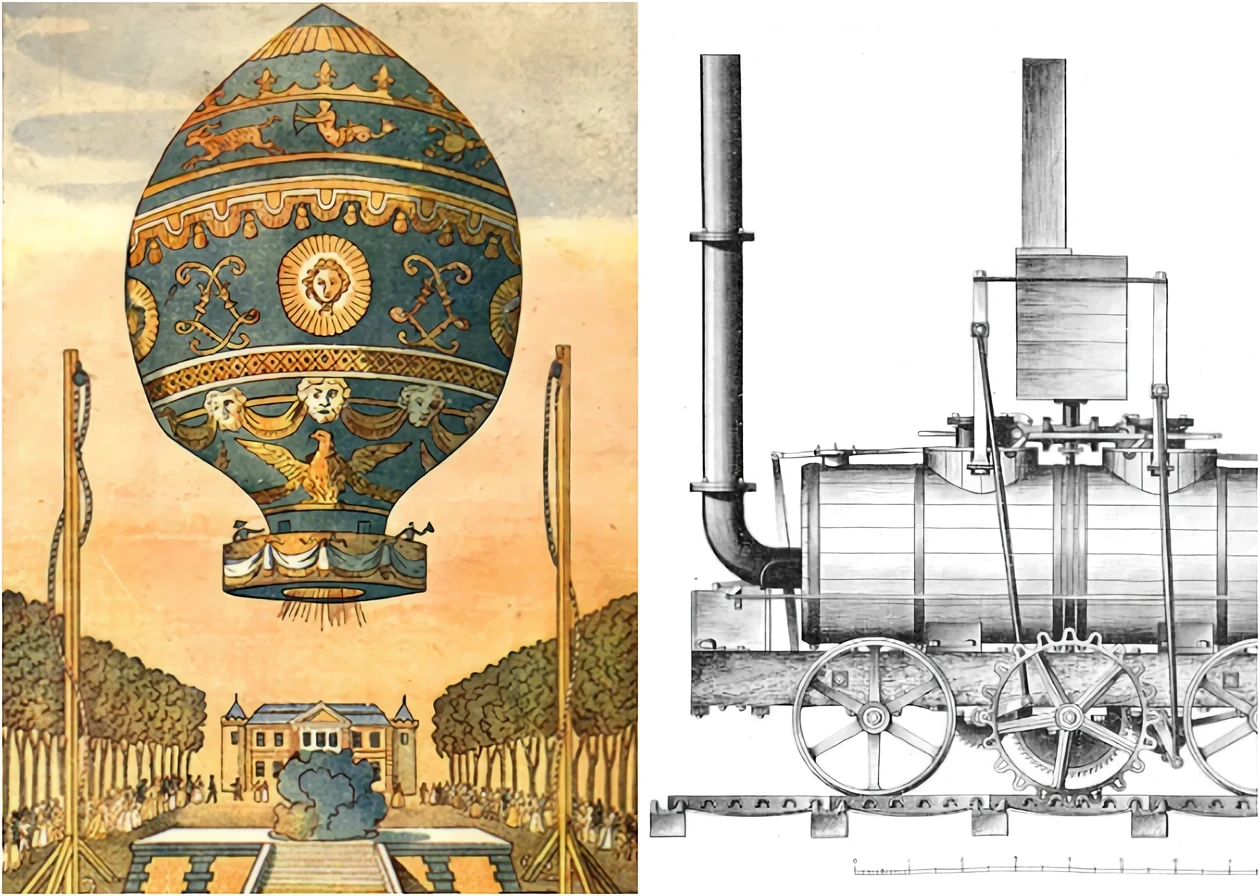
Hot-air balloons, I would imagine, follow the same principle. If you lack the concepts behind the invention, the only way to discover it is by accident, which is generally unlikely. It’s why so much material development is concentrated in the modern and early modern period - we started to piece together how the world, on a fundamental level, works, beyond pure trial-and-error.
Also, hot-air balloons before plastics were often made of silk (and rubber), since most other materials are either too heavy (at least for practical purposes) or too thermally sensitive, and that’s an expensive experiment to be undertaking if you haven’t the first clue how it works.