You’re arguing against things I didn’t say, and then attributing motives I never expressed.
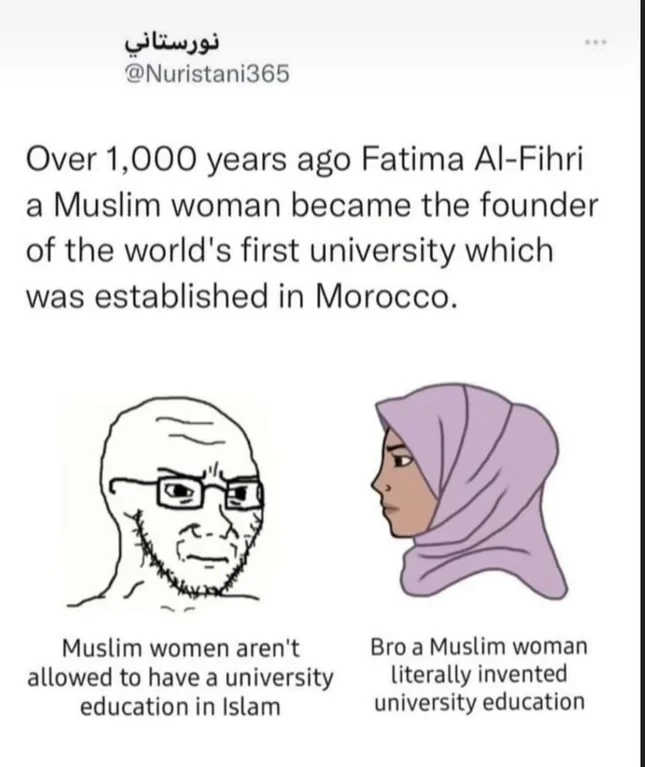
First, this has nothing to do with Christianity vs. Islam, or “civilizing” narratives. That framing is rhetorical escalation, not argument. The question isn’t whether a Muslim polity can grant a “real” charter. Of course it can. The question is whether the institutional structure at the time matches the historical definition of a university as that term is used by historians.
There’s a difference between:
European medieval universities weren’t considered universities merely because they were Christian. They were recognized as such because they developed specific institutional characteristics: legal corporate identity, degree hierarchies (bachelor, master, doctor), cross-disciplinary faculties, and recognized privileges.
If you’re arguing that University of al-Qarawiyyin met those same structural criteria prior to the 20th century, then make that case clearly. Point to its governance model, faculty structure, degree system, and legal status in comparable terms. That’s a historical comparison, not cultural chauvinism.
The existence of diplomas in the 13th century is evidence of credentialing, yes. But credentialing alone does not automatically equal “university” in the specific medieval European sense. Many institutions granted ijazahs (teaching licenses) without being structured as universities in the corporate sense used in Latin Christendom. That’s a structural distinction, not a civilizational hierarchy.
Also, I didn’t accuse you of moving the goalposts in this exchange, I was clarifying it, so correcting me for something I didn’t say is ironic given the complaint about “tilting at windmills.”
As for that phrase: in modern usage, “tilting at windmills” generally means attacking a perceived opponent or mischaracterized position. If you think I mischaracterized your argument, say that directly. But redefining the idiom mid-rant doesn’t strengthen your case.
Strip away the sarcasm and insults, and the real issue is definitional:
Are we using “university” in a broad sense meaning “any advanced institution of higher learning,” or in the narrower historical sense tied to specific medieval corporate structures?
That’s the disagreement. It isn’t about religion. It isn’t about legitimacy of Muslim polities. It’s about institutional classification.
If we can’t keep it at that level, then we’re not debating history, we’re trading accusations.