"Some commentators argue that a future with humans staying in control is unlikely because it is too costly to pay people to do so. There have already been a few viral stories of poorly-supervised coding agents deleting production databases or causing other types of damage. But we view these as “man bites dog” stories rather than an emerging norm. They go viral precisely because they represent such irresponsible and unusual behavior that they have shock value, and serve as regular reminders and learning moments helping the community guard itself against over-reliance on AI. As the aphorism goes, “if it’s in the news, don’t worry about it”. Still, being able to detect whether there is an uptick in poorly-supervised use of AI for high-stakes tasks — across the economy, not just in software engineering — remains one of the most critical data gaps we have today.By the way, the sandwich getting squished is a new trend and it is not uniquely due to AI. Over two decades ago, the Bureau of Labor Statistics started tracking programming separately from software engineering. Roughly speaking, programmers are responsible only for execution while software engineers manage a bigger part of the sandwich. Not only has programming been shrinking, it is also pays much less because it is seen as grunt work. AI merely accelerates this long-existing trend, further devaluing purely technical skills."
comments
comment on
La tentación de San Antonio
@clock no
comment on
La tentación de San Antonio
@prahou La tentacle de San Antonio?
@failedLyndonLaRouchite 1) This is not my post. I'm just sharing a post authored by Ed Zitron. 2) In my own personal experience as a technical writer, LLMs are getting more useful but they do still demand a lot of time being their nanny. They lack memory, they lack tacit knowledge, they hallucinate a lot - specially Gemini models -, and they can create more problems than solve issues if there's not a human conductor behind the scenes, making sure that everything goes along the wheels. 3) The evolution of LLMs seems to be plateauing. The level of growth from version to version is becoming less signficant over the time.
@remixtures Part 2 of 2: So what happens when there are no more "growth industries"? When there are no startups that if you buy in at the beginning you can sell decades later for 20x what you paid? The answer apparently is to create the illusion that something is the Next Big Thing that will transform the world. But unfortunately the science fiction vision of steady progress towards ever-more advanced tech isn't panning out. Technology is apparently plateauing.
@remixtures Part 1 of 2: Perhaps the problem ultimately is that our entire economy, founded in the early days of the Industrial Revolution, is inextricably geared towards growth: not merely successfully supplying a useful good or service indefinitely, but growth. This made sense when new technology was creating entirely new arenas that hadn't previously been possible. But arguably computer chips and the PCs and other devices they made possible was the last true innovation to come along.
@remixtures I can't speak for big corporations, but at the very small biotech where I worked until I retired last year, nearly every manager, PhD , and engineer found that LLMS were extremely powerful and extremely useful toolswe had NO policy on LLM use, and people just starting using them naturally, in their day to day work without any promptingso i would say your post is pretty much BS
@remixtures And it's manna from heaven for MBAs who can issue prompts and get work-shaped output.
comment on
I've released # Braindrop v1
@davep 😎 Ooooh, this looks super cool! I'll have to give this a go!
comment on
[Microblog] # BlogMore v2
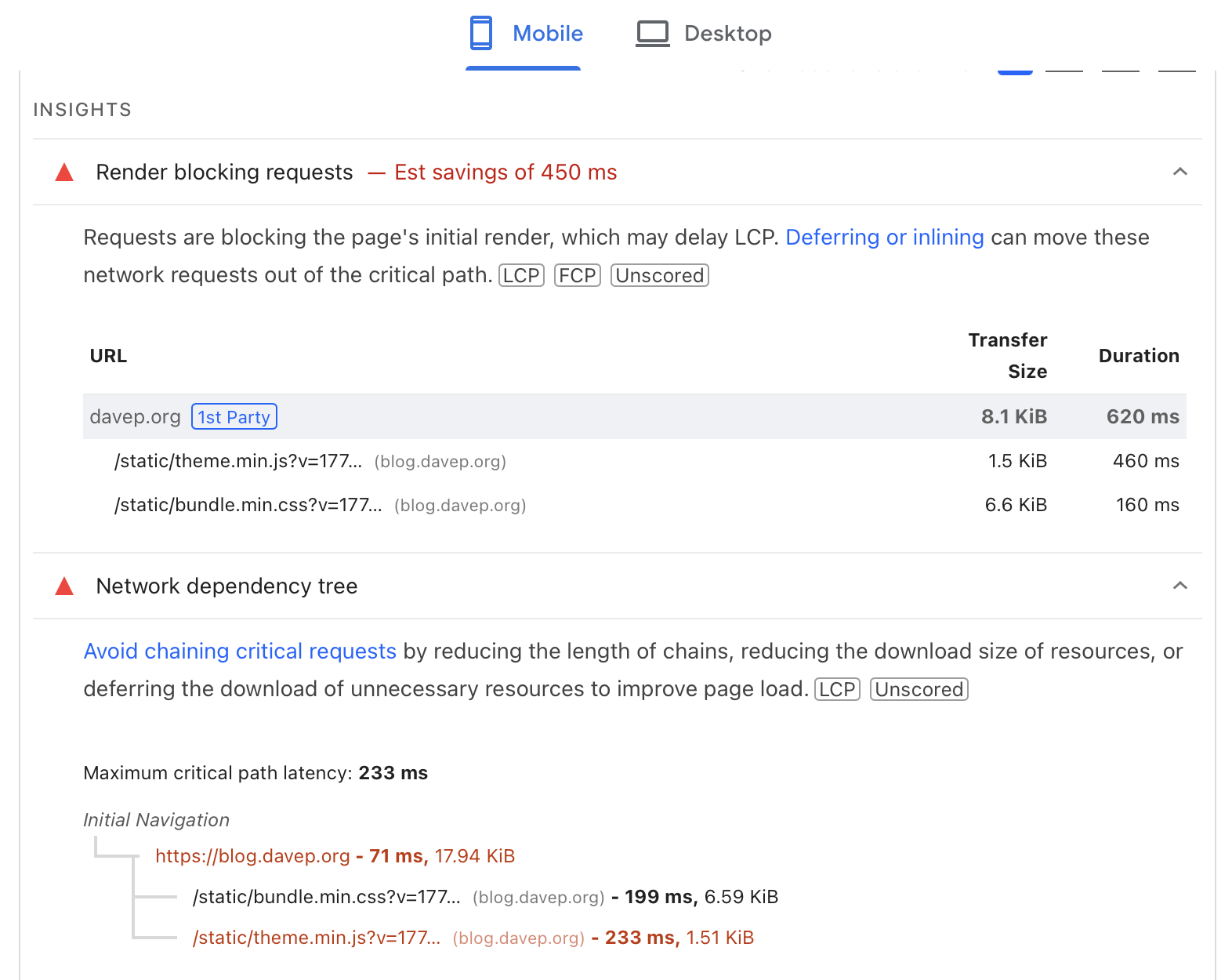
Me: I don't need to inline theme.js, that would be pointless.PageSpeed: ...
comment on
[Microblog] New acquisitions:
@remixtures hummm! how interesting!
comment on
Kavic Marabush's Pocket Guide to Computers
I read all Marabush's Pocket Guides to Computers, but still do not know how the machine works. Should I not touch the machine?
comment on
Kavic Marabush's Pocket Guide to Computers
I can give it up anytime I want
On the other hand...: "In February 2026, we estimated that frontier models’ 80%-reliability cyber time horizon had doubled every 4.7 months since reasoning models emerged in late 2024, given a 2.5M token limit. This was around half our November 2025 doubling time estimate, which was 8 months for both 50% and 80% reliability. Claude Mythos Preview and GPT-5.5 have since significantly outperformed this trend. At the time of writing, it's unclear whether Mythos Preview and GPT-5.5 represent an isolated break from existing rates of progress or are part of a new, faster trend.Mythos Preview and GPT-5.5 have large upper-bound error bars due to near-100% success rates on our narrow cyber suite’s longest tasks, even with the 2.5M token limit.2 Our tasks are also not long enough to determine how sharply the models’ reliability would deteriorate at higher task lengths. This places some of the latest models at the limit of what our narrow test suite can measure. Without the 2.5M token cap, success rates are so high that time horizons become impossible to calculate. The cap, alongside our use of a simple agent scaffold, artificially lowers success rates and understates what models can do with more tokens and stronger scaffolds. In return, it ensures time horizons are measurable and can be compared across models. For reference, a 2.5M token limit is relatively low – in our cyber range experiment we use up to 100M tokens and find performance would likely still improve beyond that budget, especially for recent models, which disproportionately benefit from higher token limits."aisi.gov.uk/blog/how-fast-is-a#AI #CyberSecurity #GenerativeAI #LLMs
comment on
[Microblog] # BlogMore v2
@andyc Thanks. Not sure I’ve seen it in anything else either (although I’ve never surveyed the SSG space like you have). Helped me tidy up a handful of things so paid off pretty well.
comment on
[Microblog] # BlogMore v2
@davep Seriously though I think this is a valuable tool and I can't recall many blogging platforms that include it as built in functionality.
comment on
[Microblog] # BlogMore v2
@davep Oh no. Please don't embarrass me. I'm perfectly of doing that myself!
comment on
[Microblog] # BlogMore v2
@andyc I was very tempted to clone your blog’s repo and take it for a spin. 😏
comment on
[Microblog] # BlogMore v2
@davep My Blogmore lint report had better be 100% clean, given I spent the last two weeks manually checking all internal links and images.Strongly agree that checking external links is out of scope and better left to other tools.
comment on
Me vs Claude, redux: blog
@davep I'm using Cursor here (chooses from multiple models incl Claude either manually or automatically) and did a similar bit of refactoring on shinyphoto last week.Asked it to identify duplicate code blocks. It found ~8 areas where similar patterns could be removed. Told it to fix them all with a commit each - 1 sentence prompt. Came back after 10mins to a git log 8 commits longer. All automagical. Code still runs, too.Considerable joy. 🤖😀
comment on
Arguing with a stroppy agent: blog
@cyclical_obsessive At least with a local CLI app, or even via GitHub Copilot on GitHub itself, it’ll absolutely read and analyse the file. I’ve found Gemini CLI has been a good tool for looking for refactoring possibilities.
comment on
Arguing with a stroppy agent: blog
@davep reminds me of the “argument” I had with Gemini about a parameter file on GitHub that I asked Gemini to review. It confidently and persistently claimed the item on the sixth line was indented with an extra space.After the third “you are right, I was wrong, I’ll try to do better”, I told Gemini goodbye. It should have disclosed that it was not actually reading the file.I hope you have better luck asking it to review files.
@davep Similar to my experiences: if I know how to code what I need coded, I really like my result better than trying to explain what is in my head about the requirements to anyone or anything (AI).If I have never coded something before, then it is faster to unleash the AI on a sample program that only demonstrates the thing I need to learn to code, then I can apply all my style preferences, requirements and constraints.Any larger scope and the solution will have issues and wrong tests.
@serge it’s a good thing you’re in Canada, I don’t think a nonce tracking service would be very popular with the US government right now.
comment on
I've updated # BlogMore to v2
@andyc